

Innovasea is leading a new initiative designed to advance how fish passage monitoring is carried out at hydropower facilities. The $4.8 million Species Aware project will enable hydropower operators to automatically identify fish species using artificial intelligence, expanding the role of automated monitoring in regulatory compliance, environmental management and operational oversight.
Species Aware is one of six projects funded in part by Canada’s Ocean Supercluster (OSC) and is supported through Canada’s Pan-Canadian AI Strategy. More than $2 million of the total funding is being contributed by the OSC, with the remaining investment coming from Innovasea and its project partners. As part of the initiative, Innovasea will work with Canadian-based power companies to test and refine automated species identification models at selected hydropower sites.
Innovasea is a global leader in aquaculture and fish tracking technology and solutions, with an established presence in the hydropower sector. The Species Aware project builds directly on the company’s existing HydroAI system, an AI-powered monitoring solution that provides continuous, real-time fish counts at hydropower facilities. The new project extends that capability by adding automated species classification, allowing operators to determine not only how many fish are passing through a site, but also which species are present.
According to Innovasea chief executive Mark Jollymore, the project represents a significant evolution in fish passage monitoring.
“Through the Species Aware Project, we’re delivering the next wave of AI innovation for fish passage monitoring,” Jollymore said. “By automating species identification, we’re helping hydropower sites further streamline compliance, reduce downtime, and collect vital data to protect and support their surrounding ecosystem.”
Longstanding challenges in fish passage monitoring
Fish passage monitoring has been a requirement at many hydropower facilities for decades, particularly where operations interact with migratory fish or species subject to regulatory protection. Despite its importance, the methods traditionally used to monitor fish movement have changed relatively little over time.
According to Jean Quirion, Innovasea’s vice president of research and development for fish tracking, historical approaches have relied heavily on manual processes.
“For many, many years, the methods that have been used in monitoring fish and passageways have been very manual in nature,” Quirion said. “We see humans manually counting fish or making judgements about species from video recordings.”
These approaches are inherently constrained by human availability and endurance. Observers cannot monitor continuously, nor can they cover multiple locations simultaneously. As a result, most monitoring programmes are based on limited sampling windows.
Because fish passage occurs continuously, data collected during short observation periods must be interpolated between observation samples to estimate total passage. This interpolation introduces uncertainty and contributes to wide margins of error.
“Humans cannot count fish 24/7, seven days a week at multiple different locations,” Quirion said. “They can only count a small statistical sample, and they have to interpolate in between.”
This uncertainty affects not only operators, but also regulators who rely on monitoring data to assess compliance and environmental performance. According to Quirion, the resulting data can be difficult to fully trust.
“The resulting data is sometimes challenging for regulators to believe or to really trust,” he said.
Automated monitoring using AI addresses this limitation by removing the need for sampling-based interpolation. AI systems can operate continuously, recording and analysing every fish that passes through a monitored section of infrastructure. According to Innovasea, this leads to significantly higher accuracy and consistency compared with manual approaches.
The added value of species-level data
While automated fish counting alone represents a substantial improvement over traditional methods, the ability to identify fish species adds a further layer of value.
The importance of species-level data varies by river system. In some cases, fish populations may be dominated by a single species, and aggregate counts may therefore be sufficient to assess overall passage performance. In other systems, however, fish populations may be distributed relatively evenly across species, or specific species may be designated as threatened, endangered or otherwise protected.
“There are river systems where there are species that are deemed at risk,” Quirion said. “It’s very important to understand how hydro operations are affecting those specific species.”
Without species-specific information, operators may have limited ability to demonstrate how their facilities interact with protected populations. They may also struggle to assess whether mitigation measures are effective or proportionate.
“If you don’t know, then you can’t take action to effectively protect them,” Quirion said.
Species identification also has practical relevance for hydropower engineering and equipment design. Different species vary in size, body shape and swimming behaviour, which can influence how they interact with ladders, bypasses and other passage structures. Accurate data on species composition can therefore support both operational management and longer-term infrastructure planning.
Integrating species identification into HydroAI
The Species Aware capability will be integrated directly into Innovasea’s existing HydroAI platform. HydroAI is already commercially available and deployed at multiple hydropower sites in Canada, where it provides continuous, automated fish counts.
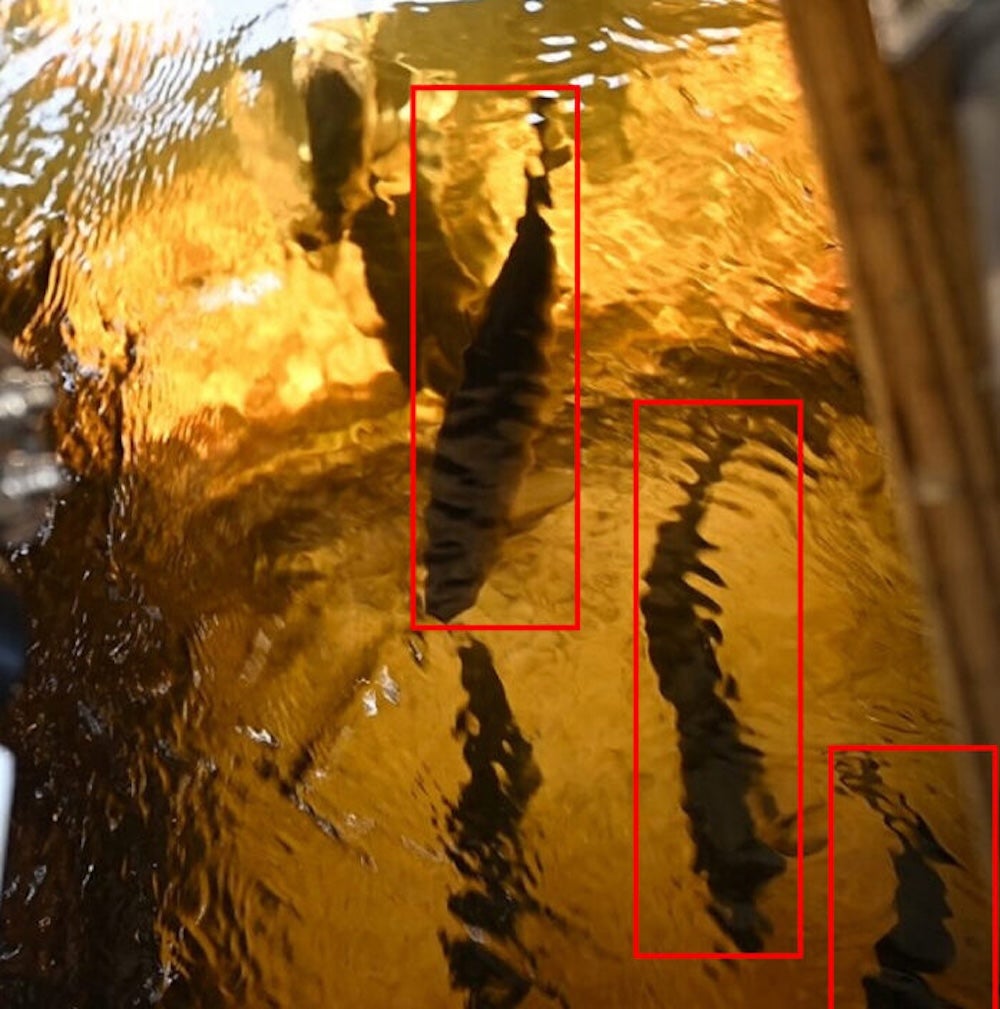
In its current configuration, HydroAI uses a camera positioned above fish ladders, capturing a top-down view of fish as they pass. This perspective is well suited to counting, as it allows individual fish to be tracked and recorded as they move through the passageway.
However, reliable species identification requires additional visual information.
“For species classification, we will require a side-view underwater camera,” Quirion said. “That will be a second camera that will just be part of that same insert.”
The side-view camera captures the fish’s profile as it swims past, enabling the AI system to analyse visual characteristics such as size, shape and colour. These features are used by the classification models to distinguish between species. Both cameras are housed within a single insert designed to fit into existing fish ladders. This approach allows species identification to be added without replacing or reconfiguring the core monitoring infrastructure.
Training AI for real hydropower conditions
A central focus of the Species Aware project is ensuring that AI models perform reliably under real-world hydropower conditions. Unlike controlled laboratory environments, hydropower passageways present a range of challenges, including variable lighting, turbulence, debris and changing flow conditions.
“We are training an AI system specifically for hydro conditions,” Quirion said. “We want it to excel in the type of environment that you find in hydropower operations.”
Innovasea’s approach involves both model design and data selection. The company has developed proprietary techniques within its machine-learning framework that focus on identifying visual features of fish that are less sensitive to low light and turbulence.
Equally important is how the models are trained.
“All of our data sets are collected in hydro environments,” Quirion said. “They contain the type of challenges that you’d see in the real world.”
Innovasea has accumulated a large archive of video data from hydropower installations, which it considers a key asset. From this archive, curated datasets are created for initial model training. These datasets provide a baseline level of performance when the model is first deployed. Once in operation, the system continues to collect field data. This data is then used to fine-tune the model over time, allowing performance to improve as the system is exposed to a wider range of conditions.
This iterative process ensures that model development remains closely aligned with operational reality rather than theoretical performance benchmarks.
Measuring and validating accuracy
Accuracy validation is critical when introducing AI-based monitoring into regulated environments. Innovasea validates the performance of its systems by comparing AI outputs directly with human observations, which remain the historically accepted reference point.
After a model is deployed, Innovasea selects a small statistical sample of the data generated by the system. Human observers are then asked to independently count fish and identify species within that sample. The results are compared with the AI’s outputs.
Each dataset produced by HydroAI is accompanied by a performance metric expressed as a margin of error. This margin reflects the difference between AI and human results and provides transparency about data reliability.
HydroAI’s margin of error varies depending on site conditions. At many installations, Innovasea has observed margins of errors of approximately 5% or less. At more challenging sites, performance can deteriorate, sometimes with margins of error as low as 20%.
In all cases, results are provided alongside the data so that operators and regulators can understand how much confidence to place in the results. By comparison, purely manual monitoring methods often involve margins of error in the range of 30–40%, largely due to limited sampling and the need for interpolation.
Deployment at existing hydropower facilities
A key objective of the Species Aware project is ease of deployment. The system has been designed to integrate with existing fish passage infrastructure rather than requiring new construction.
The camera insert is designed to fit into fish ladders with minimal modification. While some site-specific customisation may be required to accommodate different ladder dimensions, installation is straightforward.
“We’re talking about a one- to two-hour installation,” Quirion said. “It does not affect the operation of a hydropower plant.”
This approach minimises downtime and allows the technology to be retrofitted at facilities of different ages and designs. The standardised camera positioning also supports consistent data collection across sites.
Operational benefits beyond compliance
Although regulatory compliance is a primary driver for fish monitoring, Innovasea identifies additional operational benefits associated with automated species identification.
Some hydropower operators are already using HydroAI to support day-to-day management of fish passage infrastructure. The system provides real-time video access to fish ladders, allowing operators to confirm flow conditions, identify obstructions and verify that passageways are functioning correctly.
This capability is useful even outside peak migration periods, providing ongoing visibility into infrastructure performance. There are also potential reputational benefits. According to Quirion, operators using advanced monitoring systems are increasingly seen as demonstrating a proactive commitment to environmental responsibility. Looking ahead, automated monitoring could support more dynamic operational decision-making. Some hydropower plants face restrictions on generation during certain periods to protect fish, even when fish may not be present.
“If you could know very precisely, on a minute-by-minute basis, how much fish is passing by, perhaps this could drive operational decision-making,” Quirion said.
He emphasised, however, that such applications depend on the technology becoming fully proven and trusted by regulators.
Improving ecosystem protection
Reliable species-level data enables more targeted approaches to ecosystem protection. By understanding which species are present and when they are moving, operators can take actions that are better aligned with actual environmental conditions.
“If you can have that knowledge with a lot of certainty, then you can take actions that are more effective,” Quirion said.
This supports what he described as the ongoing challenge of balancing sustainable hydropower generation with protection of fish and their ecosystems.
Testing across diverse hydropower sites
As part of the Species Aware project, Innovasea will test the system at multiple hydropower sites with varying environmental conditions. These include differences in lighting, turbulence, debris loads and flow regimes. The aim is to evaluate both reliability and generalisation. Generalisation refers to the model’s ability to perform consistently across different sites rather than being optimised for a single location. The system will also be assessed for its ability to distinguish fish from debris, a common challenge in fish passage environments. Although initial training focuses on species found in North America, Innovasea has designed the system to be adaptable to international markets. Rather than training separate models from scratch, the company is developing a generic base model trained on a large and diverse dataset. This model can then be fine-tuned to recognise additional species relevant to specific regions.
“If a client in Europe wants another five species, it will require the model to be fine-tuned,” Quirion said. “That fine-tuning is a small amount of effort compared to the initial training.”
AI and the future of hydropower monitoring
Quirion sees Species Aware as part of a broader trend towards AI-driven automation in the hydropower sector.
“AI is really a way to automate anything that was previously a manual process,” he said.
By automating fish monitoring, AI allows engineers and operators to focus on interpreting results and making informed decisions rather than collecting data.
Innovasea ultimately views automated species identification as a way to improve trust – between operators, regulators and the public.
“Knowing is everything,” Quirion said. “This technology allows us to know much better and much more accurately about fish around hydro than ever before.”
Improved data supports better decision-making, more effective environmental protection and increased confidence in hydropower as a clean energy source.
HydroAI
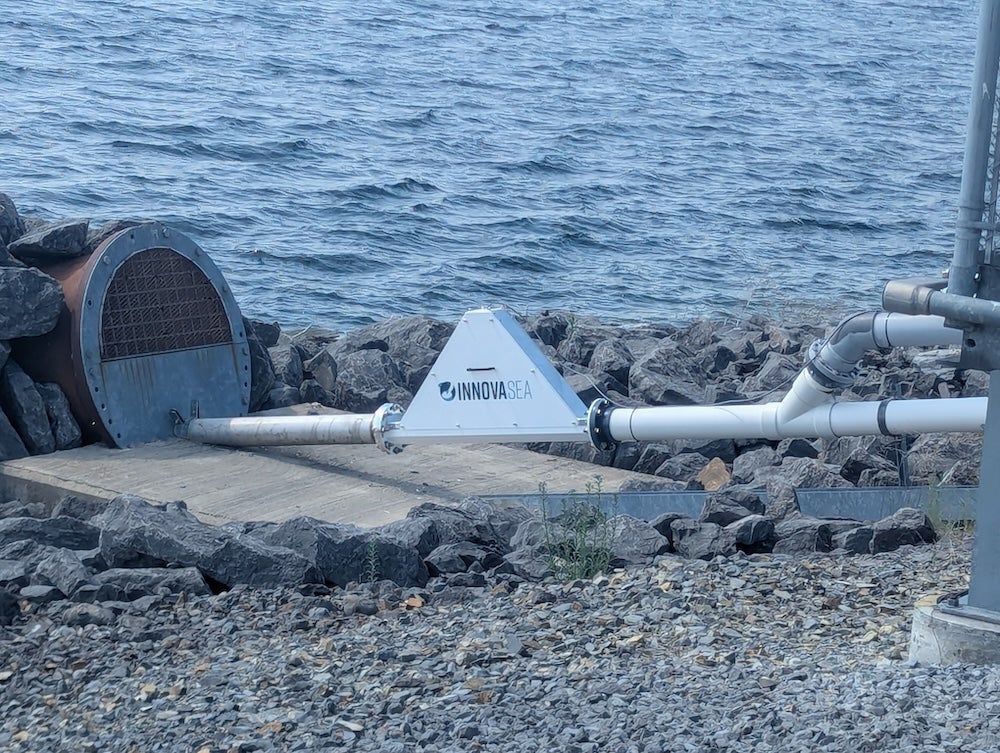
HydroAI is Innovasea’s AI-powered fish monitoring system designed to improve the quality, quantity and transparency of fish passage data at hydropower facilities. The system combines high-resolution video cameras with proprietary, cloud-based software to deliver continuous, real-time information on fish movement in and around hydropower plants. By automating monitoring tasks that have traditionally required extensive human effort, HydroAI reduces the time and labour associated with manual fish counts and video review, while providing a consistent dataset that can be shared with regulators and stakeholders.
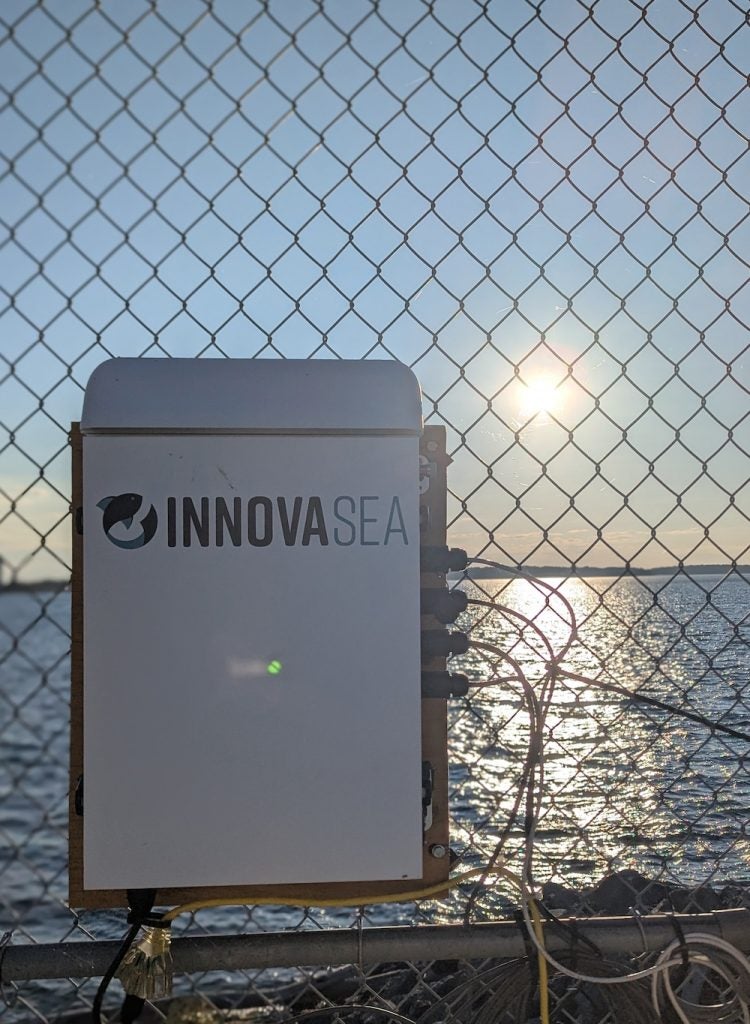
The system is built around several integrated components. High-resolution cameras capture 24/7 footage of migrating fish, while a custom camera insert allows the hardware to be installed within a range of existing fish passage structures. An onsite edge box processes camera data and transmits it to Innovasea’s cloud-based platform, where proprietary algorithms analyse the footage and deliver results to a reporting dashboard. This architecture allows operators to access fish passage data remotely and in near real time.
HydroAI is designed to integrate with existing infrastructure and support monitoring both upstream and downstream of dams. Innovasea positions the system for use at hydropower facilities undergoing licensing or relicensing, at sites operating under frequent regulatory scrutiny, and at locations where protected species or habitats may be affected. By improving data availability and transparency, HydroAI is intended to support environmental mitigation efforts while enabling more informed operational oversight at hydropower facilities


