

Genex Power is building the Kidston Pumped Storage Hydro Project, one of Australia’s most ambitious energy infrastructure projects in remote North Queensland. The project is the nation’s first new pumped hydro scheme in more than 40 years and the first in the world to transform a decommissioned gold mine into a fully contained, closed-loop energy storage system.[1] With 250MW of generation capacity and 2000MWh of storage, the Kidston project will provide flexible, long-duration capacity to the National Electricity Market and accelerate the transition to a low-emissions grid.[2]
From gold mine to energy storage
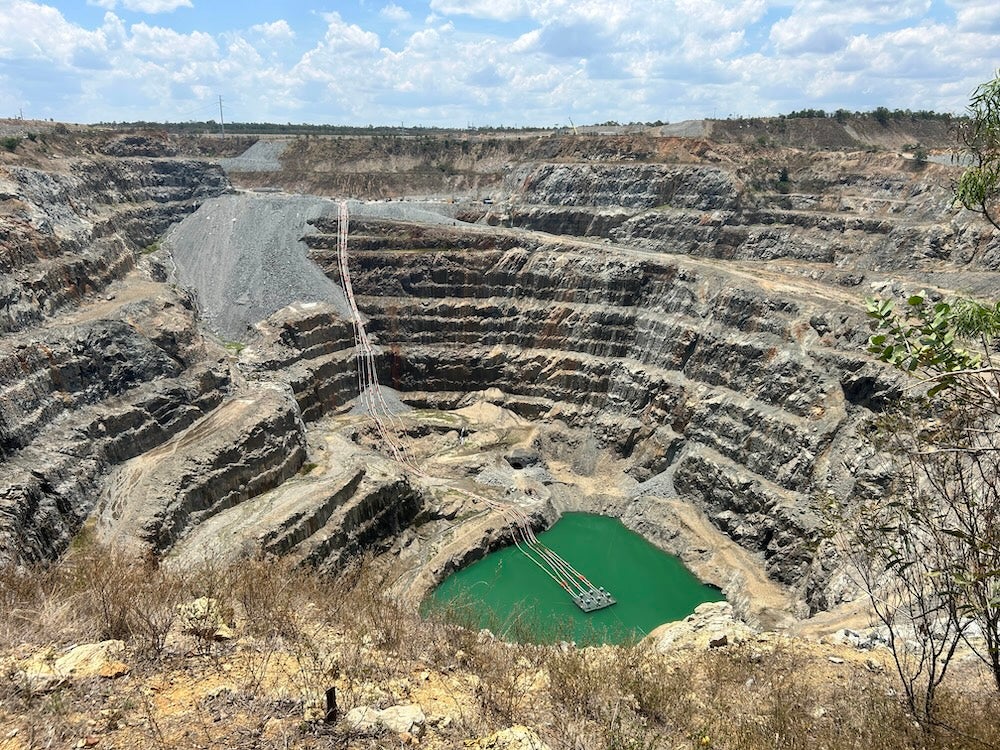
Genex Power was founded in 2014 following the acquisition of the Kidston Gold Mine, located 270km northwest of Townsville. The site’s two deep mining pits, Wises and Eldridge, created a unique opportunity. Their scale and elevation difference offered natural conditions for a pumped hydro configuration. Combined with North Queensland’s abundant solar and wind resources and its lack of firming capacity, the location provided an ideal setting for long-duration storage.
The project repurposes the former pits as the upper and lower reservoirs in a fully contained, off-river system. Two 125MW reversible Francis pump-turbines, supplied by Andritz Hydro, move water between reservoirs.[3] During periods of surplus renewable generation, water is pumped from the lower Eldridge Pit to the higher Wises Pit. When demand rises or renewable output falls, the flow is released to generate electricity. The system can deliver up to eight hours of continuous generation at full output with a response time of less than 90 seconds. Because it’s a closed-loop design, the plant requires minimal water top-up and operates independently of rainfall for river flows.
Engineering a landmark energy asset
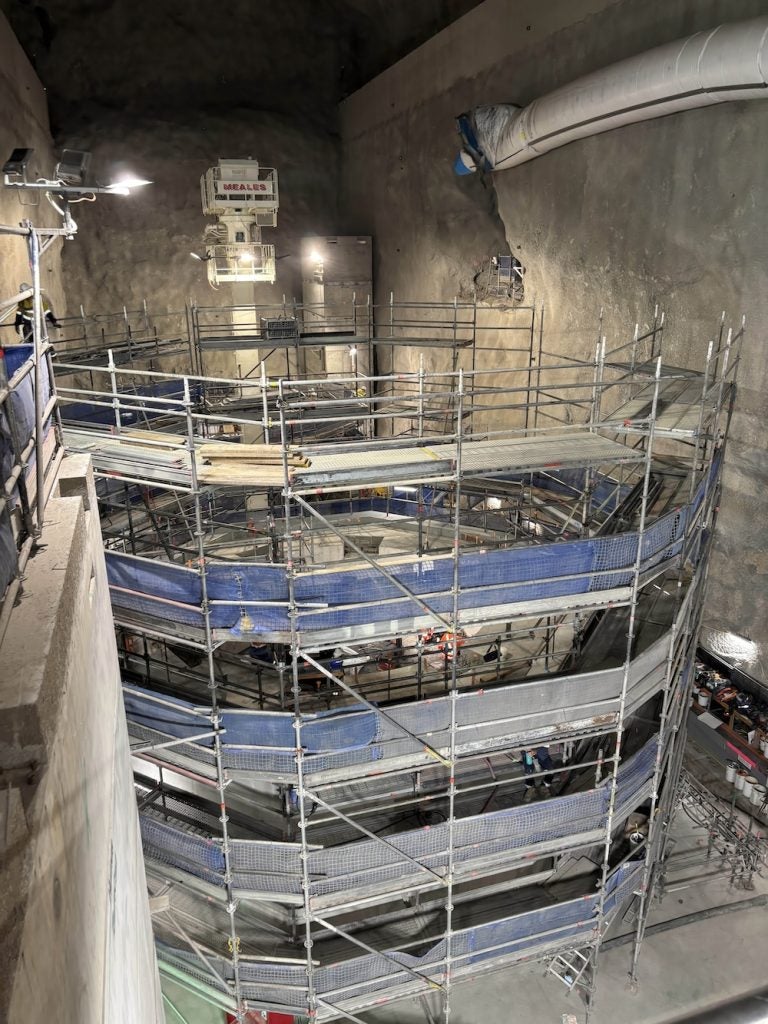
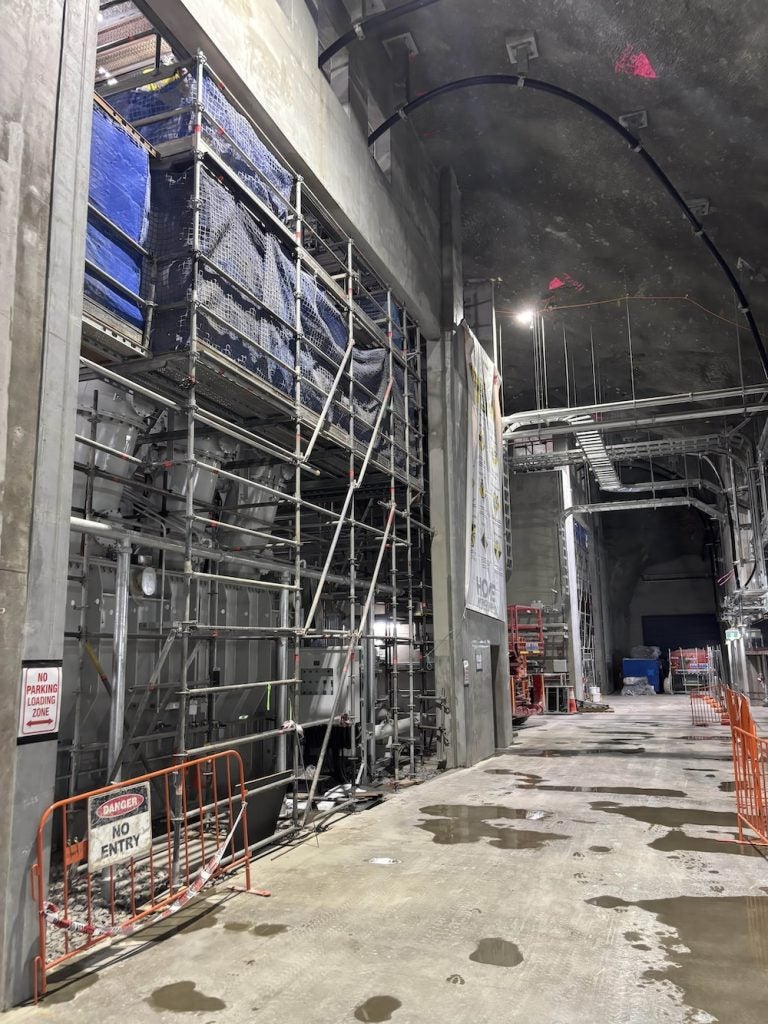
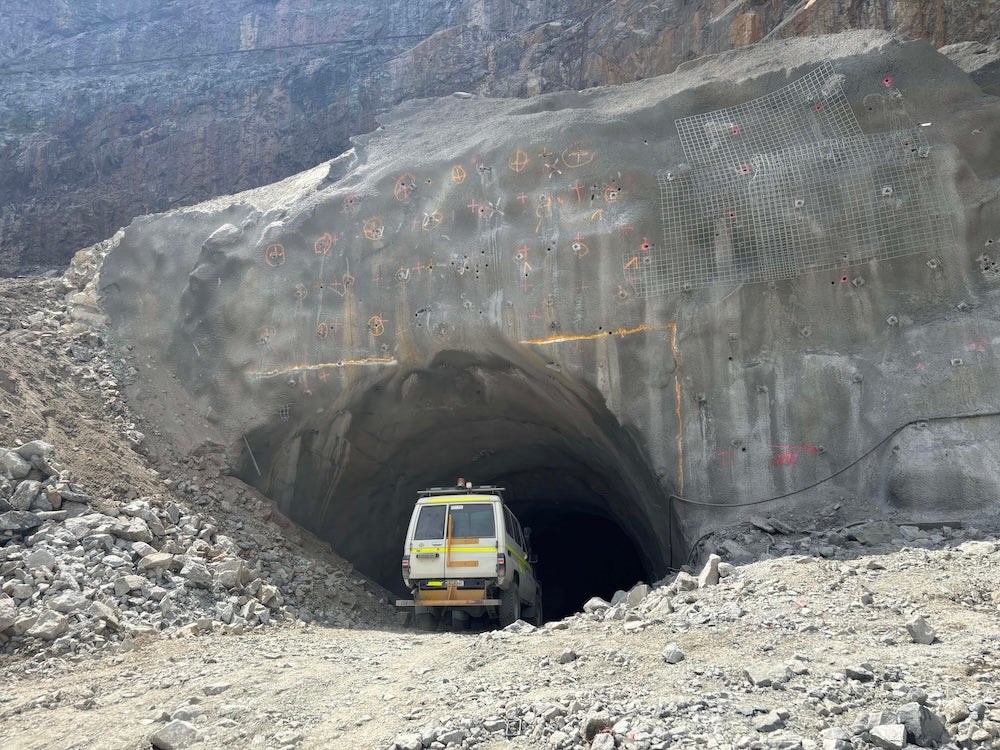
Genex designed the system around a 250m-deep underground powerhouse accessed via a 1.7km main decline tunnel. Twin 235m intake shafts, twin 330m tailrace tunnels, and two vertical shafts for cable routing and ventilation complete the layout. Raise-boring methods and drill-and-blast excavation provided precise, efficient tunnelling through hard rock. Steel linings in high-pressure zones and concrete linings elsewhere ensure hydraulic resilience and long-term structural integrity.
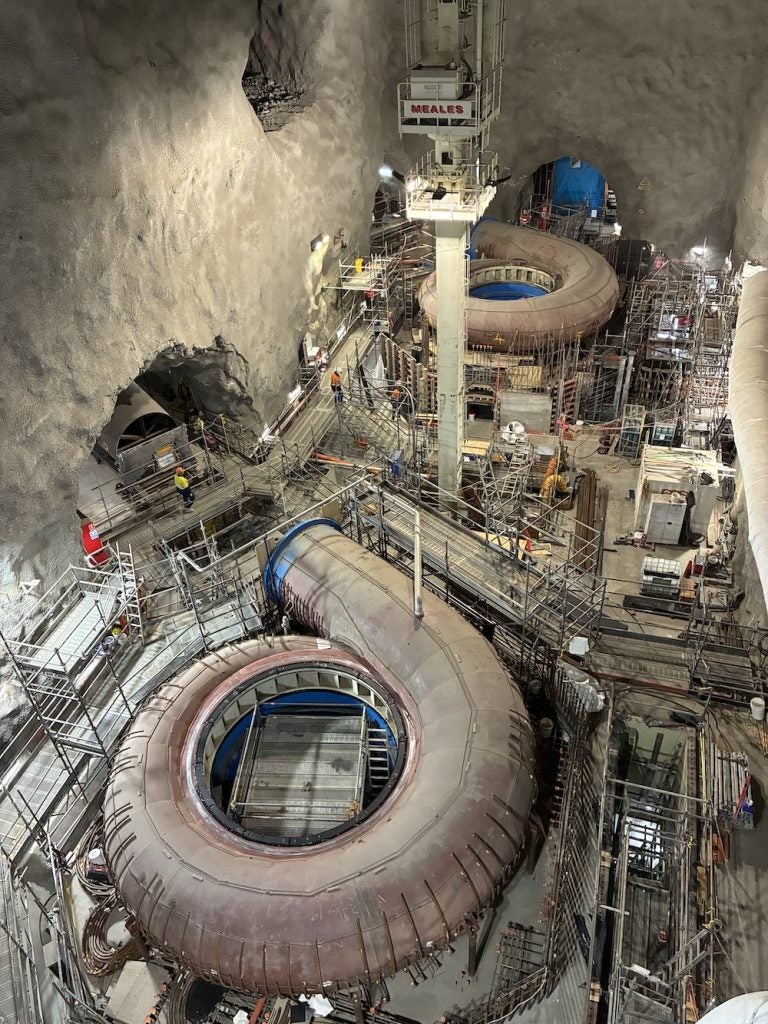
Every component was engineered to withstand high hydraulic loads, variable operating conditions, and the demands of a remote environment. The powerhouse cavern features reinforced concrete lining and houses key electromechanical equipment within embedded turbine pits designed to accommodate dynamic operating pressures. Fixed-speed Francis turbines were chosen for their proven reliability in high-head, closed-loop systems, prioritising durability and rapid response over variable-speed flexibility.
Detailed geotechnical modelling confirmed stability across all interfaces, from pressure shafts to tunnels and penstocks. Analyses of water hammer, cavitation risk, and surge behaviour informed the design, while surge arrestors and pressure relief systems protect the plant during rapid switching between pump and generation modes. Thermal, electrical, and control systems were designed in parallel with the mechanical plant to ensure seamless synchronisation. The transformer cavern houses two 160 MVA step-up transformers, and a 250m deep insulated cable shaft routes power to the surface. Control systems, SCADA integration, and grid interface hardware are being configured in accordance with the operational standards of EnergyAustralia (the plant operator) and the National Electricity Rules.
Overcoming challenges
Delivering a project of this scale in remote North Queensland has tested ingenuity at every stage. Construction began in 2021 following financial close, with early works focused on tunnelling and cavern excavation. In 2022, the tunnelling team faced groundwater ingress through fractured rock that temporarily halted progress on the main tunnel. Engineers swiftly implemented a realignment strategy that extended the route by 436m, successfully bypassing the affected zone and maintaining schedule integrity. By April 2024, major underground excavation has been completed and civil fit-out was underway.
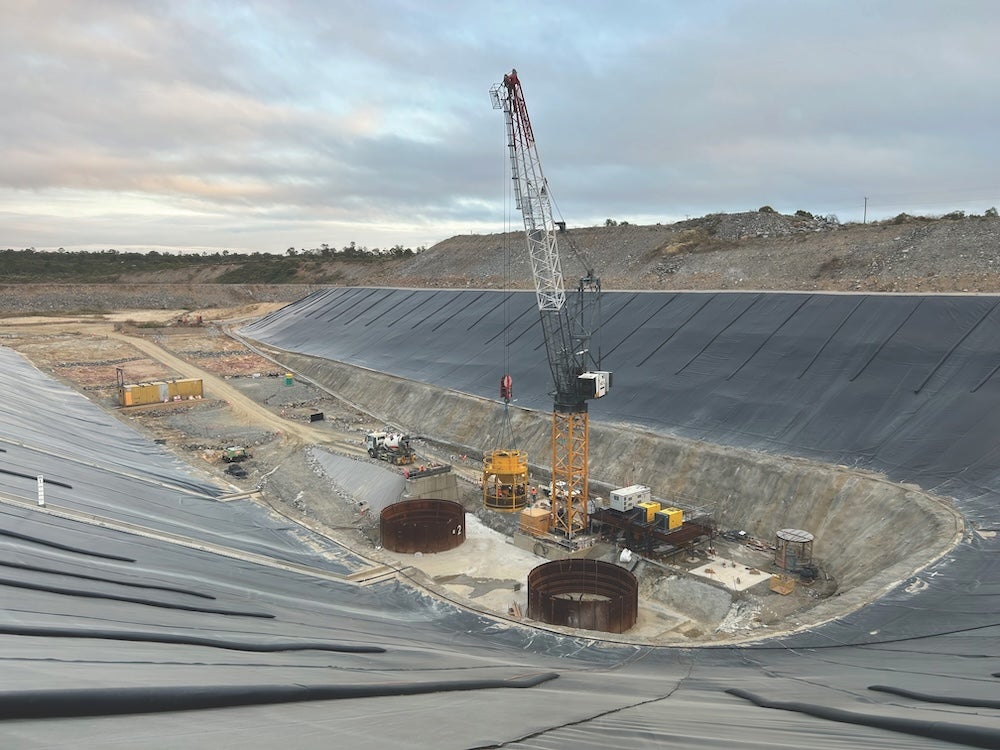
At the surface, Wises Pit was transformed into a sealed upper reservoir through installation of a 6km embankment and HDPE liner. Six high-capacity pumps transferred more than 25 billion litres of water from the Eldridge Pit into the Wises Pit to prepare both reservoirs for operation.
Andritz Hydro began turbine component deliveries in 2023. By mid-2025, the first spiral case and stay ring were installed, marking the start of electromechanical assembly. [4] Both turbine units are presently progressing through fit-out and alignment, keeping the project on track for commissioning in late 2025 and commercial operation in 2026.
Commissioning will include progressive energisation of auxiliary systems, no-load turbine spin tests, wet commissioning of conduits, and staged load ramping under supervision from Genex and EnergyAustralia. Initial grid synchronisation will test governor response, inertial stability, and control behaviour in both generation and pumping modes. Full operational readiness testing is expected to commence later in 2026, after which EnergyAustralia will assume operational dispatch rights under its 30-year offtake agreement.
Supporting grid stability and renewables
The Kidston project will play a critical role in stabilising Australia’s grid by shifting renewable generation into peak demand periods and providing firm, dispatchable energy in a region where solar and wind output often outpace local demand. The plant will also deliver synchronous inertia and system strength through its rotating generators. When required, the machines can operate in condenser mode to stabilise frequency and voltage in areas with limited synchronous generation.
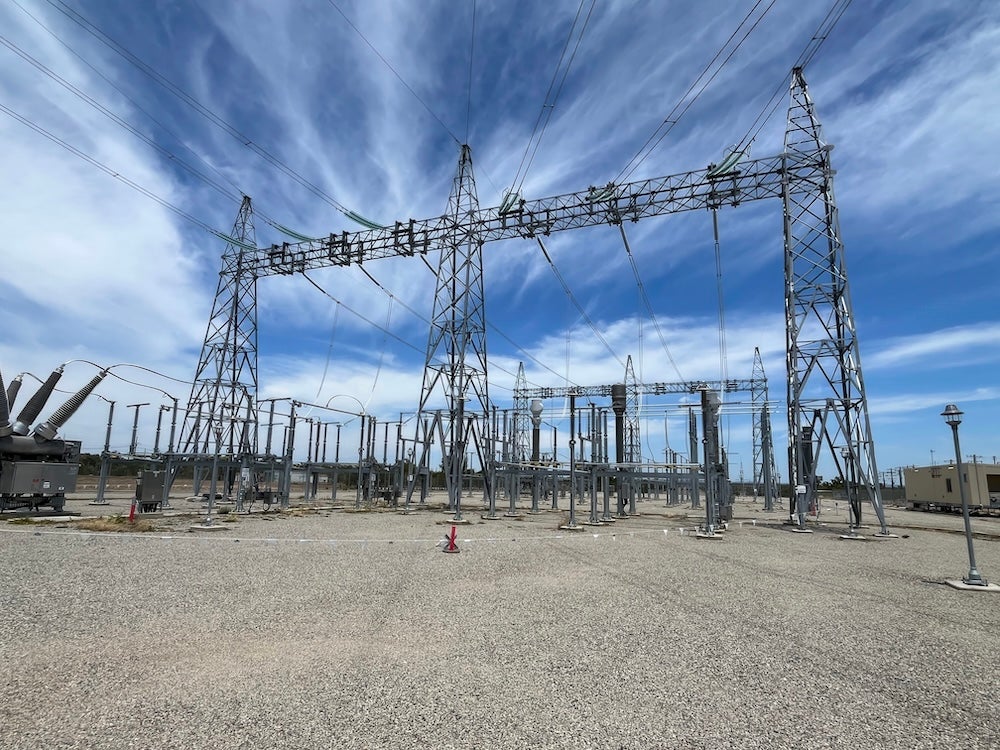
The project connects to the National Electricity Market through a new 275kV, 186km transmission line built by Powerlink Queensland. This infrastructure links Kidston to Mount Fox via switching stations. The new transmission corridor also unlocks capacity for future developments, including a proposed utility-scale battery.
Australia’s clean energy transition depends on reliable storage. The Australian Energy Market Operator’s 2024 Integrated System Plan identifies a need for more than 36GW of storage by 2035. [5] The Kidston project’s eight-hour storage duration and rapid response capability aligns directly with the market’s growing need for medium-duration capacity and system strength services. The project is one of the first projects in Queensland to deliver this capability at scale. [6]
Genex conducted extensive modelling during development to assess the project’s performance under multiple market scenarios. The project will deliver value through arbitrage, frequency control ancillary services, system restart ancillary services, and synchronous inertia provision. As coal-fired generation retires and variable renewable energy expands, Genex expects the Kidston project to become increasingly valuable as a multi-service asset.
Environmental stewardship and Indigenous partnership
Environmental responsibility has guided every stage of the project. The plant’s closed-loop design eliminates dependence on rainfall and avoids interference with natural waterways. By reusing existing mining pits, the project avoids new land disturbance and significantly reduces its environmental footprint compared with greenfield hydropower. Project construction also makes significant use of raw materials available on site as a consequence of the former mining operations.
As the project lies within Ewamian Country, Genex worked closely with Traditional owners to conduct cultural heritage surveys across the areas of disturbance. Through this collaboration, the project created employment pathways and awarded more than $6.6m in contracts to Indigenous-owned businesses, ensuring local communities shared directly in the project’s benefits. The project also sponsored a tourism project spearhead by the Ewamian people, providing a direct contribution to its construction cost.
Powering regional growth and national innovation
The Kidston project has also become a catalyst for regional growth and innovation. Construction of the 275kV Kidston–Mount Fox transmission line required nearly 350 new towers across challenging terrain. Powerlink employed advanced lidar scanning and geotechnical mapping to optimise alignment, reducing ecological impact and construction risk. Helicopter and drone stringing, modular substation delivery, and real-time grid synchronisation made it one of the most complex network upgrades in the region in more than a decade.
The project has created more than 500 regional jobs and generated additional employment through contractors and suppliers.[7] Genex supported local hiring and Indigenous participation, exceeding workforce targets. Infrastructure upgrades, including refurbished accommodation and improved access roads, have enhanced local industry capacity. [8] Once commissioned, the project will sustain permanent operations and maintenance roles, ensuring long-term regional benefits.
Financing Australia’s energy future
The Kidston Pumped Storage Hydro Project was made possible through an innovative mix of public and private investment. It includes a $610m long term loan from the Northern Australia Infrastructure Facility, the largest in its portfolio and a $47m grant from the Australian Renewable Energy Agency.[9,10] Genex also secured a 30-year Energy Storage Services Agreement with EnergyAustralia, providing long-term revenue certainty and granting the retailer full operational dispatch rights. Japan’s Electric Power Development Company, J-POWER, supported the project through a strategic investment and technical services agreement and now owns Genex Power, bringing international expertise to Australia’s growing energy storage sector. [11]
This blended financing model demonstrates how public support can attract private capital to deliver complex, capital-intensive infrastructure that underpins the clean energy transition.
Pioneering the next generation of pumped storage hydro
The lessons from the Kidston Pumped Storage Hydro Project are being applied to feasibility studies for new off-river pumped hydro developments. Genex and its partners continue to contribute to national working groups on storage investment frameworks and market incentives for long-duration storage. Future projects will benefit from standardised engineering and procurement models, improved turbine logistics, and closer integration with high-voltage interconnection planning.
References
[1] https://www.hydropower.org/blog/milestone-reached-at-kidston-pumped-storage-project-spiral-case-successfully-installed [2] https://arena.gov.au/news/arena-commits-47-million-to-queensland-pumped-hydro-plant/ [3] https://arena.gov.au/assets/2021/07/kidston-stage-two-hydro-solar-project-report.pdf [4] https://genexpower.com.au/250mw-kidston-pumped-storage-hydro-project/ [5] https://www.aemo.com.au/-/media/files/major-publications/isp/2024/2024-integrated-system-plan-isp.pdf [6] https://statements.qld.gov.au/statements/96794 [7] https://arena.gov.au/news/arena-commits-47-million-to-queensland-pumped-hydro-plant/ [8] https://www.naif.gov.au/media-centre/naif-commits-up-to-610m-loan-for-north-queensland-hydro-power-storage-project/ [9] https://www.naif.gov.au/media-centre/naif-commits-up-to-610m-loan-for-north-queensland-hydro-power-storage-project/ [10] https://arena.gov.au/news/arena-commits-47-million-to-queensland-pumped-hydro-plant/ [11] https://www.jpower.co.jp/english/news_release/pdf/news240731_1e.pdf


