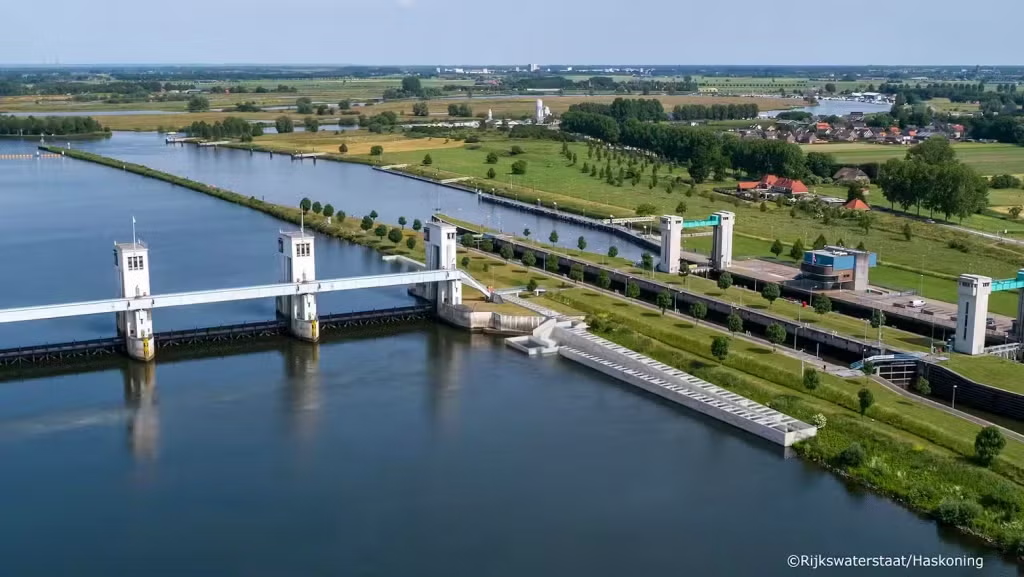

Fish ladders at seven weirs along the Meuse River in the Netherlands are set to be refurbished following inspections that found they no longer operate optimally. At Lith weir, located near the town of Oss in the southern Netherlands, authorities plan to construct an additional fish passage to improve upstream migration.
The weirs play a key role in navigation and water management but act as barriers for aquatic species. Fish ladders have been installed at each site to support migration, though several now require upgrades. Works range from minor renovations to more extensive interventions, including replacement of basins and intake structures.
Lith presents a more complex case due to the presence of a hydroelectric power plant. The existing fish ladder is located outside the weir and lock complex, which can make it difficult for fish to locate the entrance under certain flow conditions. A second fish ladder is therefore planned between the weir and the lock to improve accessibility and ensure year-round passage.
Water level differences at Lith weir can reach up to 3m, which most fish cannot overcome in a single movement. The new design will include a loop-shaped structure with multiple steps, each with a drop of 15 cm. A debris trap will retain floating material, and a side channel will generate a stronger current downstream to guide fish towards the entrance.
The municipality of Oss granted an environmental permit for the additional fish ladder at the end of February. Objections can be submitted until 7 April 2026. A technical building permit application is also in progress.
The upgrades form part of ecological restoration measures under the European Water Framework Directive. Additional actions along the river include removing bank reinforcement, creating natural channels, and improving tributary connections to enhance biodiversity and water quality.
A contractor for the fish ladder works is expected to be appointed before the summer 2026 construction period. Completion of all works is scheduled no later than December 2027, in line with the directive’s programme deadline.
Further information is available via the “Samenwerken aan rivier natuur” project website.