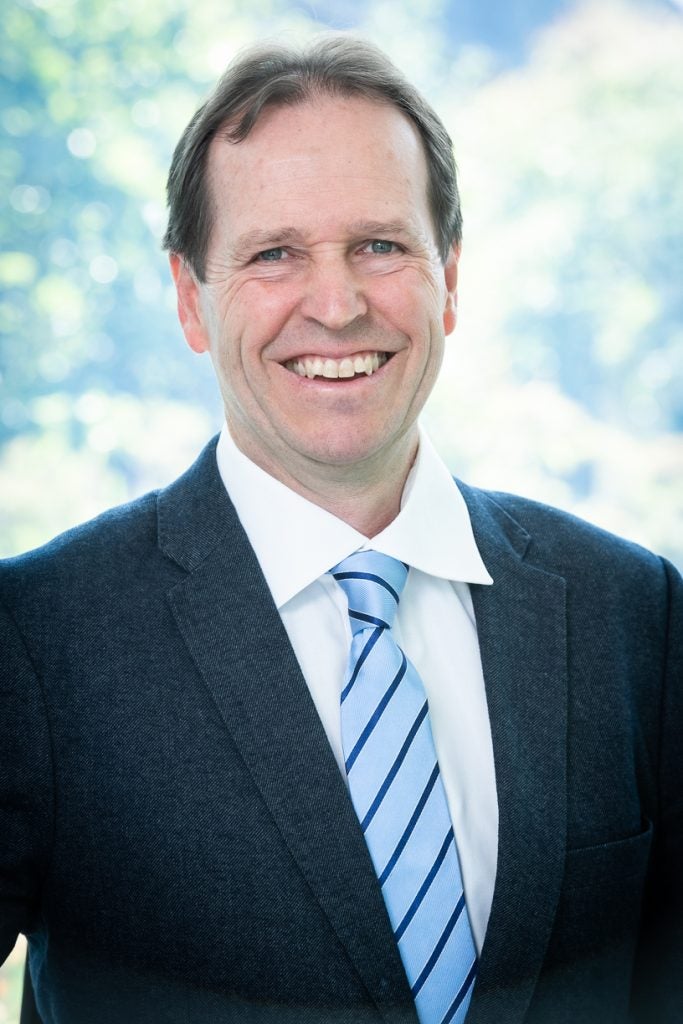

As dam owners and operators around the world confront ageing assets, increasing scrutiny and the need for long-term resilience, the role of instrumentation and monitoring is under growing focus. No longer simply a matter of installing standard devices, modern dam safety practice is increasingly driven by risk – specifically, an understanding of how a dam might fail and what needs to be measured to detect those risks early.
For Paul Southcott, Senior Principal – Dams and Headworks at Entura and convenor of a working group under the Australian National Committee on Large Dams developing updated guidance on dam instrumentation and monitoring systems, this shift has been central to his career. With nearly four decades of experience across Australia and the Indo-Pacific, he has worked at the forefront of changes in how engineers approach inspection, instrumentation and monitoring, combining hands-on field experience with strategic risk assessment.
In this Q&A, Southcott reflects on the evolution of dam monitoring practices, the opportunities and limitations of new technologies, and why engineering judgement remains essential in turning data into meaningful insights for dam safety.
Please give a background to your experience and expertise in the industry
I started working as an engineer in the late 1980s. From 1993 to 1999 I lectured in engineering at the University of New England in Armidale, New South Wales. I joined Hydro Tasmania Consulting, now Entura, in 2000. Over my 26 years with the business, I’ve worked on all aspects of dams projects across Tasmania, mainland Australia and the Indo-Pacific region, including in Malaysia, Indonesia and Nepal. I’m now Entura’s Senior Principal, Dams and Headworks, and a lead trainer for the Entura clean energy and water institute (ECEWI).
When and why did your interest in dam inspection, instrumentation, and monitoring develop?
When I first joined Entura in 2000, Hydro Tasmania was completing a pilot study of a dam portfolio risk assessment approach, which I was fortunate to then roll out across 54 major dams over six years. I was also given the task of running Hydro Tasmania’s dam safety program, which involved annual inspections, instrumentation and surveying, and five-yearly comprehensive surveillance reviews which take a deep dive into the monitoring data.
Dam risk assessment was a huge step change in thinking about dam safety, instrumentation and monitoring. Rather than putting in a standard set of instrumentation for a given dam type, emphasis shifted to identifying the key failure modes for each dam and then choosing the most appropriate instruments, locations and frequency to yield meaningful information.
I learned a lot from this early work on Hydro Tasmania’s dams – being involved in inspections, troubleshooting instrumentation problems, and interpreting what the data was really telling us. This was very different to my previous experience and I basically learned on the job. I’m still involved in five-yearly comprehensive surveillance reviews and the longer 20-year dam safety reviews across Hydro Tasmania’s portfolio.
Why are inspection and monitoring systems such a vital part of the industry?
Dams are incredibly valuable infrastructure with the potential to serve industries, communities and the environment for many generations. Each dam is unique and they all carry some level of risk. Inspections, instrumentation and monitoring are the front line of confirming that a dam is behaving as intended and identifying whether something important is changing.
A key challenge is separating the signal from the noise. This requires working out which instrumentation is still helpful, what is less relevant and could be discontinued, and whether new technology could meaningfully enhance or accelerate understanding of the dam’s condition and behaviour.
When appropriate inspection, instrumentation and monitoring systems are coupled with engineering judgement, they support the long-term safety, reliability and sustainability of dam infrastructure.
Are there any key advances that have particularly shaped dam instrumentation and monitoring in recent years?
Clearly, there have been very significant technological changes. Where information once needed to be gathered manually in the field, we now have continuous streams of near real-time data thanks to improvements in automation, remote sensing and communications technologies. New approaches are emerging all the time – from drones and satellite scanning to robotic total station instruments.
This means that dam engineers are getting vast amounts of data all the time, and there’s a very real temptation to keep adding new instruments without thinking critically about their value. Technology alone doesn’t keep dams safe. Even if we can measure something with more automation and much greater frequency, it doesn’t necessarily make that data more precise or more relevant.
We must come back to what a dam’s potential failure modes are and how they might develop. Then, using engineering judgement, we can make better decisions about the most appropriate instrumentation, placement and monitoring frequency to yield the information that best supports safety decisions.
What does it mean to you to lead ANCOLD’s dam instrumentation and monitoring guidelines working group – and what does the group hope to achieve?
I’m very proud to be convening this working group, having been involved with ANCOLD for a long time, and having been involved in revising various other ANCOLD guidelines.
Although these instrument guidelines date back to 1983, the basic principles are still very relevant – such as the need to validate instrumentation readings. There’s also good information about legacy instrumentation and how it works, which is still very relevant for older dams.
I’d like the next iteration of the guidelines to shift focus from the instruments themselves to a risk-based approach guided by failure modes. The failure mode determines what needs to be measured, which in turn informs which instrumentation to choose, how to use it, and how to interpret its output.
The working group has reviewed the existing guidelines to identify gaps, benchmarked them against international guidelines, and surveyed ANCOLD members to confirm that we’re addressing what the industry really needs. We’ve now agreed on the content scope and allocated the writing of each section. We are aiming for a first draft by the end of this year, with reviews proceeding through 2027.
We’re not going to reinvent the wheel where good references already exist. Our intention is to focus on what extra value we can add with an overarching framework focusing on key principles: understanding the failure modes before designing an instrumentation system, and regularly checking and validating that instrumentation is not only working properly but is also providing data that genuinely supports dam safety.
How important is knowledge sharing, particularly for younger engineers?
There will always be a place for some targeted upskilling and knowledge sharing, especially when it comes to legacy instrumentation. Younger engineers need to understand how older instruments work and what they are actually measuring. It’s taken me 26 years to develop the perspective I now have on instrumentation, failure modes and risk assessment – and you can’t learn that instantaneously. The guidelines will go some way to addressing this, but mentoring and coaching remain important both in the workplace and across the industry.
At Entura, we’ve formalised our commitment to industry-wide knowledge-sharing through our Entura clean energy and water institute, where we share our experience through targeted up-skilling and training customised to participants’ needs. We’ve offered dam safety training in Tasmania, across mainland Australia and across our region – including a tailored program for dam safety inspectors in partnership with MYCOLD and Malaysia’s Universiti Tenaga Nasional (UNITEN), and programs delivered as part of the South Asia Regional Infrastructure Connectivity (SARIC) initiative – because many of the challenges and opportunities for dam safety are common across the world and there’s much to learn from each other.