

As long-duration energy storage moves from policy ambition to engineering necessity, the challenge facing the hydropower sector is no longer technological capability but deployability. Europe’s hydropower industry has increasingly warned that without large-scale storage infrastructure, renewable expansion will lead to curtailment, price instability and growing system risks. Pumped storage hydropower, which today accounts for more than 90% of global electricity storage capacity, is therefore emerging as a critical enabling technology for power system resilience and decarbonisation. Yet despite its maturity, expansion remains constrained by geography, permitting complexity and capital intensity. Suitable sites with the required topography are limited, while environmental considerations and long development timelines further restrict new projects.
Against this backdrop, alternative approaches that extend the applicability of pumped storage without fundamentally altering its operating principles are gaining attention. Mine Storage is one such developer, advancing a model based on repurposing decommissioned underground mines into closed-loop pumped hydro systems. By shifting the spatial requirements of storage from natural elevation to engineered vertical shafts, the company aims to unlock new locations for deployment while giving existing, idle infrastructure new purpose.
In an interview with International Water Power & Dam Construction, CEO Fredrik Olrog outlines how this concept translates into practical engineering, project configuration and commercial strategy, and where it may sit within the evolving energy storage landscape.
Engineering constraints and design optimisation
Mine-based pumped storage introduces a fundamentally different design envelope compared to conventional surface schemes. Rather than shaping reservoirs and waterways to suit hydraulic requirements, engineers must work within the constraints of pre-existing underground geometry.
“Mine-based systems have less geometric flexibility,” Olrog says, noting that the use of existing shafts and underground structures requires careful handling of hydraulics and construction sequencing.
Vertical shafts are central to the concept, providing the hydraulic head required for energy storage. However, they also introduce efficiency penalties that are less pronounced in conventional waterways. Frictional losses along shaft walls, as well as turbulence at transitions and interfaces, must be actively managed through design optimisation.
“Vertical shafts with naked rock surfaces introduce potential efficiency losses, both from friction and turbulence,” Olrog says. “We manage that through shaft diameter optimisation and smooth linings and high-quality electromechanical designs”
Despite these constraints, overall system performance remains comparable to conventional pumped storage. “The overall efficiency remains around 70 to 80%” he notes, placing mine-based systems within a competitive range for round-trip efficiency.
The process of converting a mine into a functional storage system involves multiple layers of intervention. Existing shafts typically require rehabilitation, including structural reinforcement and sometimes sealing to ensure water tightness. Underground caverns must be adapted or excavated to house turbines, pumps and associated equipment. In addition, a closed-loop reservoir system must be established, often combining underground volumes with surface features such as quarries or lakes.
“Sealing and waterproofing are critical,” Olrog notes. You also need to consider how water moves through the system over repeated cycles, and how that interacts with the surrounding geology.
Surface integration varies significantly between sites. In some cases, a disused quarry can be repurposed as a reservoir, minimising additional excavation. In others, natural water bodies may serve as reservoir, simplifying hydraulics but introducing new environmental and permitting considerations.
Site selection is therefore critical. Depth is a primary driver, as it directly determines hydraulic head and energy capacity. Geological stability is equally critical, both for structural integrity and long-term operational reliability.
Existing infrastructure, including shafts and access tunnels, can significantly reduce capital expenditure, while proximity to grid connections is essential for commercial viability.
While the global potential is considerable, Olrog emphasises that only a subset of sites will meet the combined technical and commercial criteria required for development. “There are many candidates globally,” he says, “but probably a subset are investment grade.”
“We use a structured multi parameter screening and elimination framework to identify and prioritise suitable underground sites,” Olrog adds.
Project configuration and cost dynamics
Mine Storage’s approach is inherently site-specific, with each project configured according to local conditions rather than standardised design templates. Power capacity is typically determined by grid connection constraints, while energy storage capacity is a function of shaft depth and system volume.
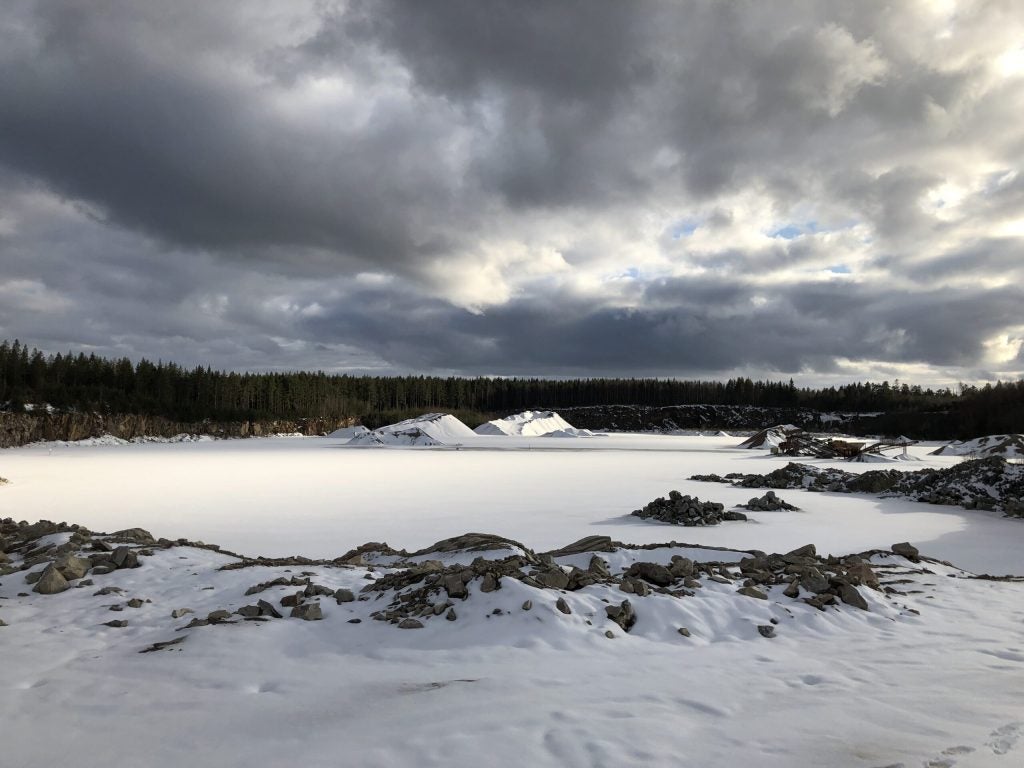
The Norberg project in central Sweden provides a clear example. Built around a decommissioned iron-ore mine, it is designed to deliver 24MW of power and 138MWh of storage capacity, with a rock quarry serving as the upper reservoir and the existing shaft providing the hydraulic conduit. The configuration reflects both the physical characteristics of the site and the available grid connection capacity.
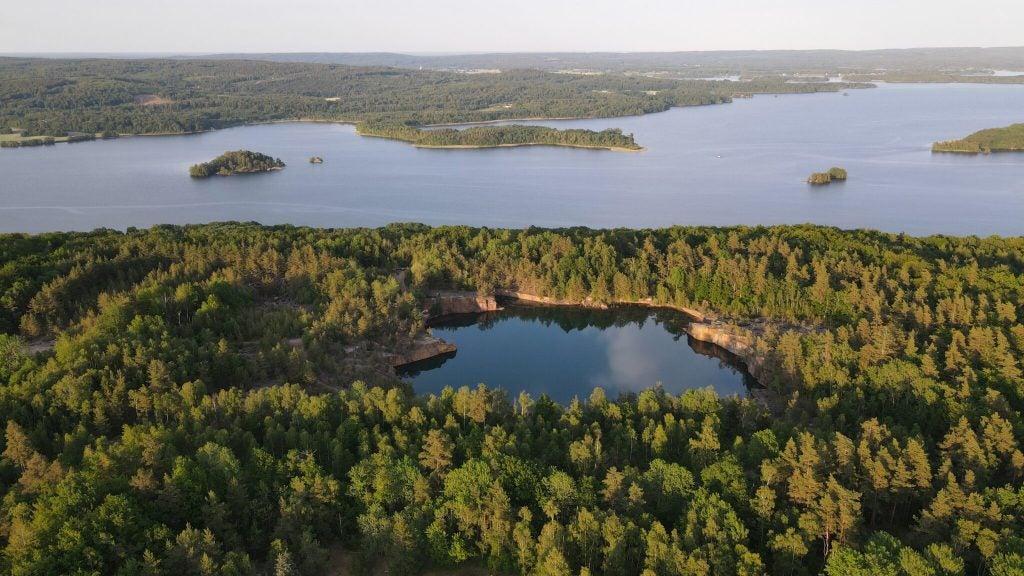
Similarly, the Vånga project utilises an abandoned stone quarry in combination with a natural lake, creating a system with 30MW of peak power and 70MWh of storage. In this case, the use of a natural lower reservoir reduces the need for extensive civil works but increases surface visibility and alters the permitting landscape.
“The power rating is typically constrained by the grid connection,” Olrog explains. “The energy capacity, on the other hand, is determined by the available head and the volume of the system. So each project is optimised individually.”
From a cost perspective, the most significant advantage of mine-based systems lies in the reuse of existing infrastructure. Avoiding large-scale dam construction not only reduces capital expenditure but also shortens development timelines and lowers environmental impact.
“Dam construction is a major cost driver in conventional projects,” Olrog says. “If you can eliminate that and leverage existing excavation, you have a clear economic benefit.”
However, this does not imply that mine-based systems are low-cost by default. Underground works, including shaft rehabilitation, sealing and equipment installation, remain capital-intensive. Electromechanical systems must also be designed to operate reliably under the specific conditions of each site. In terms of operational characteristics, mine-based storage is best suited to mid-duration applications. Typical discharge durations range from six to 24 hours, aligning with the needs of intraday balancing and peak shifting. While individual projects are smaller than many conventional pumped storage schemes, scalability is achieved through aggregation. “Scalability comes from building a portfolio of projects,” Olrog adds.
Revenue, bankability and system integration
As with many infrastructure technologies, the transition from concept to deployment is driven as much by commercial considerations as by engineering performance. For Mine Storage, Olrog identifies three primary challenges: permitting timelines, grid connection queues and investor understanding.
“The technology itself is well proven,” he says. “The challenge is demonstrating that it can be applied in this new context with the same level of reliability and bankability.”
Revenue stacking is central to this process. Mine Storage projects are designed to capture value from multiple streams, including energy trading, ancillary services and grid support. Among these, ancillary services such as frequency regulation and reserve capacity are seen as the most critical for financial viability.
“This is fundamentally a megawatt-based business,” Olrog explains. “Ancillary services and grid support are the main drivers. Energy arbitrage is part of the picture, but it’s not the primary focus.”
This reflects broader trends in electricity markets, where the value of flexibility is increasingly recognised. Policy frameworks are beginning to evolve accordingly, with mechanisms such as the UK’s cap-and-floor model providing revenue certainty for long-duration storage assets.
“We are starting to see supportive policy frameworks emerge,” Olrog says. “And we expect that to expand into other markets over time.”
Within the wider energy storage ecosystem, mine-based pumped storage occupies a distinct niche. Batteries provide high-speed response for short-duration applications, typically up to a few hours, while other technologies are being developed for seasonal storage. Mine Storage’s systems are positioned in the intermediate range, delivering sustained output over multiple hours.
One of the more innovative aspects of Mine Storage’s approach is the potential for co-location with data centres. This concept leverages the thermal properties of mine water, which typically remains at low temperatures, to provide efficient cooling.
“The water in the system is around 4 to 6 degrees Celsius,” Olrog explains. “By using heat exchangers, we can provide cooling without the need for conventional chillers.”
This creates a dual-use system in which the same infrastructure supports both energy storage and thermal management. For data centre operators, this can translate into significant reductions in both capital and operating costs. At the same time, co-located storage provides firm power and reduces peak demand on the grid.
The concept also addresses some of the practical challenges associated with data centre development, including land use, noise and visual impact. Underground facilities can offer inherent advantages in terms of security and environmental integration.
While discussions with potential partners are still at an early stage, the level of interest suggests that such integrated solutions could become an important part of future infrastructure planning.
Scaling a new infrastructure class
Mine Storage’s long-term strategy is centred on developing a repeatable model that can be applied across multiple projects and geographies. Rather than focusing on individual large-scale installations, the company aims to build a portfolio of assets.
“Success is multiple projects reaching final investment decision and a repeatable development model,” Olrog says, describing the transition from early-stage development to a scalable platform.
The company’s business model reflects this approach. Projects are developed in partnership with utilities, municipalities and infrastructure investors, with capital generated from each development recycled into the pipeline to fund further projects.
The Norberg project represents a key milestone, supported by a €20m grant from the European Innovation Fund and progressing through permitting and engineering phases, with commissioning targeted for 2030.
Looking ahead, Olrog sees mine-based storage as a way to expand the geographical reach of pumped storage hydro. “We’re turning legacy mines into critical grid infrastructure,” he says, highlighting the potential to open up new locations for deployment and create a distinct segment within the sector.
Globally, the potential resource base is substantial. Thousands of decommissioned mines exist across Europe, North America and other regions, many of which could, in principle, be adapted for energy storage. However, realising this potential will require alignment between engineering feasibility, regulatory frameworks and market conditions.
For hydropower engineers, the concept represents an extension of established principles into a new context. By adapting existing infrastructure to meet modern system requirements, mine-based pumped storage hydro offers a pathway to increase deployment without relying solely on conventional site development.
In doing so, it may play an increasingly important role in addressing the growing demand for long-duration energy storage, particularly in regions where traditional pumped storage opportunities are limited.


