

Few pumped storage projects arrive in a developer’s portfolio with as much groundwork already completed as Navaleo.
When Alpiq joined the scheme as majority shareholder with Spanish renewable energy developer Erbienergía in February, it became part of a project that had already secured a 75-year water concession, grid connection rights, support under Spain’s Government Funding IDAE programme and designation by the European Commission as a Project of Common Interest (PCI). With the principal hydraulic concept established and all key permits secured for construction, Navaleo offered more than a mature development opportunity. It marks Alpiq’s first large-scale hydropower project outside Switzerland and establishes the company as a significant new participant in Spain’s emerging long-duration energy storage and flexibility market.
As development progresses, Alpiq is building on that established foundation through a programme of engineering optimisation ahead of final investment decision. Storage duration is expected to be extended to almost ten hours, installed capacity is intended to be increased to approximately 552MW, and elements of the underground layout and machine configuration are being refined to improve constructability, reduce geological risk and prepare the project for the operational demands expected in Spain’s electricity market during the early 2030s.
For Alpiq, Navaleo also represents a different type of pumped storage project from those with which the company has traditionally been associated. Although the utility brings decades of experience operating high-head pumped storage assets in Switzerland, Spain presents a different combination of technical and market conditions. The company identifies the country’s mountainous terrain, extensive renewable deployment, established hydropower sector and relatively isolated electricity system as key reasons why additional long-duration storage is expected to become increasingly valuable over the coming decade. Those characteristics made Navaleo an attractive opportunity, but equally important was the maturity of the project itself.
Scale also influenced the decision. Navaleo ranks among the larger pumped storage projects currently under development in Spain. Unlike schemes built around river regulation or large dam infrastructure, it has been conceived as a closed-loop development using fully excavated reservoirs.
That approach reduces interaction with natural watercourses while allowing the project to make use of water recovered from the former mining area in which it will be built.
Refining an established design
Because Navaleo entered Alpiq’s portfolio at an advanced stage of development, much of the optimisation work has focused on strengthening the existing concept rather than replacing it.
The hydraulic arrangement remains centred on one upper reservoir connected to two hydraulically linked lower reservoirs through approximately 5km of waterways leading to an underground powerhouse. A vetical pressure shaft of around 720m provides a gross head that varies between approximately 690m and 730m depending on reservoir levels, with an average head of around 710m. Active storage is currently expected at between 3.2 and 3.3 million m3, providing close to ten hours of generation at rated output. Hydraulic losses remain subject to further optimisation but are presently expected to remain below approximately 3% during turbine operation.
The most visible change in the design has been the increase in storage duration. Compared with the original developer’s proposal, Alpiq has extended storage from around seven or eight hours to almost ten. The decision represents a balance between additional civil works, installed capacity, operational flexibility and capital efficiency, reflecting assumptions about the role in renewable integration and provision of security of supply the plant is expected to play once it enters service.
Those assumptions extend beyond storage duration alone. The current reference configuration comprises two reversible pump-turbine units rated at approximately 276MW each, and the company is also assessing a double-stage variable-speed arrangement. Alpiq acknowledges that such a configuration presents technical challenges at this combination of unit size and hydraulic head, making supplier engagement and detailed design an important part of the next development stage. The attraction lies in broadening the plant’s operating envelope, particularly during pumping, as it strengthens its capability to participate across balancing and ancillary service markets expected to evolve over the coming decade.
The underground layout has also been revisited. Compared with the original concept, revisions have been introduced to improve constructability while reducing geological risk, although Alpiq stresses that the principal configuration that is fully permitted is now broadly established. Before final investment decision, optimisation will continue across hydraulic losses, equipment selection, powerhouse arrangements, procurement strategy and construction planning. Some details will inevitably evolve through supplier dialogue and tendering, but the emphasis is now on reducing residual uncertainty rather than pursuing wholesale redesign.
The engineering programme is being guided as much by anticipated operating conditions as by the hydraulic characteristics of the site. Alpiq expects the Spanish electricity system of the early 2030s to accommodate significantly higher levels of variable renewable generation than today, with more frequent periods of surplus production and a growing requirement for balancing and reserve capacity. Those assumptions underpin the decision to extend storage duration and to evaluate variable-speed technology, with the intention of delivering a plant capable of operating efficiently across a wider range of market conditions rather than being optimised for a single duty cycle.
The site itself introduces a second set of design considerations. While Navaleo’s hydraulic configuration is based on a conventional closed-loop arrangement, its location within a former mining district means that water management, environmental rehabilitation and underground construction are closely linked. Those site-specific challenges have become a defining element of the project’s next stage of development.
Working with the site
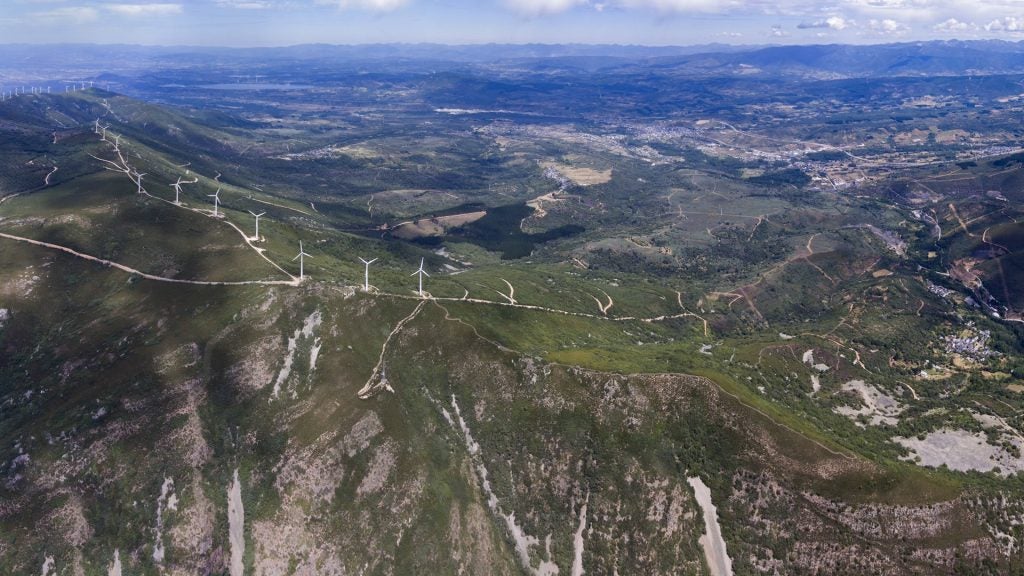
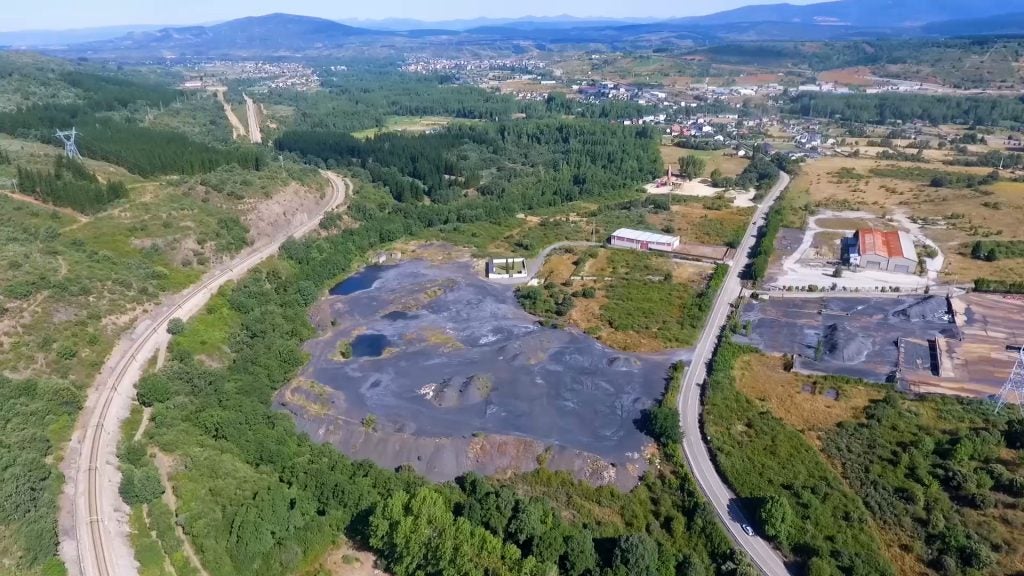
The former mining landscape in the Bierzo region is central to Navaleo’s development, but not in the way often associated with mine conversion projects. Existing mine workings do not form part of the hydraulic system, nor is the project based on repurposing underground voids as reservoirs. Instead, the legacy of mining influences the Central Depuradora Reversible (CDR): Water Treatment Pumped Hydro Storage Plant through water management and environmental rehabilitation. Mine drainage, seepage and recovered water are intended to become part of the project’s wider water management strategy. Rather than relying on external water resources, Alpiq plans to recover water associated with the former mining operations, treat it where necessary and incorporate it into the closed-loop system before reservoir impoundment. During operation, drainage and seepage flows will continue to be collected, treated and returned to the hydraulic circuit as part of an integrated water management approach.
That distinction is important. The treatment plant is not intended to operate as part of each pumping or generating cycle. Instead, it functions alongside the pumped storage scheme, ensuring that recovered mine water reaches the required quality before entering the reservoirs. In practice, this separates water treatment from electricity production while allowing the two systems to support one another over the project’s operating life.
For the engineering team, the challenges are therefore less about adapting historic mining infrastructure than managing the interface between new civil works and an established industrial landscape. Water chemistry, seepage collection, treatment capacity and long-term environmental monitoring all become design considerations alongside more familiar questions of hydraulic performance and underground construction. Particular attention is also being given to ensuring that former mining features do not compromise the safety, durability or long-term performance of the new hydraulic structures.
The closed-loop configuration supports that approach. By using fully excavated reservoirs rather than depending on river regulation, the project limits interaction with natural watercourses while providing greater control over the hydraulic circuit. This is important not only from an environmental perspective but also in reducing dependence on external water resources and improving permitting robustness.
Although environmental rehabilitation forms part of the project, Alpiq sees broader implications for future pumped storage development. In its view, projects such as Navaleo demonstrate that brownfield sites can deliver more than installed capacity alone. Water management, site rehabilitation and long-term regional regeneration can be incorporated within the development without altering the primary function of the scheme. The company points to the Bierzo region, where the decline of mining has brought both economic and demographic challenges, as an example of where new infrastructure can contribute to the long-term reuse of industrial land while remaining focused on its principal role within the electricity system.
For Alpiq, one of the broader lessons from Navaleo is that projects of this type should be assessed on more than generating capacity or storage duration. The company argues that water management, permitting resilience, environmental performance and territorial impact are becoming increasingly significant factors as pumped storage development moves towards more complex brownfield locations.
Preparing for operation
While optimisation of the civil and hydraulic design continues, the project is also being shaped by assumptions about the system it will eventually serve.
Alpiq expects Spain’s electricity mix to contain a substantially higher share of variable renewable generation by the early 2030s than it does today. The company anticipates more frequent periods of surplus renewable production together with continued demand for balancing and reserve services. Rather than designing Navaleo around a single operating mode, the intention is to develop a plant capable of responding to a range of market requirements, with dispatch ultimately determined by electricity prices, ancillary service requirements, capacity mechanisms and system needs.
Experience from Switzerland remains an important reference point throughout the design process, although Alpiq is careful to distinguish between transferring engineering practice and reproducing an existing project. Knowledge gained from high-head schemes including Nant de Drance and FMHL+ is being applied in areas such as underground construction, hydraulic design, project governance, environmental management and the coordination of civil, electromechanical and grid interfaces.
At the same time, the company stresses that Navaleo must respond to conditions that differ significantly from those of its Swiss pumped storage portfolio. Renewable generation profiles, grid-code requirements, regulatory arrangements and the characteristics of the former mining site all require project-specific solutions. The objective, Alpiq says, is not to reproduce a Swiss development in Spain, but to apply established engineering principles within a different technical and operational context.
That philosophy also defines the work that remains before final investment decision. Alpiq describes the current phase as one of confirmation rather than reinvention, with detailed engineering intended to reduce technical uncertainty and strengthen confidence in programme, cost and execution. Supplier engagement will continue to influence equipment selection and some design parameters, but the company’s view is that the principal concept is now established.


