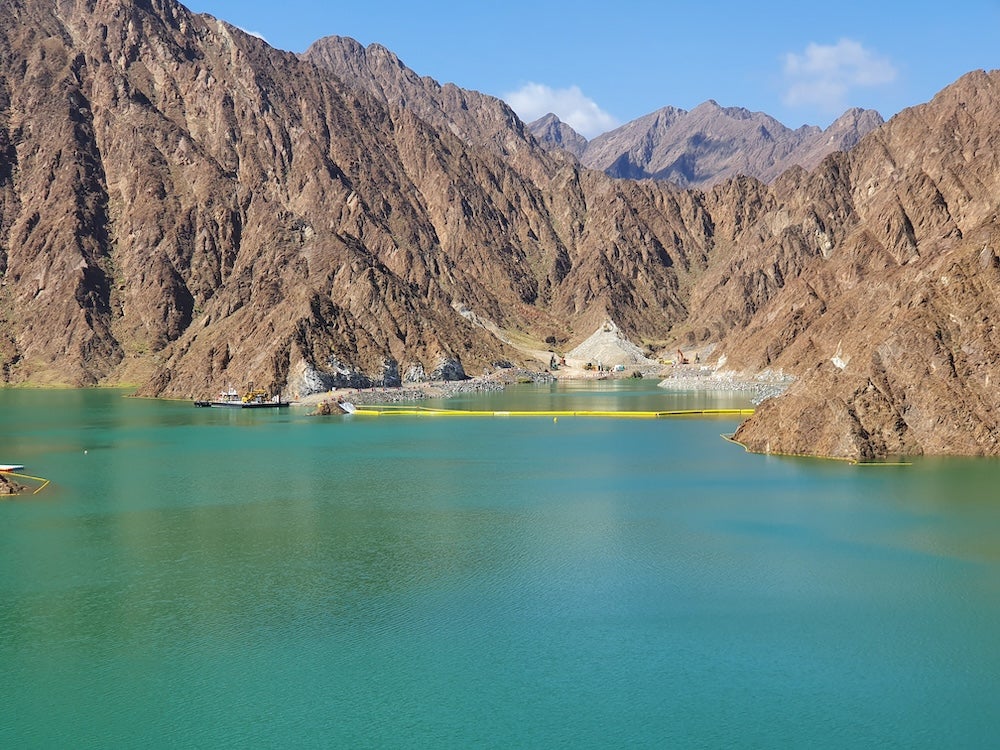

Hydropower plants are expected to operate reliably over long asset lives, often under conditions that have changed considerably since their original design. Changes in debris and sediment loads, environmental requirements and reservoir use can all place different demands on intake infrastructure and associated protection systems. At the same time, refurbishment and modernisation programmes are giving operators an opportunity to reassess systems beyond turbines, generators and major civil structures. Debris management, fish passage protection, sediment control, environmental monitoring and safety measures can all influence operational performance and maintenance requirements. The issue can be particularly significant at sites exposed to high debris loads. Large woody material, finer debris, sediment and, in some regions, anthropogenic waste, can result in recurring interventions. How material is intercepted, retained, diverted and ultimately removed therefore needs to be considered as part of the wider operating strategy.
New pumped storage development is also creating additional applications for debris and safety systems, particularly where protection may be required around both upper and lower reservoirs.
Michael Sims, Regional Business Development Leader at Ecocoast, says debris-management systems deliver the greatest value when their specification addresses both ecological concerns and day-to-day performance.
“The greatest opportunities arise where environmental and operational challenges overlap,” Sims says. “If a solution can support biodiversity while protecting infrastructure, reducing maintenance requirements and preventing downtime, it presents a much stronger case for the operator.”
At hydropower plants, Ecocoast works on intercepting or diverting debris before it reaches the intake, protecting fish screens and passes, controlling sediment during construction and maintenance, keeping the public away from hydraulic structures, and monitoring water quality continuously, such as turbidity, temperature and dissolved oxygen. Keeping debris out of intakes and people and vessels away from them, currently accounts for much of the company’s hydropower work, although Sims says the balance between the two varies between markets. In the UK and mainland Europe, safety can be an important part of the specification, particularly where reservoirs and waterways have recreational or other users. Across parts of Africa and South America, debris management is often the principal concern.
Integrating retrofit measures
With much of the world’s hydropower fleet having operated for decades, Sims sees refurbishment as a particularly appropriate point at which to reconsider debris and environmental protection systems.
“Ideally, these measures would be considered from the outset, but many hydropower plants have been operating for decades,” he says. “Refurbishment therefore provides an ideal opportunity to introduce new ecological improvement.”
Operators undertaking refurbishment are already reviewing intakes, civil structures, equipment and operating procedures. Fish screens, debris management, safe passage routes, sediment control and environmental monitoring can therefore be assessed within that process rather than added separately at a later stage.
Nor does this necessarily require extensive alteration to an existing scheme. “Sometimes just relatively targeted improvements can make a big difference for the environmental and operational performance,” Sims says.
What a site needs depends on the material being managed and the hydraulic conditions. Ecocoast’s systems range from permanent debris booms for smaller debris through to log screen barriers designed for larger material and higher-flow environments. Depending on requirements, barriers can contain debris for subsequent removal or divert it away from critical areas.
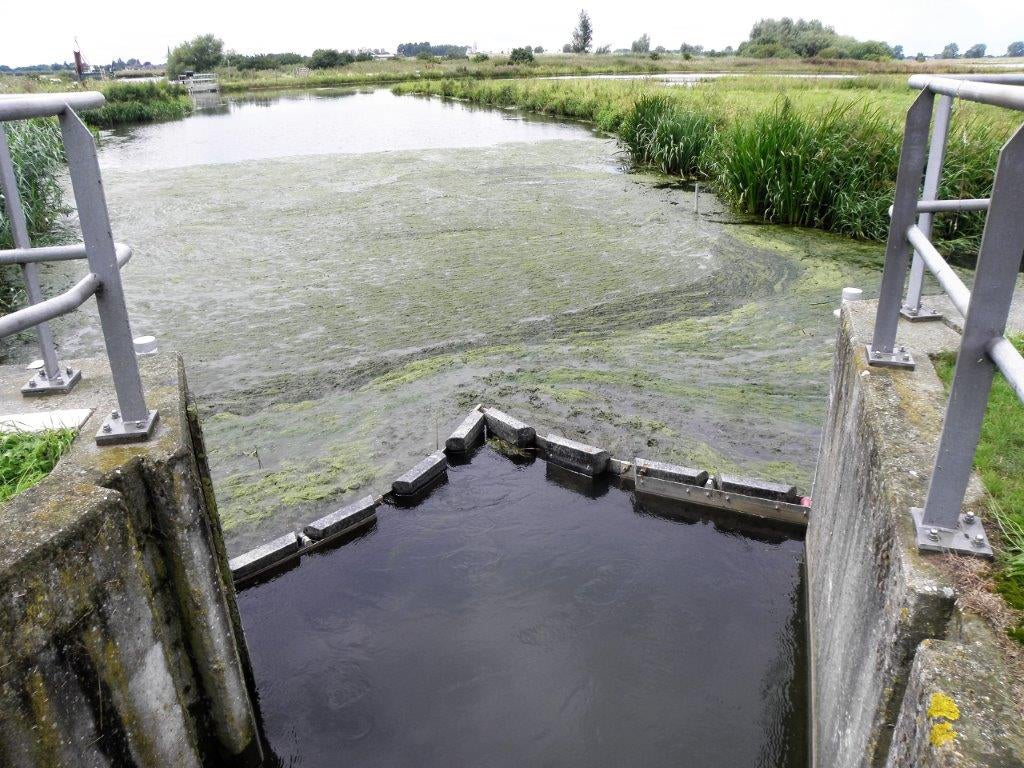
Fish passage presents another application. Debris entering a fish pass can obstruct it. Ecocoast designs these barriers to the individual sites, typically deployed in a V-configuration in front of fish passes, with the aim of preventing debris from entering and obstructing the passage. Geometry, materials and fixings are engineered to the specified flow conditions and structure at each site. For Sims, effective specification depends on setting the design objective before assessing the engineering response.
“Hydropower projects often begin with a broad requirement, such as fish passage or debris control,” he says. “The important step is defining the performance outcome so the solution is proportionate to the site and risk.”
In the case of fish migration, for example, establishing the required outcome is necessary before an appropriate solution can be developed. While systems can be engineered for demanding conditions, Sims says operators ultimately need to balance the engineering response against its cost and the scale of the problem being addressed.
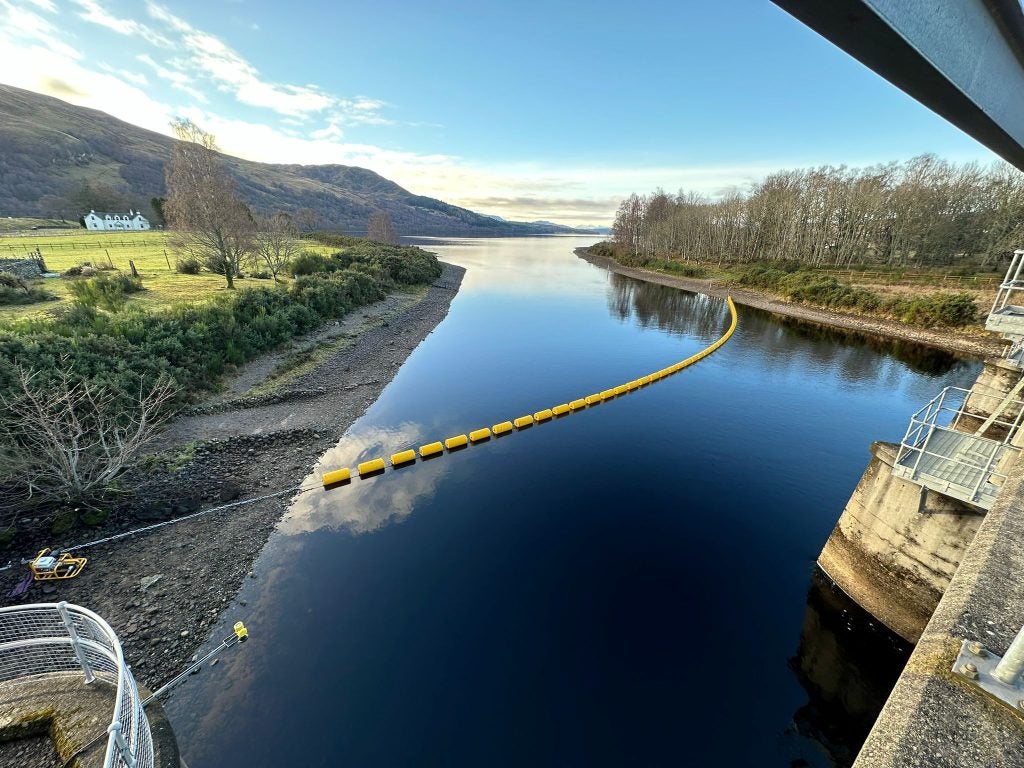
safety boom in Scotland. Image courtesy of Ecocoast
Managing extreme debris
That calculation can change significantly at hydropower plants where debris and sediment are already resulting in frequent operational interventions.
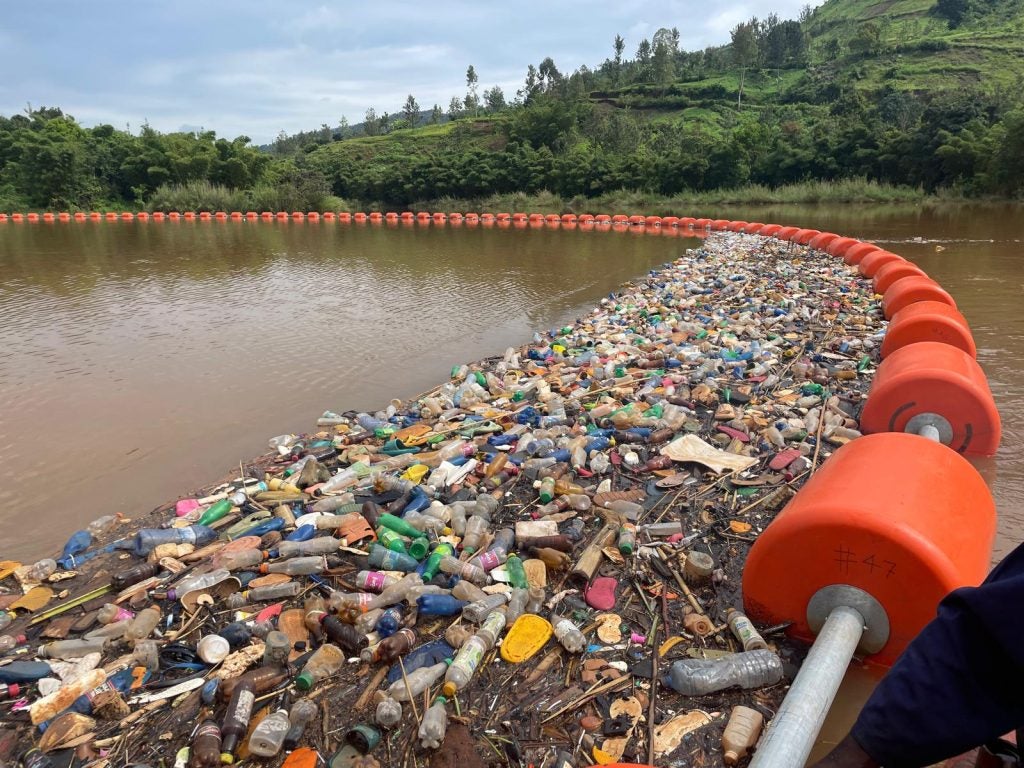
Ecocoast is seeing growing opportunities across Africa and South America, where some sites face combinations of woody debris, sediment and anthropogenic waste. The company has supplied systems at major African hydropower developments.
In Mozambique, Ecocoast supplied a 380m Bolina Log Screen Boom, designed to manage large debris. Rather than retaining the material immediately upstream, the system diverts debris towards the spillway. It then continues downstream to another location where collection is planned.
The project illustrates the importance of considering what happens to material after interception. Retaining large volumes of debris creates its own operational requirements, meaning barrier design needs to be considered alongside the strategy for removal or diversion. South America is presenting similar challenges, and Sims has visited potential hydropower project sites recently.
Mountainous terrain, substantial water-level variation and significant sediment and debris loads combine to create demanding conditions. At some of the sites assessed by the company, Sims says hydropower facilities are being shut down seven to ten times a year to remove debris and sediment. Reducing those interventions provides a clear operational driver for improved debris management. The location of such projects can, however, make installation challenging. Large barrier systems can incorporate maintenance walkways, while individual units can weigh around two tonnes. Installation can consequently require cranes, heavy vehicles and sufficient access for transporting components.
“Access can be challenging, particularly when installing larger barriers, so we often have to adapt our approach to transporting equipment to site and carrying out the installation,” Sims says.
The installation strategy therefore needs to be considered alongside the barrier itself. Sims says Ecocoast has yet to encounter a site it has been unable to access, although equipment and transportation arrangements have sometimes had to be adapted considerably to local conditions.
Pumped storage applications
Pumped storage presents a different set of requirements because operators may need to consider debris and sediment at both sides of the scheme. Ecocoast is currently working on a pumped storage project where barriers are being considered on both sides to reduce the potential for debris to be drawn through the system as water is transferred between reservoirs.
“The downstream section has traditionally received less attention, but operators are increasingly recognising the impact that sediment can have,” Sims says.
Smaller material, including twigs and pieces of woody debris, may have limited immediate impact, but Sims believes its potential effects over longer operating periods should be considered.
Safety can also have greater prominence at pumped storage schemes, particularly where reservoirs are publicly accessible. Sims says operators can require exclusion measures around both upstream and downstream areas, creating opportunities for barriers to perform more than one function. Ecocoast can supply systems that combine debris interception with preventing vessels and people from entering restricted areas.
The consequences of unauthorised access were demonstrated during a recent site visit for Sims. Despite a roughly 6ft perimeter fence, a member of the public climbed into the restricted area and jumped into the water directly in front of the gates while Sims and others were inside the dam structure.
The equipment was not operating at the time, but the incident demonstrated the risks associated with public access around hydraulic structures.
Vessels can create another hazard. During floods or severe weather, unmoored boats can be carried towards hydropower infrastructure. Sims says barriers therefore need to be considered against credible abnormal events as well as normal operating conditions.
“It’s unlikely to happen, but if it does, what’s the cost to you and the implications to you if it does happen?” he says.
Expanding hydropower activity
Ecocoast’s increased involvement in hydropower followed its acquisition of UK company Bolina Ltd in 2020. Bolina had already supplied hydropower installations, but Sims says the company had not actively pursued the international hydropower market.
Since the acquisition of the 1998 founded Bolina Ltd, Ecocoast has increased its focus on the sector, including through participation in hydropower industry events and greater activity in international markets.
Local relationships are an important part of that strategy. Ecocoast has offices in the UK, UAE and Saudi Arabia and, at the time of the interview, was preparing to establish a mainland European office. The company also works with local agents who can maintain in-country relationships with clients, supported by Ecocoast hydro experts travelling to projects and meetings.
Sims says the company has substantially increased its hydropower focus over the last three to four years, with Africa becoming an important market. He travelled to the continent three times during 2025 and had already made several visits during 2026.
Asia also presents opportunities for hydropower protection solutions, with requirements and procurement priorities varying across the region. Ecocoast focuses on demonstrating how systems designed for each site can support operational reliability, environmental protection and long-term value.
For hydropower operators, the engineering requirement ultimately varies considerably between assets. A run-of-river plant exposed to heavy woody debris, a large reservoir development and a pumped storage scheme moving water between two reservoirs will each present different hydraulic, debris and access conditions.
How the system will be operated is equally important. Intercepting debris is of limited benefit unless the operator has considered whether material will be retained or diverted, how accumulated debris will be removed, how the system will be accessed for maintenance and how it will perform during higher-flow or abnormal events.
For existing plants, refurbishment provides an opportunity to reassess these requirements using operational experience accumulated over the life of the asset. For new schemes, particularly pumped storage, they can be considered earlier in the design process.
As Sims’ examples from Africa, South America and Europe demonstrate, there is no single debris-management requirement across hydropower. The challenge is to define the operational problem first and engineer the solution around the conditions and risks of the individual site.