

Multipurpose dam projects enable equitable sharing of water resources for diverse needs by generating transformative impacts on a large scale, says Mtchera Johannes Chirwa, Director of the African Development Bank (AFDB) Group’s Water Development and Sanitation Department. What’s more, he adds, they integrate the water-food-energy-ecosystem nexus and create resilient systems where joint public and private sector participation can drive sustainable growth, innovation, and shared prosperity while fostering cross-sector collaboration,”
To encourage bold leadership in an effort to unlock economic opportunity and fortify Africa’s future, the bank is positioning multipurpose dam projects as essential to addressing the continent’s water crisis. It is framing them as strategic infrastructure investments that can power industry, secure food supplies, and protect public health.
Multipurpose dams enable large efficiency gains by pooling use of infrastructure. A single installation generates multiple impacts across several sectors, including water supply, irrigation and energy production. Water used for electricity generation can be reused downstream for other economic activities such as irrigation and the maintenance of ecological flow.
Such an approach secures water supplies for local communities while supporting irrigation and electricity generation at regional and national levels. A cost-sharing model strengthens the financial viability of multipurpose dam projects, with revenues from electricity generation and irrigation helping to fund dam maintenance. These revenues supplement income from domestic water charges, which is often insufficient to cover operating and maintenance costs.
Kenyan projects
A multipurpose approach has been taken at the ongoing Thwake Dam project in Kenya, which is set to sustainably transform a semi-arid region affected by drought, ensuring food security and creating local jobs.
Located at the confluence of the Athi and Thwake rivers, the 80.5m high dam with a capacity of 688Mm3, is being co-financed by the Kenyan government and the African Development Bank Group at a cost of around US$635m. Described as being a flagship project, it is scheduled for completion in July 2027 and expected to benefit 1.3 million people by providing drinking water, 20MW of hydroelectric power, and irrigation for 40,000 hectares of agricultural land.
Other bank-supported schemes include the Muvumba Multipurpose Water Resources Development Programme in Rwanda. Comprising construction of a 39m high dam on the Muvumba River that will impound 55Mm3 of water, it is due for completion later in 2026. It will ultimately deliver 50,000m3 of drinking water daily, irrigate 10,000ha of farmland and generate hydropower. AFDB says this programme will also strengthen climate resilience through catchment protection, forest management and local capacity building. It is expected to benefit about 800,000 people and also support fisheries and livestock. Revenue from hydropower will help cover operation and maintenance costs.
Regional studies
Across Africa, leaders are redefining the importance of water as not just being a necessity, but more of a strategic pillar for economic prosperity, a cornerstone of public health, and a shield for resilience.
Earlier this year the Economic Community of West African States (ECOWAS) kickstarted a strategic regional initiative. Funded by the Spanish Agency for International Development Cooperation it is focusing on a feasibility study looking at new multipurpose dams.
During a two-day event held in Senegal, the study’s objectives, methodology, and the planned coordination and information exchange framework were presented to representatives from ECOWAS member states, transboundary basin organisations, regional institutions, and development partners. This enabled stakeholders to align their efforts from the project’s earliest stages and establish an understanding of its scope and ambition.
Burkina Faso
Africa is the most vulnerable continent to the impacts of global warming and Burkina Faso is already being affected by climate change. The country is experiencing a general increase in temperatures, with projections indicating an average rise of up to 4°C. Rainfall patterns are also becoming more variable, with increases of at least 5% in some regions and decreases of about 0.2% in others. Such contrasted trends highlight the need for localised studies capable of capturing site-specific hydrological responses.
The Bagré Dam is a multipurpose structure which was commissioned in 1993, with a total storage capacity of 1.7 billion cubic meters at its maximum water level of 235.5m. A recent study has assessed the potential effects of climate change on water inflows, storage, and withdrawals, particularly for agricultural and hydropower production. Given the strategic importance of the dam for these functions, greater understanding of the impact of climate change will help with the implementation of mitigating measures. In this study, rainfall and temperature data were used to model variations on dam inflows. The results show a temperature rise of 1°C to 5°C and a general increase in rainfall of up to 50% by 2100, compared with the reference period 1995–2014. These changes in climate variables lead to an increase in dam inflows of up to 200% in some months, an increase in water storage of up to 60%, and a rise in water withdrawals for agriculture and hydropower of up to 50% and 100% respectively.
As Yasmina Ouedraogo et al conclude in their research published in Environmental Research Communications, climate change is undeniable, and its future effects in developing countries could be devastating. Such changes will inevitably impact the water availability of the Bagré Dam and its related activities, which is why it is crucial to identify effective strategies for the sustainable and efficient management of water resources at the dam. The authors recommend exploring integrated water managements strategies and investing in resilient infrastructure to optimise the use of available resources. Additionally, efforts could be directed towards developing sustainable agricultural practices and adopting efficient water technologies to maintain agricultural productivity while preserving the hydroelectric production capacity of the Bagré Dam.
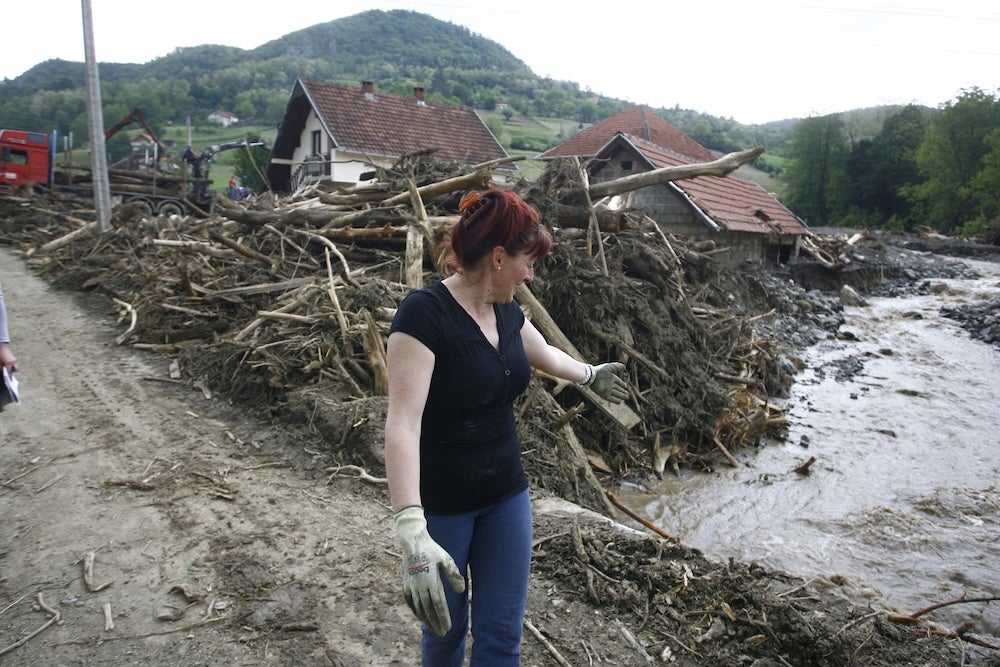
Image: Nebojsa Markovic/Shutterstock.com
Serbian plans
The European Bank for Reconstruction and Development (EBRD) is supporting Serbia’s efforts to strengthen climate resilience, protect communities from flooding and improve long term water security through the multipurpose Pambukovica dam project. The project is being supported by an EBRD sovereign loan of up to €66m and will involve the construction and operation of a multipurpose dam and reservoir near the village of Pambukovica in the flood prone Kolubara River basin. This is one of Serbia’s most vulnerable regions which has repeatedly been affected by extreme weather, including the devastating floods of 2014. Designed as a modern, climate resilient multipurpose dam, the project will initially focus on flood retention and flow regulation, designed to impound 8.15Mm3 of water while being pre designed to support future irrigation. The project will also ensure ecological flow management, sediment control and improved water quality, contributing to healthier river ecosystems and more sustainable land use across the catchment area.
Once the reservoir has been fully established, the project is expected to enable the development of irrigation systems serving more than 2200 hectares of agricultural land, thereby strengthening local farmers’ resilience to droughts and increasingly unpredictable rainfall, helping to safeguard agricultural productivity in the region. EBRD’s Deputy Director for Serbia, Jelena Čeperković, said: “The Pambukovica dam project is a strategic investment for Serbia, strengthening protection against floods while laying the foundations for more resilient agriculture and sustainable water management. Through this project, the EBRD is helping communities to better adapt to climate change and secure long term economic and environmental benefits.”
Working with Srbijavode Limited Liability Company, Arup was appointed to establish the environmental, technical, operational and governance foundations needed to consider the dam suitable for investment.
By addressing climate risk before construction, the project strengthens flood resilience and long term water security in the Kolubara Basin. Testing the dam under future hydrological conditions improves protection for downstream communities and ecosystems, while establishing an approach that can be replicated for climate resilient dam planning across the region.
Integrated hydrological, hydraulic and geotechnical analysis, combined with dam safety and emergency planning, identified the measures required to manage flood risk safely as conditions change. A targeted design review then challenged key assumptions in the proposed solution, improving reliability and long term operability.
Using a new Digital Terrain Model and updated hydrological analysis, Arup examined flood behaviour across a wide range of scenarios, informing critical decisions on flood routing and spillway capacity, and improving understanding of downstream safety and emergency preparedness needs.
Overall, Arup says its work helped secure EBRD financing for the Pambukovica Dam, creating a clear pathway for delivery of climate resilient flood infrastructure in the Kolubara Basin.
References
Assessing the Impact of Hydropower to Multipurpose Dam Reoperation on Downstream Hydrology and Water Quality by Jeongin Yoon, Sooyeon Yi, Eunkyung Lee, Jungwon Ji, Seonmi Lee and Jaeeung Yi. Water 2025, 17, 3191
Modelling Climate Change Impacts on Water Availability and Sectoral Water Demands in a Multipurpose Reservoir Using Machine Learning: A Case Study of the Bagré Dam (West Africa). Yasmina Ouedraogo, Daniel Yamegueu, Fowe Tazen, Babacar Leye and Maïmouna Bologo Traore. Environ. Res. Commun. 8 (2026) 065027


