

An inspection of the waterway at Norway’s Vangen hydropower plant found 80 fish in the intake tunnel, prompting operator Hafslund to develop a screen for the two intake openings at Vassbygdvatnet. The lake is part of the Aurland watershed, which supports a vulnerable sea trout population and a small salmon population. Since the screens were installed in early 2021, Hafslund says no fish have been found in the tunnel and the plant has continued to generate as before.
The retrofit had to meet three operating requirements. The screen needed to exclude fish, pass the plant’s maximum operating flow and stay clear of debris. Moss, twigs and leaves can quickly block a fine-mesh screen, so the position of the panels was an important part of the design.
Screening both intake openings
Work began in 2019 with a trial screen. Hafslund personnel developed the design for Vangen’s intake and tested several steel types before selecting the final configuration. A workshop in Sogndal fabricated the panels.
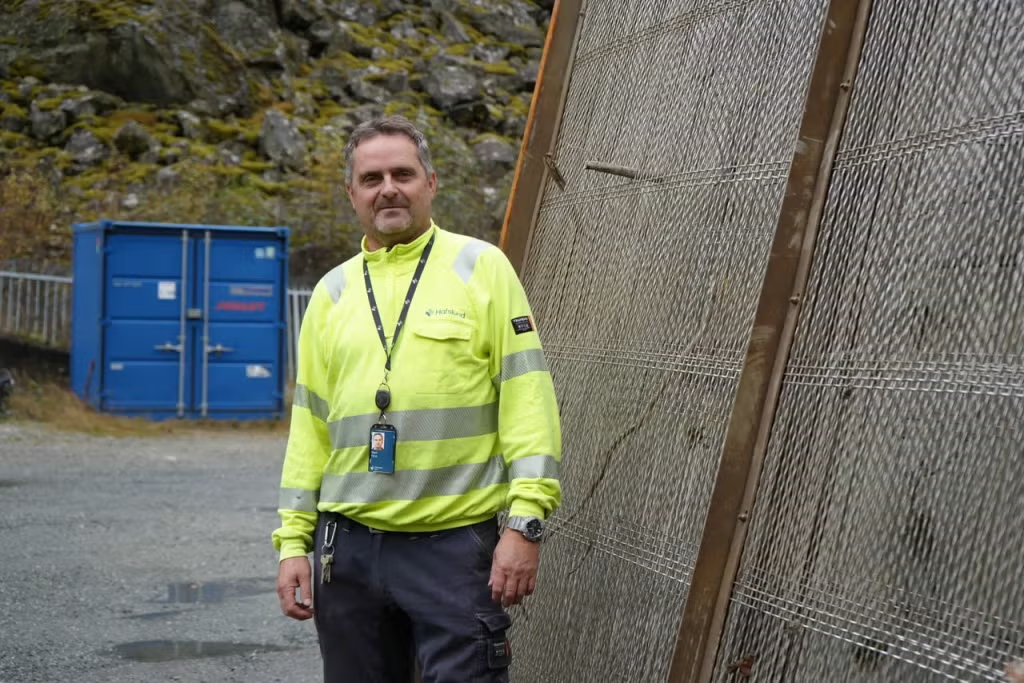
Each intake opening is fitted with four panels measuring 5m by 2.6m. The eight panels weigh 400kg each and provide a combined screen area of 104m². The installation is designed to pass up to 90m³/s across the two openings. Placing the panels 10m below the surface limits their exposure to floating debris. Hafslund reports that the screens have operated without clogging since installation.
Bjørn Ebne proposed the screen and worked with Bjørn Otto Dønnum, Ådne Einemo and Rune Bekkedal to develop it. The operator’s own staff maintain the installation, with Ebne continuing to oversee maintenance in consultation with Hafslund’s watercourse and environmental manager. The panels have undergone several refinements since the original trial.
“It is a solution that is only found here and nowhere else, and is specially designed for the intake at Vangen power plant,” said Ragnhild Stokker, senior environmental advisor at Hafslund.
Monitoring fish at the intake
Hafslund used underwater cameras to observe how fish responded as they approached the panels. The footage showed fish turning in front of the screens, with no cases of fish becoming trapped against them recorded by the cameras. A tagging trial also documented fish returning to Vassbygdvatnet.
The observations at the intake complement the tunnel inspection findings. The tunnel checks track whether fish are getting past the panels, while the camera footage shows what happens when they encounter the screens. The post-installation tunnel count reported by Hafslund is zero, compared with 80 fish found during the pre-installation inspection.
Hafslund plans to draw on its experience at Vangen in fish protection work at other hydropower plants. At Vassbygdvatnet, the depth of the two intake openings allowed the operator to install a fine screen below floating debris while providing enough screen area for the plant’s full operating flow.
Source: Hafslund


