
Like many countries, the UK is entering a critical period of change in its power system. Electricity demand is expected to rise sharply as transport becomes increasingly electrified and AI expands, adding to the challenge of meeting ambitious government targets while managing persistent global energy risks.
New research by CBI Economics identifies floating solar (FPV) as a credible option for strengthening the UK’s energy security. Its report, Floating Solar: The Missing Piece in the UK’s Energy Security Strategy, highlights a substantial resource base: around 65,000 hectares of water industry and man-made water bodies, alongside more than 47,500 hectares of freshwater assets within 5km of urban areas.
With appropriate government support, the report estimates that FPV capacity could reach 58.6GW by 2050. This scenario assumes coverage of 30% of the surface area of water industry and man-made water bodies, and 2.5% of natural water bodies.
The potential benefits extend beyond electricity generation. When designed and built to robust technical and environmental standards, floating solar arrays can also reduce reservoir evaporation. This could be particularly valuable in England, where the Environment Agency has warned that rising temperatures will increase evaporation and contribute to growing pressure on public water supplies.
As James Armstrong, Founder and Managing Partner of Bluefield Partners, says: “Floating solar is one such opportunity that speaks directly to the challenges facing the UK today.”
Armstrong draws on Bluefield’s experience owning and operating the UK’s largest floating solar project at the Queen Elizabeth II Reservoir in Surrey. Operational since 2016, the 6.3MW installation connects directly to Thames Water’s private network, supplying around 20% of the site’s energy needs.
Water sector reform further strengthens the case for floating solar, Armstrong adds. As the UK reassesses how water companies operate, invest and deliver value for customers, leasing reservoir surface area for FPV could provide a relatively low-risk revenue stream. That income could help offset operating costs, support reinvestment and ease upward pressure on customer bills.
Mining solutions
One of the UK’s newest floating solar farms has begun generating electricity at a quarry in Cheshire. Developed by Nova Innovation, the 400kW installation comprises 650 panels on North Arclid Lake and supplies power to Bathgate Silica Sand. It will help the company decarbonise its century-old quarry operations, reduce energy costs and strengthen its energy security..
“This is a significant moment for our business and shows that quarries are playing a key role in creating a more sustainable future,” said David Robinson, Managing Director at Bathgate Silica Sand.
Nova developed the project in partnership with RSK, completing it in just six months.
Commenting on the project, Nova Innovation’s Chief Executive Officer, Simon Forrest, said: “It clearly demonstrates what floating solar can offer to businesses with access to water bodies. We are excited about what this project signals, both for our pipeline and for the role floating solar will play in the UK reaching its 2035 target.”
The UK government’s Solar Roadmap sets out a commitment to increasing national solar capacity to 70GW by 2035, identifying floating solar as a technology capable of contributing at pace and scale across lakes, reservoirs, ports and harbours. According to Nova Innovation, the North Arclid installation demonstrates how industrial businesses can use existing water assets to lower electricity bills and support their transition to low-carbon energy while preserving valuable operational land..
Indonesian situation
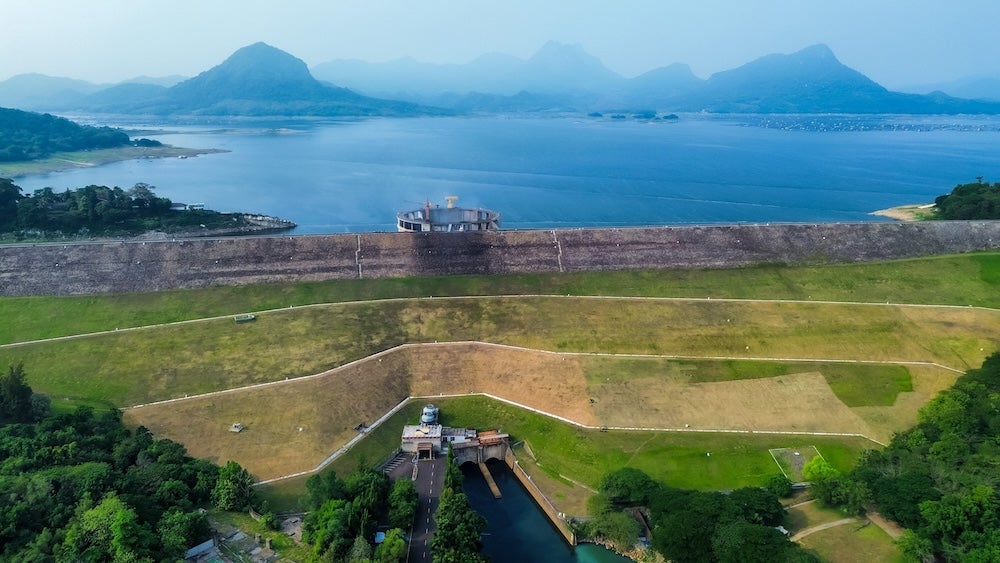
Indonesia faces the challenge of reducing greenhouse gas emissions while meeting growing electricity demand. A recent study has assessed the potential for floating solar across 92 of the country’s water bodies, using a multi-criteria decision analysis framework to identify and rank suitable sites.
Jatiluhur, Jatigede and Setupatok dams consistently emerged as the three strongest candidates. All are in West Java, close to major electricity demand centres and existing transmission infrastructure. These locations could help reduce balance-of-system costs and facilitate integration into the electricity network.
Iranian reservoirs
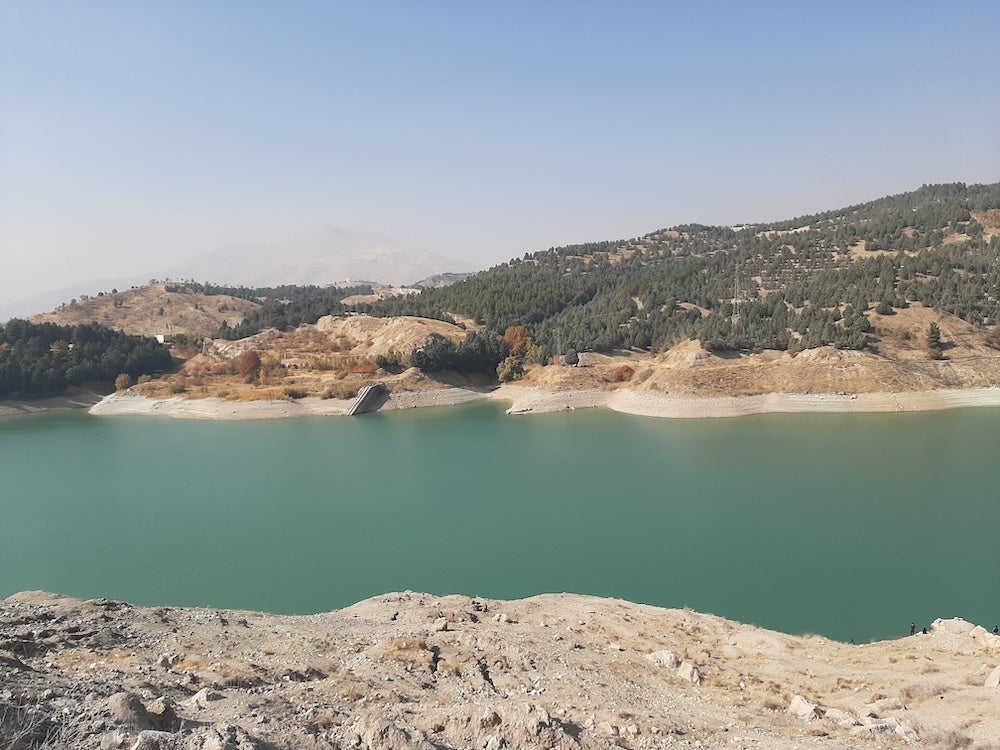
In Iran, another study has examined the technical, environmental and economic feasibility of floating solar across 117 major reservoirs. Evaporation presents a significant challenge to water storage in the country’s hot, dry climate, strengthening the case for technologies that can conserve water while generating electricity.
Using ArcGIS-based spatial analysis, high-resolution Solargis solar data and evaporation modelling, the researchers estimate that covering just 0.5% of reservoir surfaces could prevent the loss of 4.2 million cubic metres of water each year. The study also identifies substantial potential for electricity generation.
Ghiasi and colleagues describe their work as the first systematic nationwide assessment to combine technical, environmental and spatial analyses to guide large-scale floating solar deployment. Their findings suggest that the technology could make an important contribution to Iran’s energy and water security.
The researchers recommend further work on pilot-scale validation of technical and environmental performance, optimisation of reservoir coverage and integration with hydropower. These steps would help policymakers and engineers refine design standards, minimise ecological risks and guide future deployment.