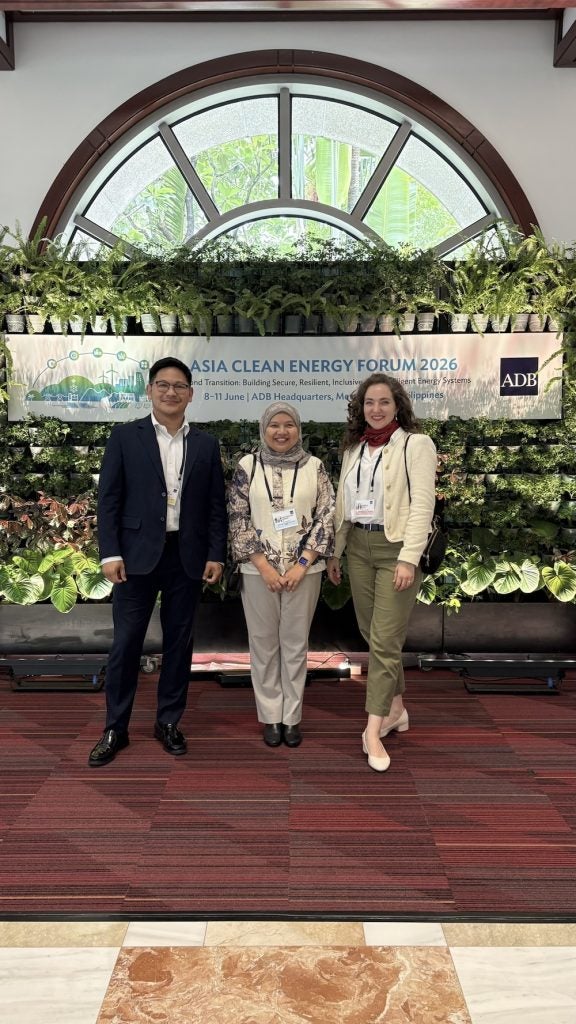

As Southeast Asia Regional Lead for the International Hydropower Association (IHA), I work with governments, utilities, developers and financial institutions across one of the world’s most dynamic energy regions. My role focuses on advancing sustainable hydropower and pumped storage development, facilitating policy dialogue, sharing international best practice and promoting the Hydropower Sustainability Standard (HSS) to help ensure projects deliver lasting environmental, social and economic benefits. Southeast Asia is at the heart of a remarkable energy transition. Rapid economic growth, electrification and expanding digital infrastructure are driving demand for reliable, affordable and clean electricity. At the same time, countries are accelerating the deployment of solar and wind power to meet climate and energy security objectives. In my view, this has led to a renewed appreciation of hydro’s value not only as a source of renewable energy, but also as an enabler of increasingly complex power systems.
Regional asset
The 2026 World Hydropower Outlook highlights this trend clearly. East Asia and the Pacific remain the global leader in hydropower development, with 590GW of installed hydropower capacity, including 106GW of pumped storage. The region added approximately 14GW of hydropower capacity in 2025, with China accounting for more than 40% of global capacity additions.
Equally significant is the momentum emerging across South and Central Asia. The region added 5.8GW of hydropower capacity in 2025, including more than 3GW of pumped storage, and now has a development pipeline exceeding 300GW. Looking across Asia, one message from the Outlook is clear: hydropower is no longer viewed simply as a mature renewable technology, but also a strategic asset for energy security, system flexibility and climate resilience.
Against this broader backdrop, what I find particularly encouraging in Southeast Asia is the growing recognition of hydropower as a regional asset. The vision of an interconnected ASEAN Power Grid is creating new opportunities for cross-border renewable energy trade, with hydropower-rich jurisdictions such as Lao PDR and Sarawak (Malaysia) increasingly supplying clean electricity to neighbouring markets. At the same time, Indonesia, the Philippines, Thailand and Viet Nam continue to explore opportunities for both conventional hydropower and pumped storage development.
A different industry
The industry today is very different from when I first entered the sector. Ten years ago, discussions were often centred on installed capacity and generation. Today, conversations are increasingly focused on system value, sustainability and flexibility. Expectations around stakeholder engagement, biodiversity, climate resilience and benefit-sharing have grown significantly. Encouragingly, this shift is also being reflected in project development practices. The HSS certification of projects such as Bakun in Malaysia, Asahan 3 in Indonesia and San Roque in the Philippines demonstrates the region’s growing commitment to sustainable hydropower.
At the same time, the rapid growth of wind and solar is increasing demand for long duration energy storage and balancing services. This has transformed pumped storage from a niche technology into a strategic component of energy security planning. The 2026 Outlook notes that global pumped storage capacity has now surpassed 200 GW for the first time, underlining its growing importance in modern power systems.
Building momentum
Looking ahead, I am optimistic about the future of hydropower in Southeast Asia. The region still possesses substantial untapped hydropower and pumped storage potential, while growing electricity demand will continue to create opportunities for investment. Realising that potential, however, will require enabling policy frameworks, effective planning, strong ESG performance, regional cooperation and access to finance.
At IHA, we remain committed to bringing stakeholders together and supporting the sustainable development of hydropower worldwide. As momentum builds towards the 2027 World Hydropower Congress, I believe the sector has a valuable opportunity to share lessons, strengthen partnerships and accelerate progress.
Hydropower has long been the backbone of renewable electricity. In the decade ahead, I believe it will become even more important, not only as a source of clean power, but as the foundation of reliable, resilient and interconnected renewable systems across Asia.