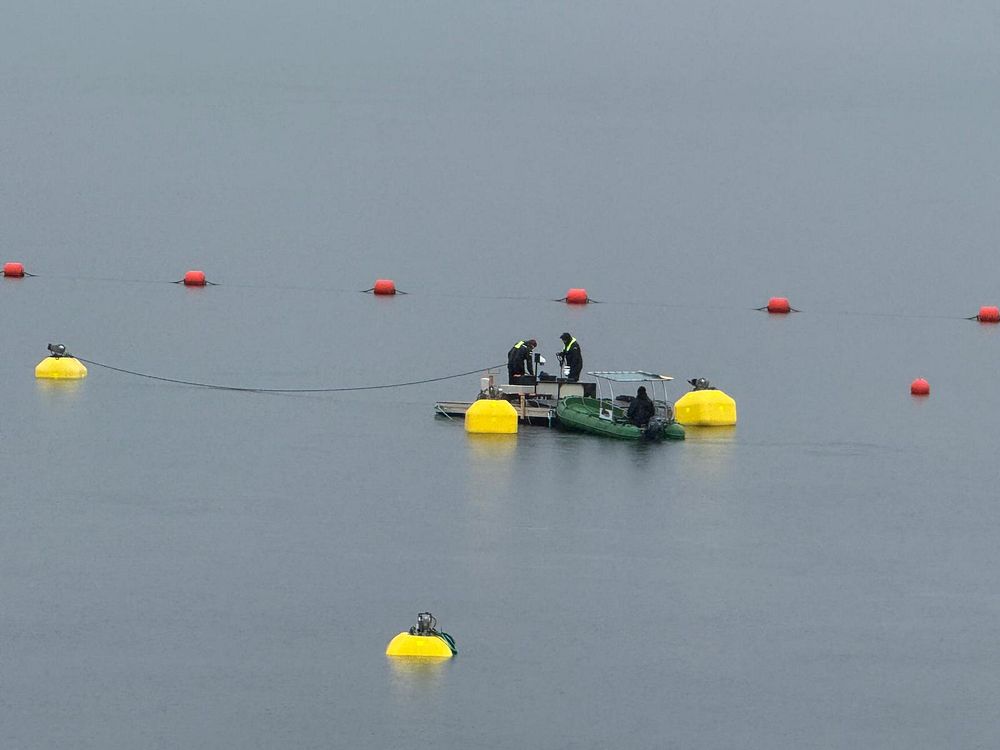

Fred. Olsen 1848 has completed a pilot installation of four automatic Tension Buoy units at the EDP Floating PV Lab in Portugal, an open-access facility for testing floating and hydro solar technologies.
The site, located on a dam reservoir where water levels can fluctuate by up to 50m, is being used to evaluate the company’s adaptive mooring system under variable conditions.
The Tension Buoy system is designed to maintain stability in floating photovoltaic (FPV) installations despite large changes in water level. According to the company, the self-adjusting tensioning system can be configured for different sites, including reservoirs with complex bathymetry.
“By validating our technology in a dam lake with such large water level and bathymetry variations, we are uncovering the potential for floating solar and hydro power hybridisation. It’s a key step toward making hybrid renewable systems more adaptable and resilient,” said Even Hjetland, Principal Development Engineer at Fred. Olsen 1848 and a member of the installation team.
The installation was completed in five days. The project involved collaboration with EDP, Sperra and local partners. As part of the trial, Sperra’s 3D-printed gravity anchor was deployed alongside the Tension Buoy system to test anchoring performance under site conditions.
The pilot will operate for one year as a live demonstration, with data collected on system performance, reliability and maintenance.
“Through the Floating PV Lab, EDP strengthens its focus on innovation and positions this initiative as a strategic, collaborative platform. By closely monitoring technological evolution and performance, EDP secures a solid competitive edge in the development of next-generation renewable energy solutions,” said Pedro Miguel Oliveira, Head of New Technologies and Special Projects at EDP.
Fred. Olsen 1848 said the technology is intended to support the development of hybrid renewable energy systems by enabling floating solar deployment in reservoirs used for hydropower. The company added that combining solar with existing hydro infrastructure could improve system flexibility and output.