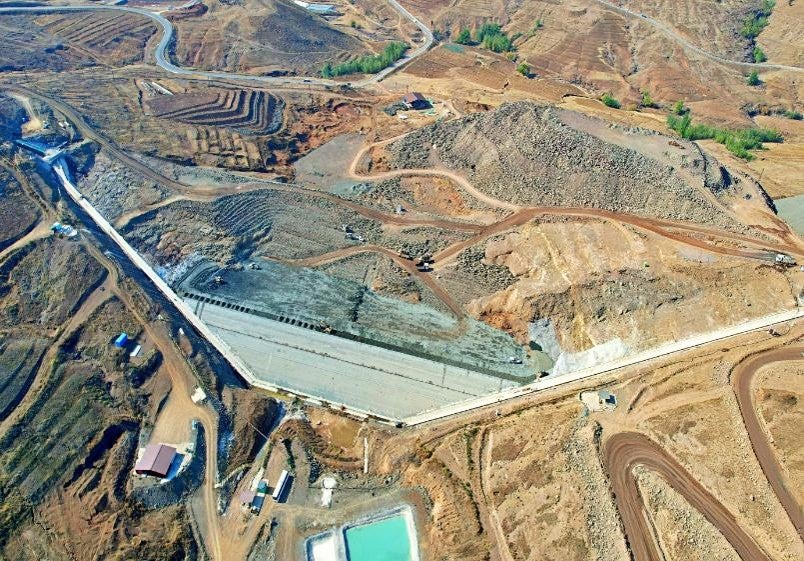

Construction of the Polihali Dam under Phase II of the Lesotho Highlands Water Project (LHWP) has reached 50% completion, with the project remaining on schedule for the start of reservoir impoundment during the 2027/2028 rainy season.
The 166m-high concrete-faced rockfill dam (CFRD), located in Lesotho’s eastern highlands, is being built alongside several associated structures, with work progressing simultaneously across the site.
A key construction milestone was achieved in mid-May when the upstream rockfill and concrete curb reached elevation 2020m, slightly ahead of schedule. By the end of June, construction had advanced to elevation 2024m.
To date, 9.6 million cubic metres of rock have been placed at an average rate of 26,000 cubic metres per working day, bringing the dam’s rockfill to 67% completion. The next stage involves raising the downstream rockfill to match the upstream side and concrete curb, marking the project’s third major construction milestone.
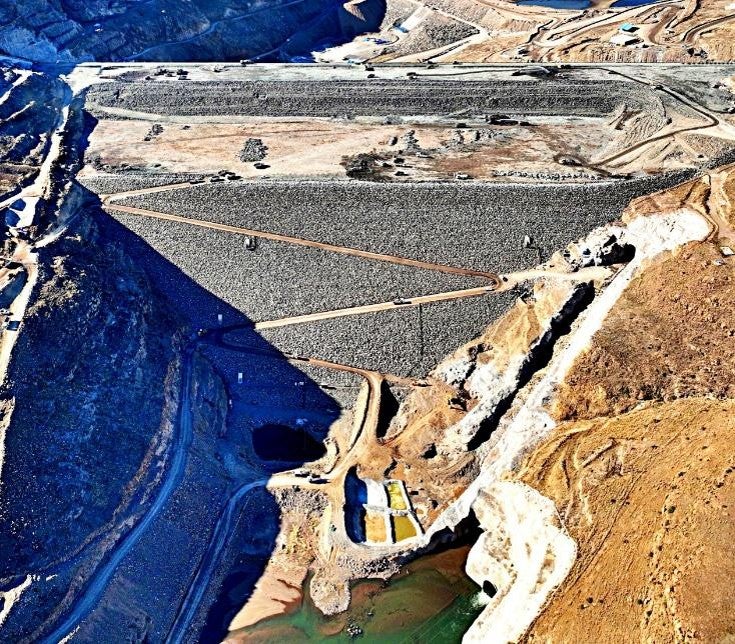
Construction of the upstream concrete face has also progressed. The concrete curb, which provides the foundation for the face slabs, is complete to the current elevation, while casting of the starter slabs has begun. These reinforced concrete panels form the starting point for construction of the dam’s main concrete face. Concrete works on both the internal and external plinths have been completed.
Work is also advancing on the 43m-high saddle dam, where 375,627 m3 of rock had been placed by the end of June. Concrete works on the internal and external plinths are complete, while the upstream concrete curb has reached elevation 2,047m.
Construction continues on the 100m-high intake tower, which will regulate water flow into the transfer system. The bottom outlet tunnel, incorporating a 2.2m-diameter compensation pipe for downstream environmental releases, is also progressing. The tunnel will supply a 4.4MW hydropower station.
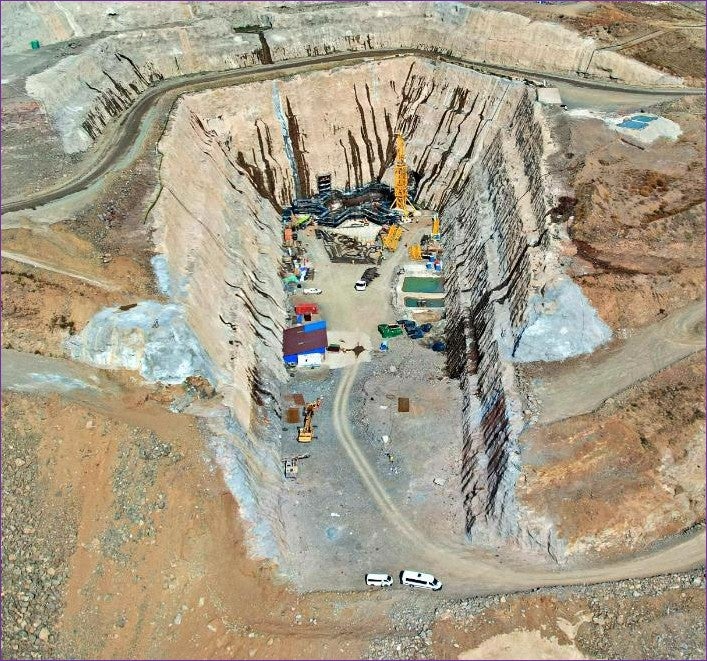
Work on the spillway is continuing, including final excavation and concrete construction, while excavation of the plunge pool is underway.
Beyond construction progress, the project has recorded zero fatalities and high lost-time injury-free performance. By the end of April, the project employed 2,709 people, including 2,062 semi-skilled workers. According to the Lesotho Highlands Development Authority (LHDA), 99% of the semi-skilled workforce comprises Basotho nationals.
Located about 1km downstream of the confluence of the Khubelu and Senqu (Orange) rivers, the Polihali Dam will create a reservoir with a storage capacity of 2.325 billion cubic metres. Once operational, it will increase water transfers to South Africa from the current 780 million cubic metres a year to 1.27 billion cubic metres annually.
Construction of the Polihali Dam is expected to be completed in 2029.
The project forms part of Phase II of the Lesotho Highlands Water Project. This year also marks the 40th anniversary of the signing of the LHWP Treaty, under which the bi-national water transfer and hydropower scheme was established.