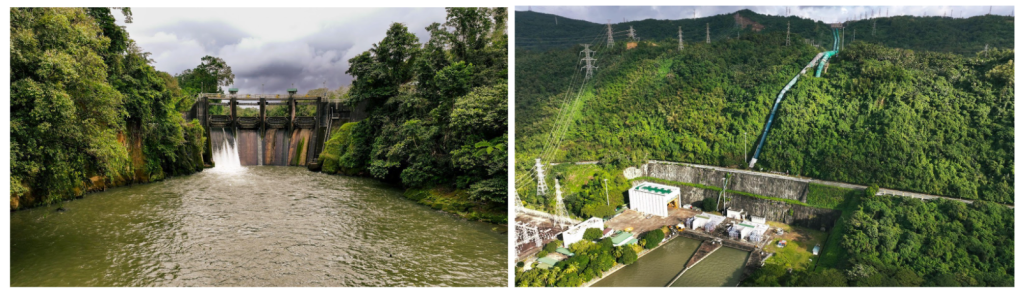

The 797MW Caliraya-Botocan-Kalayaan hydroelectric power plant (CBK HEPP) complex in Laguna, Luzon, has been officially turned over by the Philippine government to the Thunder Consortium, led by Aboitiz Renewables, Inc., the renewable energy arm of Aboitiz Power Corporation (AboitizPower).
The consortium comprises Aboitiz Renewables and Japanese firms Sumitomo Corporation and Electric Power Development Co., Ltd. (J-POWER). It won the bidding process conducted by the Power Sector Assets and Liabilities Management Corporation (PSALM) in July 2025 as part of the privatisation of CBK HEPP. The Philippine Competition Commission approved the acquisition of the hydroelectric and pumped storage assets in November 2025.
The ceremonial turnover was led by President Ferdinand R. Marcos Jr., together with PSALM, and witnessed by Japanese Ambassador to the Philippines Endo Kazuya, senior Philippine government officials, and representatives of the consortium.
The CBK complex, including its Kalayaan pumped-storage units, plays a key role in the Luzon grid. The facility provides energy storage and rapid dispatch capability, contributing to system stability, ancillary services, and renewable energy integration. As the Philippines expands its renewable energy capacity, CBK is expected to support grid reliability and reduce the risk of supply disruptions.
President Marcos said the turnover supports the country’s energy objectives. “Today’s turnover of the Caliraya-Botocan-Kalayaan Hydroelectric Power Plant marks a deliberate step toward an energy system that is steadier in operations, smarter in design, and ready for the future that we are building. A future where Filipinos can count on electricity that keeps pace with their needs and works without disruption.
“We thank the Thunder Consortium for taking on this responsibility with a clear commitment to long-term stewardship,” he added.
Ambassador Endo described the transition as a milestone in Philippine-Japanese cooperation in renewable energy. “It is clear that this power plant is not merely an energy provider but a pillar supporting the country’s development. I would like to express my deepest respect to all those involved for their dedication, as well as my sincere gratitude to the Philippine government for its long-standing support.”
Sabin Aboitiz, President and CEO of Aboitiz Equity Ventures and Chairman of AboitizPower, said the consortium is prepared to operate the facility and contribute to national energy requirements. “It provides flexibility, stability, and resilience in a rapidly changing energy system. It allows us to manage peaks in demand, support reserves, and integrate more renewable energy into the grid without compromising reliability. And as we add more solar and wind into the system, facilities like CBK become even more critical.”
The turnover marks a milestone in the Philippine government’s power sector privatization program and is expected to generate additional fiscal resources.
For Aboitiz Renewables, the acquisition expands its hydropower portfolio and adds a large-scale pumped-storage asset to its renewable energy portfolio. The transaction is among the largest hydropower acquisitions in the Philippines and aligns with AboitizPower’s strategy to expand renewable energy capacity and strengthen its long-term generation portfolio.