

How does hydrodemolition differ from traditional mechanical demolition methods when used in hydropower infrastructure repair?
It starts with accessibility. That’s a big question around repairing hydropower infrastructure, such as a dam, that has hard-to-reach areas – “how can I get to this surface?” Hydrodemolition can help reach those spots that seem inaccessible using traditional tools. There is an expansive list of accessories on the market to enhance hydrodemolition machines’ versatility. This makes it possible to complete concrete removal on virtually any surface – vertical, overhead, inclined, underwater and confined areas with limited access. Since hydrodemolition robots are operated through remote controls, workers don’t have to be put in potentially hazardous conditions. Traditional methods often require extensive scaffolding, which can be challenging and time-consuming to set up. Controlling a hydrodemolition robot remotely from a safe area is much safer than removing concrete mechanically while standing on a ledge or suspended scaffolding.
Hydrodemolition uses a high-pressure water jet to remove concrete. The method is impact-free, meaning it won’t cause microfractures, helping ensure stability of the overall structure. The hydrodemolition will leave behind a rough but even surface that is ideal for bonding new material.
What specific advantages does hydrodemolition offer in terms of precision and selectivity when working around critical structures and embedded reinforcement?
Hydrodemolition provides a range of structural benefits that make it effective for concrete repair and restoration. By creating a rough surface profile, it offers a great mechanical bond for new concrete without creating microfractures or “bruising” commonly seen with mechanical removal methods. Hydrodemolition selectively removes deteriorated, lower-strength concrete without fracturing exposed aggregates. Because of its vibration-free nature, the surrounding structure remains largely unaffected. Additionally, Hydrodemolition naturally cleans and protects reinforcing steel and other embedded metal elements during removal which often eliminates the need for secondary surface reinforcement.
Bonding performance is critical for long-term repairs. How does hydrodemolition contribute to improved bonding surfaces for new concrete compared to conventional methods?
One of the most critical factors for improving the bonding surface is hydrodemolition eliminating microfractures. That’s what makes the bonding more durable and what sets it apart from more conventional forms of concrete removal and repair. With alternative techniques, say a handheld breaker, there tend to be layers of dust and damaged concrete with small cracks in the residual concrete. That profile can potentially compromise the bonding for new material.
In lifecycle terms, how can hydrodemolition-based repairs extend the service life of hydropower assets?
It comes back to hydrodemolition’s impact-free nature and ability to eliminate microfractures. They can have a significant, negative effect on a dam’s structural integrity. There’s been extensive research on this, including a Life Cycle Cost analysis by the Swedish Cement and Concrete Research Institute. Their studies found that using hydrodemolition for concrete repair leads to a significantly extended life expectancy of 21 to 35 years, compared to 7 to 12 years with mechanical chiselling.
Many hydropower facilities operate under strict outage windows. How does hydrodemolition help reduce downtime and improve project efficiency during maintenance works?
Like any project, proper planning is essential to fully experience hydrodemolition’s benefits. The method is much faster than using any handheld tool and can be utilised on any surface, even those in hard-to-reach areas, which are critical benefits when a crew is working under the high-pressure deadlines of hydropower facility maintenance. Since hydrodemolition can reach virtually anywhere on a dam, for example, crews sometimes find it’s an all-encompassing solution that answers a lot of their questions. Another key perk is the robotic action that repeats the same sequence time after time that other methods can’t replicate. That ensures that every second it’s operating is maximised for consistent concrete removal.
From a sustainability standpoint, how does hydrodemolition compare to traditional repair methods in terms of material removal, waste reduction, and resource efficiency?
Helping operations achieve sustainability goals is certainly a point of emphasis for hydrodemolition. Of course, using water is necessary to perform hydrodemolition, but the industry has made great strides to minimise the amount. Further, using a water treatment system simplifies water management and creates a more environmentally sound operation. The system removes suspended solids and treats the water to the proper pH. Treated water then can be safely released back to the environment or recirculated through the hydrodemolition equipment.
From a resource perspective, hydrodemolition preserves and cleans rebar, so the existing rebar can be reused. And because microcracks are eliminated, the repair is expected to last longer. Additionally, the debris from hydrodemolition is easier to clean up because it’s gravel-like. It can simply be collected with a vacuum truck and hauled away for recycling, opposed to needing extra equipment and labor to clean up concrete debris of all sizes.
Finally, hydrodemolition offers a dust-free work environment. Silica exposure is a significant health risk when workers use methods that create clouds of dust. Because water is used for the removal, there is no dust.
Environmental protection is a key concern in hydropower projects. What environmental benefits does hydrodemolition offer, particularly in sensitive aquatic or protected areas?
Water treatment systems are a considerable innovation in maintaining a sustainable, environmentally compliant hydrodemolition project at a hydropower facility. The process uses water and that water will have a higher pH along with concrete particles after it’s done its job. That can cause concern that the wastewater will contaminate a sensitive area, which is a nonissue with proper water management and a water treatment system designed for hydrodemolition. The system also provides proper documentation to help users adhere to even the strictest regulations. Contractors have successfully completed jobs in heavily protected areas that were made possible thanks to these water treatment systems.
There have also been projects at hydroelectric power plants where rather than safely releasing the wastewater from hydrodemolition after treatment, the contractor used a water filtration system to recirculate the water back into the robot. This creates environmental benefits from a number of angles. To start, it removes the need to constantly replenish the water supply. In turn, that reduces fuel consumption by eliminating the trips needed back and forth to not only haul in fresh water, but also to haul wastewater off-site with a vacuum truck. So, even with the concern that hydrodemolition water can contaminate sensitive areas, it can be a very environmentally clean process when treating the water properly with a water filtration system.
How does hydrodemolition minimise the risk of microcracking or structural damage to remaining concrete, and why is this important for dam safety and long-term performance?
By nature, the high-pressure water jet used in hydrodemolition is impact-free and causes very little vibration to the concrete structure. The water jet penetrates the concrete surface like a rapid erosion as it pressurises and widens existing pores and microcracks. The material is removed as the pressures builds up and exceeds the compressive strength of the concrete.
Dams are a crucial piece of infrastructure. They should be maintained with the best possible method that will lead to the longest and highest-strength structural life, which is what hydrodemolition accomplishes. Giving these structures the longest life possible also provides a financial incentive to asset owners for not having to make more repairs every few years.
Are there particular hydropower applications or structures where hydrodemolition delivers the greatest value compared to traditional techniques?
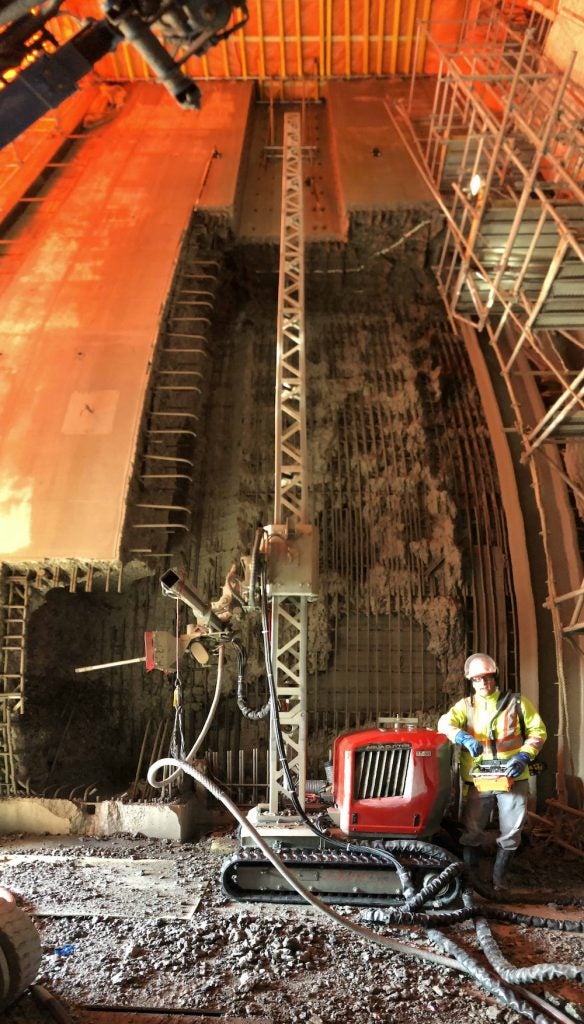
Productivity and accessibility are two areas where the value is greatly realised. The larger the concrete surface, the better it is to use a robotic method like hydrodemolition due to how much faster it removes material. Each area of a hydropower facility presents its own set of challenges. Contractors are faced with repairing inclined surfaces, vertical surfaces, overhead surfaces and confined areas on dam faces, spillways, intakes, sections of the powerhouse itself – it’s not just everyday flatwork. It can be intimidating trying to figure out how repair in all these areas will be possible, but that’s why hydrodemolition equipment is engineered the way it is. There are so many different tools, like towers, spines, extension kits and rail systems, that take hydrodemolition to areas not possible to reach with other methods.
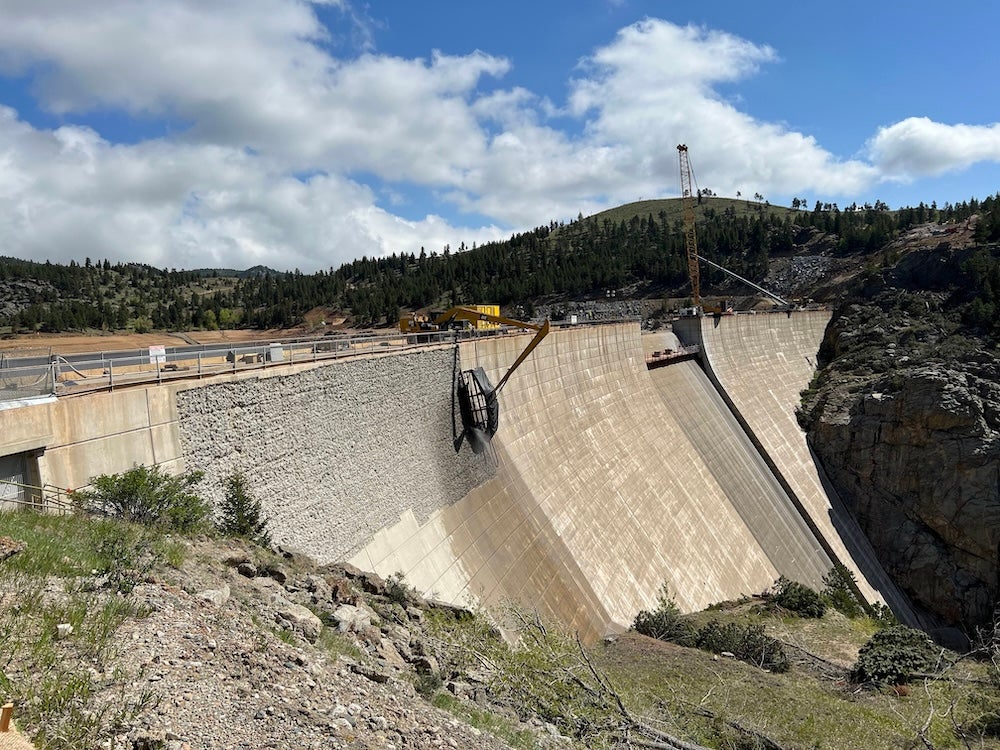
The Gross Dam Reservoir Expansion project in Colorado in the US is a good example of how Hydrodemolition accesses challenging areas and quickly removes large amounts of concrete. The dam face is about 300ft tall and required 18,849m2 (203,000ft2) of concrete removal, which makes you wonder how to remove that much concrete that far off the ground. But that’s where hydrodemolition comes in – to make the seemingly impossible possible. The crew was equipped with hydrodemolition robots, frames and a spine to attach to the dam face. The cutting head was mounted to an excavator boom reaching over from the top of the dam to remove concrete on the dam face. The crew achieved 111-plus m2 (1,200-plus ft2) of removal per hour without putting any crewmembers in potentially dangerous situations suspended in the air.
Can you share examples or lessons learned from hydropower projects where Aquajet’s solutions have delivered measurable benefits in terms of lifecycle extension, reduced downtime, or environmental protection?
Another notable project comes to mind in Manitoba, Canada, where safety, productivity and sustainability were especially crucial. The Keeyask Generation Project required 140m3 (4,944ft2) of removal. The crew used hydrodemolition daily for a nearly 12-hour shift, working in 3.7m-wide (12ft-wide) sections to demolish the damaged portion of a concrete pier. Using a Hydrodemolition robot, the crew removed an average of 4m3(141ft3) over a 12-hour shift without disrupting the timeline of the overall project. Environmental protection was a cornerstone of the project, so with hydrodemolition specified, it was necessary the contractors properly collected and treated wastewater. But rather than treating and releasing it, the crew opted to use a water filtration system as part of a closed loop system to recycle the treated water back into the hydrodemolition robot to reduce the amount of water needed and greatly enhance the project’s sustainability. The crew estimated they recycled 5,016m3 (1.325 million gallons) of water throughout the project.
Looking ahead, how do you see the role of hydrodemolition evolving as hydropower operators focus more on sustainability, asset longevity, and climate resilience?
I see hydrodemolition becoming a standard, best practice methodology. It’s faster, so it has a positive effect on deadlines and budgets. It can remove concrete on virtually any surface above or below water, addressing access challenges. There’s no dust and the equipment is remote-controlled, enhancing worksite safety. Contractors are successfully completing projects in sensitive areas and meeting environmental requirements. And it’s offering the preservation of structures rather than replacement, which is both fiscally and environmentally responsible. At this time, asset owners, engineers and contractors are still gaining experience with hydrodemolition. But as they continue to learn about it, they will recognise how it aligns with their priorities, and it will become standard practice.


