

The US Army Corps of Engineers (USACE) has reached a major construction milestone at Bluestone Dam in southern West Virginia with the completion of the right-side stilling basin, a key component of the ongoing Phase 5 dam safety upgrade. Announced on 2 March 2026 by the USACE Huntington District, the achievement represents a significant step forward in a long-running programme designed to strengthen the dam’s flood risk management capabilities and ensure its long-term resilience.
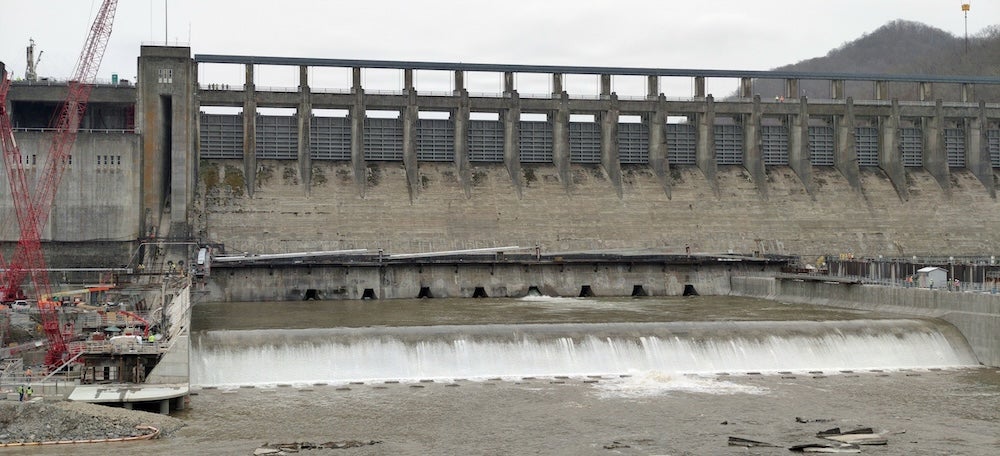
With the completion of the new structure, water is flowing down the right side of the dam for the first time since 2020, restoring dual-sided discharge and marking a visible sign of progress on one of the largest infrastructure investments in West Virginia. The milestone marks a critical point in the Bluestone Dam Phase 5 project, which brings together years of planning, engineering and construction aimed at strengthening a structure that protects communities along the New and Kanawha river valleys.
With the newly constructed stilling basin and divider wall in place, Bluestone Dam can now reliably discharge significantly more water than in the past, providing increased protection for approximately 165,000 people living downstream.
“This is about delivering resilient infrastructure,” Col. Phil Valenti, US Army Corps of Engineers, Huntington District commander, said. “The resilience and protection this project provides communities downstream is immeasurable. It’s about turning what once seemed impossible into reality.”
Long-term dam safety programme
The current construction work is the culmination of decades of dam safety planning and engineering. The programme originated with the completion of the Dam Safety Assurance Evaluation Report in 1998, which identified the need for improvements to ensure the long-term reliability of the structure.
Since then, USACE has implemented a series of upgrades through multiple phases of work. Phase 5, the final stage of the programme, began in 2018 with planning and design and is now approximately 63% complete. The total cost of all phases of the Bluestone Dam project is estimated at US$960m, representing a major federal investment in flood risk management infrastructure in the region.
According to Phil Johnson, regional business director for the USACE Great Lakes and Ohio River Division, securing full project funding was an important turning point.
“This project is a massive undertaking and requires incredible planning and partnering to keep the project progressing,” Johnson said. “We were brought to full funding in 2018 with the Bipartisan Budget Act and that allowed us to deliver this project sooner than originally projected.”
Engineering beneath the water
Although most of the newly completed work will remain hidden once the basin is fully operational, the engineering improvements are essential to the dam’s performance. The new stilling basin replaces fractured natural rock beneath the dam with approximately 10ft (3m) of reinforced concrete incorporating an integrated drainage system. Steel strand anchors are used to help counter uplift forces created by the pressure of Bluestone Lake.
A newly constructed divider wall splits the basin into two sections, collecting drainage water and strengthening the structure while allowing operators to inspect or maintain each side independently.
One of the most distinctive features of the upgrade is the installation of massive baffle blocks measuring 12ft wide and rising 16½ft above the floor of the basin. These structures are armoured with stainless steel to withstand the powerful energy of water discharged through the dam’s crest gates.
Don Whitmore, director of the Dam Safety Production Center and designer of record for the project, highlighted the importance of these elements during a recent visit to the site.
“It may not be easy to see once water is flowing as most of the completed work will be underwater – but it is essential,” Whitmore said. “It’s the installation of the drains, steel strand anchors, concrete and 16½ foot tall super cavitating baffle blocks that makes the entire dam optimally function.”
Managing a complex project
Delivering the final phase of construction has required careful coordination between engineers, contractors and government partners, particularly given the confined space around the dam structure.
“The complexity of this huge project in such a small space requires the best of us and that’s what we have… a team compiled of the best of the United States Army Corps of Engineers working in partnership with Brayman Construction Corporation and in collaboration with the State of West Virginia,” said Dennis Hughes, chief of the Engineering and Construction Division at the Huntington District. “I’m confident that we are getting the engineering right, getting the construction management right and we’ve got the right team working on this project.”
Work continues on the remaining elements of Phase 5, with USACE estimating that the project will be completed in 2030 – five years earlier than originally planned.
Benefits beyond flood protection
In addition to improving flood risk management, the Bluestone Dam project is expected to deliver broader economic and environmental benefits for southern West Virginia. Construction activity has created jobs and provided a boost to the local economy while also supporting recreational opportunities along the New River. Bluestone Dam serves as the anchor to the region’s well-known “Golden Mile” fishing area at the confluence of the Greenbrier and New Rivers. Reliable releases of oxygenated water from the dam support fish populations and help maintain favourable conditions for anglers. Once construction is complete, public access to fishing areas near both stilling basins will be restored.
Improvements are also planned for river access on the left bank downstream of the dam. On the right side, a new pier will be built at the end of the training wall to provide elevated fishing and river observation opportunities that comply with the Americans with Disabilities Act. These facilities will be opened to the public after construction work is completed.
Looking toward completion
For the project team, the completion of the right-side stilling basin represents both a major achievement and a step toward the final goal of fully upgrading Bluestone Dam.
“As we mark the completion of the right-side stilling basin and reflect on six years of construction up to this point, we recognize that every finished feature of work adds strength and reliability to Bluestone Dam and safety, resilience and peace of mind to those potentially affected along the New and Kanawha River Valleys,” said Josh Miller, Bluestone Dam project manager. “Each milestone brings us closer to an end state of an upgraded Bluestone Dam and a more predictable future.”
When complete in 2030, the upgraded dam will provide safer and more reliable discharge of water downstream, strengthening flood protection for communities across the region and ensuring the continued performance of one of West Virginia’s most important water infrastructure assets.


