

Recruiting engineering graduates is one part of maintaining a power generation workforce. Preparing them to work safely and effectively in operating plants requires a structured route from academic study to practical experience.
In the Philippines, AboitizPower is linking these stages through its Cadetship Program, which combines technical instruction with training at generation facilities operated by its Transition Business Group (TBG). The six-month programme draws on workforce requirements identified at individual sites to guide recruitment and subsequent development.
A central part of that approach is the JERA-AboitizPower Global Technical Center of Excellence (GTCOE), a joint learning and development hub where Filipino and Japanese engineers train together before applying their learning at their respective facilities.
Recruiting against operational needs
The Cadetship Program begins with an assessment of the capabilities that generation sites will need. Human resources teams work with recruitment and technical training staff to identify candidates who can develop those skills.
“The Cadetship Program is designed as one connected talent journey. We start by understanding the workforce capabilities our sites will need from our Human Resource Business Partners, then work with our Talent Attraction team to bring in the right talent and select candidates who can grow into those needs”, says Aldren Ribalde, Technical Academy Manager.
Recruitment extends to engineering graduates from regional universities and partner schools. For a business operating across Luzon, Visayas and Mindanao, this provides a means of developing prospective employees closer to its generation facilities while opening routes into the industry for engineers based outside the main urban centres.
The latest intake comprises 12 engineering graduates, with a programme start date of 21 September. Their selection followed a two-day recruitment event in Toledo City and Cebu City attended by 27 candidates with backgrounds in mechanical, chemical, electrical and electronics engineering.
“Investing in people means creating opportunities for talent wherever it can be found. We want to reach engineers from regional universities and partner schools, develop their capabilities, and give them a pathway to build careers in the power industry,” said Melissa Dizon, Talent Attraction Manager at AboitizPower. “As our operations continue to grow across different regions, we also want to continue growing the talent pool that can support them.”
The regional approach connects recruitment with the geographical spread of the company’s operations. It also gives graduates an opportunity to develop careers in the areas where they already live and work.
From shared instruction to plant experience
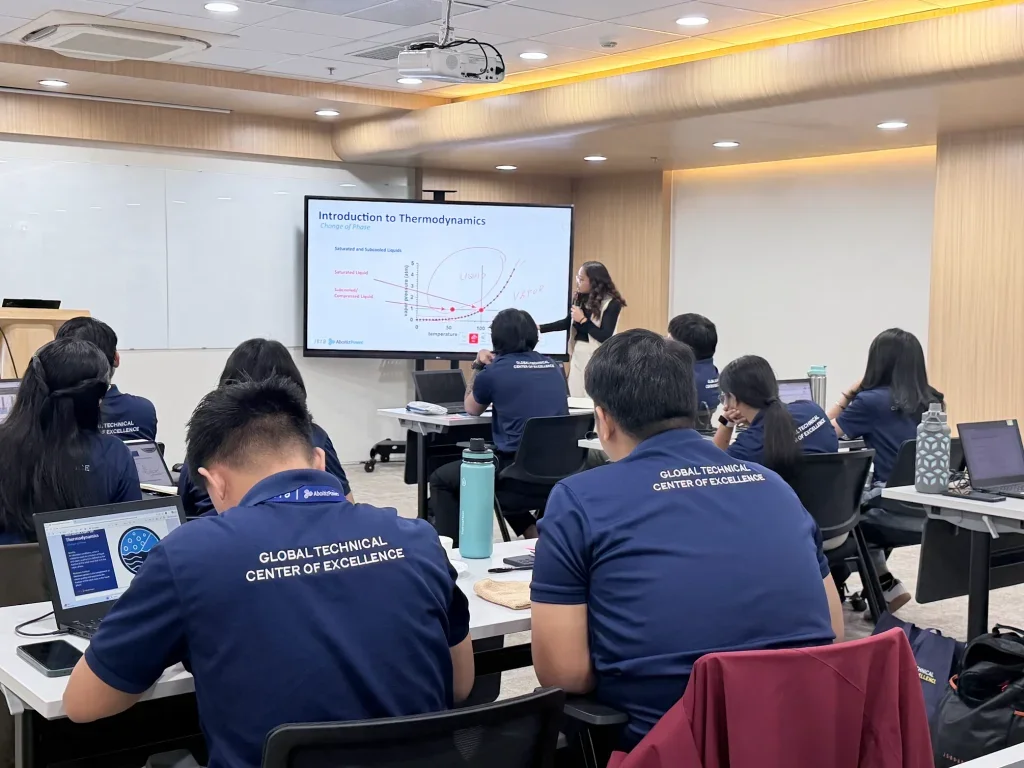
Once selected, cadets spend three weeks at GTCOE, learning alongside JERA participants from Japan. The centre provides training in power plant operations, maintenance, safety and emerging energy technologies.
This shared period gives participants a common technical foundation and exposure to operating practices across the two companies. Cadets then move into plant-specific instruction and on-the-job training at their assigned sites, where they work alongside experienced personnel.
The transition from the training centre to the plant is a core part of the programme. Classroom and practical instruction establish the foundations, while operating conditions provide the context in which graduates must learn to use them.
“We want our cadets to understand that becoming a power professional is not only about building technical competence. It is about developing the whole engineer—the mindset, discipline, ownership, and behaviors that enable them to apply what they know responsibly and effectively,” said Engr. Mayshelle Rosario, GTCOE Director.
“GTCOE provides the common foundation, but the real development happens as they bring that learning into the workplace, learn from actual operating conditions, and work alongside the people who keep our power facilities safe, reliable, and efficient.”
Since September 2025, four GTCOE cohorts have produced 96 graduates from the Basic Operations and Maintenance Program: 58 AboitizPower cadets and 38 JERA participants. Across its wider activities, the centre has provided training and capability development to approximately 2,000 AboitizPower and JERA participants since its launch.
The cadetship forms one part of this broader training provision, connecting graduate recruitment with the operational requirements of individual facilities. Its structure takes participants through a shared introduction to power plant practice before moving them into the equipment, procedures and working conditions of their assigned sites.
For AboitizPower, the approach provides a route for developing engineers to support its generation operations as the business grows. For graduates, it establishes a defined progression from university into plant work, supported by technical instruction and experience alongside operating teams.
Source: AboitizPower


