

Research has shown with increasing confidence that as global surface-level temperatures continue to rise, precipitation and streamflow extremes will intensify. And this is why the World Bank has recently been looking at enhancing the safety and resilience of dams in the cntext of climate change and extreme hydrological events, providing detailed methodologies of climate change impact assessment, along with case studies on adaptative reservoir operations from different regions.
Learning from Australia
After assessing the impact of climate change on PMP estimates, Australian researchers have identified the assumption of a stationary climate
as a key shortcoming of traditional estimates.
Indeed, based on an optimistic climate scenario, PMP estimates across Australia are predicted to increase by an average of 13% by 2100, compared with 33% for the pessimistic scenario. PMP methods, the team says, will require regular updating to account for likely progressive increases in PMP and ensuing flood estimates. Such PMP projections indicate serious implications for the hydrological safety of dams under climate change impacts in Australia, while the same range of impacts can be expected for many other regions of the world.
It was Queensland’s Wivenhoe Dam on the Brisbane River which caught global attention back in 2011 when, what has been described as ‘suboptimal flood control operation’, caused severe flooding. Tragically, 33 people died, flood damages amounted to A$3.2bn across 90 towns, and more than 20,000 homes were flooded when greater priority was given to storing water for water supply than releasing it for flood control.
As one of the most advanced countries regarding dam safety in the world, with a low number of recorded dam failures and incidents, the World Bank report says this is why the event became so well studied for learning purposes. Primarily operated as a water supply dam for the Brisbane and Ipswich regions by Seqwater, Wivenhoe Dam also provides for flood mitigation control, hydropower generation, and recreation. A 59m high rock and earthfill embankment with a total storage capacity of about 3.1 billion m3, construction was completed in 1984.
Bringing a historic class action to court over the management of the Wivenhoe Dam, a group of nearly 7000 local flood victims won their case in 2019, with a judge finding that they were ‘victims of negligence’. The New South Wales Supreme Court then ruled that the dam’s flood engineers relied too closely on “rain on the ground” estimates in 2011 while not appropriately using forecast rainfall for the Wivenhoe Dam’s catchment area and reservoir operations.
The World bank report says this case highlights the importance of establishing a proper decision support system and operation manual for multipurpose dam operations, which inherently include conflicting demands for water supply and flood control. The introduction of advanced rainfall and inflow forecasting systems is equally important for supporting the decision support systems for reservoir operation.
Italy’s Lake Como
Lake Como in Italy is a natural reservoir mainly used for irrigation and hydropower generation, but with flood protection becoming an increasingly important additional purpose. As live storage of the reservoir is only 5% of the lake’s mean annual inflow volume, combined with the control gates’ small discharge capacity, reservoir management is described as being ‘challenging’.
Back in 1997, an adaptive reservoir management approach was implemented to incorporate short term predictive probability density forecasting information into decision making. Despite conflicting management objectives of the multipurpose reservoir, the decision support system demonstrated significant operational improvements, such as:
- Reducing the frequency of flooding in the city of Lake Como by more than 30%.
- Reducing water deficit by 110 million m³/year – on average by 12%.
- Increasing hydropower generation by an average 3%.
The decision support system aims at optimising conflicting operational objectives with an advanced flood forecasting system. Whereas the system’s operating rules focus on maximising long-term benefits, it also guides operators on the amount of water to be released from the reservoir during floods in order to reduce dam failure and downstream flooding risks.
Furthermore, the system makes extensive use of probabilistic forecasts, stochastic optimisation, and Bayesian decision techniques implemented in a user-friendly environment. It also illustrates the importance of collaboration among reservoir managers, scientists, and other stakeholders for developing an advanced rainfall and flood forecasting system integrated with a system for optimising reservoir operation.

Shift in US policy
In a significant policy shift back in 2017, the US Army Corps of Engineers co-developed the Forecast Informed Reservoir Operations (FIRO) programme. Its aim is to better inform decision making on retaining or releasing water, by integrating additional flexibility in operation policies and rules based on enhanced monitoring and improved weather and flow forecasts, in order to maximise various development objectives, such as water supply, hydropower generation, and flood attenuation.
The FIRO system uses Ensemble Forecast Operations (EFO) – a risk-based approach of reservoir flood control operations that incorporates ensemble streamflow predictions made by the California-Nevada River Forecast Centre.
One of FIRO’s first applications was for the Coyote Valley Dam on Lake Mendocino in California. A dual-use reservoir with a capacity of 137 million m3, it is owned and operated by the United States Army Corps of Engineers and Sonoma Water. However, over time, it became clear it was meeting neither water resources nor flood control demands efficiently.
The Corps was to pilot test the system during water years 2019 and 2020 – a period of time which coincided with an extreme drought in the region. Whereas WY 2019 was a relatively wet year, WY 2020 was the third driest year on record for 127 years. Indeed, FIRO enabled a 19% (more than 13.6 million m3) increase in water storage by the end of March which allowed the service provider to maintain water supplies throughout the subsequent very dry period in the region. The case of Lake Mendocino demonstrates the importance of introducing advanced technologies, building the capacity of responsible agencies, and ensuring close collaboration among key stakeholders, including technical and research agencies for climate and hydrometeorology.
Reservoir operation in Japan
In Japan, many metropolitan areas have been developed in highly flood-prone areas at the downstream ends of river basins. Therefore, the country has established a river basin–based comprehensive and integrated flood management system, upon which river basin administrators provide guidance regarding dam operations to dam owners and operators during floods. Non-government owners of dams that do not have flood control functions are also requested to contribute to flood management at the basin scale, with the aid of an advanced rainfall and flood forecasting system.
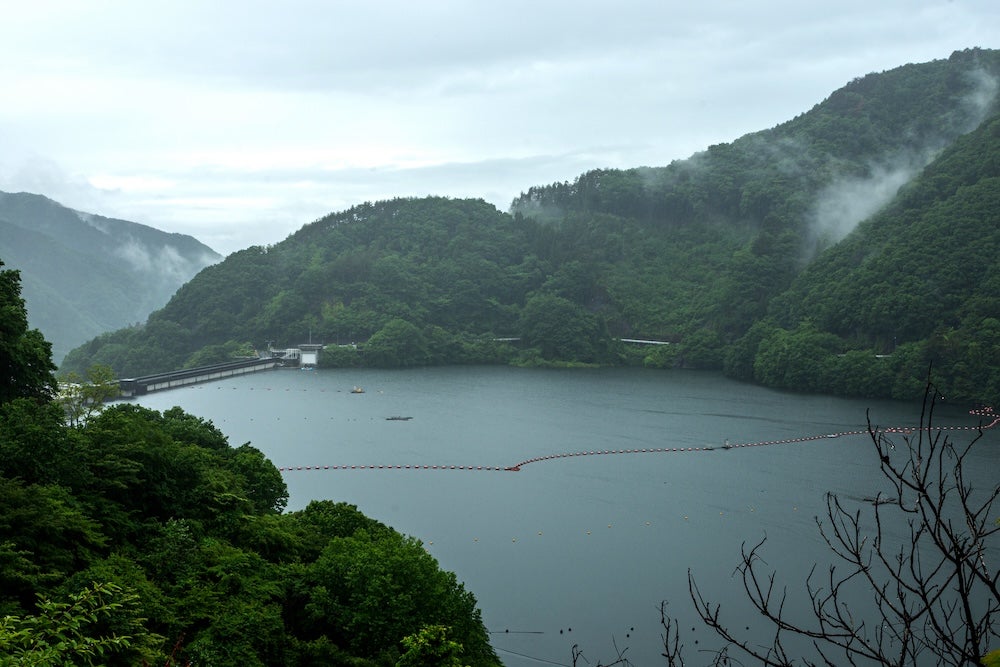
The case study is given of the 140m high Kusaki Dam, a concrete gravity structure which impounds a 60.5 million m3 reservoir. Commissioned in 1976 and managed by the Japan Water Agency, the project serves several purposes, including 20MW of hydropower generation, water supply to the Tokyo metropolitan area, and irrigation and flood control of the downstream Tone and Watarase Rivers.
During Typhoon Hagibis from October 11–13, 2019, the Kusaki Dam conducted an emergency pre-flood reservoir drawdown based on weather and flood forecasting information. Without this, the dam would have had to move into emergency operation, requiring the dam operator to discharge the full amount of inflow to prevent the reservoir level from exceeding the maximum surcharge flood water level and to ensure dam safety. Instead, the operator was able to limit the maximum outflow to about 600m3/sec compared with about 1700m3/sec and, accordingly, the maximum flood reservoir level was reduced by about 2.6m. Without such operation, critical downstream areas protected by embankment dikes could have been flooded as a result of breaches.
India’s reservoir operations
In India, research shows a clear increasing trend in PMP across the country. Specifically, 84% of the Indian mainland exhibits an increasing trend in PMP, about a 35% increase from 1971–2010 compared with the 1901–70 period. This indicates the significant impact of climate change, demonstrating that it must be factored into the revised planning and design of water resources and hydropower engineering projects.
Sri Lanka
Climate change impacts on the hydrometeorological characteristics of the Mahaweli River Basin in Sri Lanka have also been assessed using downscaled and bias-corrected climate scenario. As the largest and perennial river basin in Sri Lanka which drains 10,300km2, rainfall in the basin varies greatly over space and time.
Research shows that with an average temperature increase of 1.1°C from 2026-45, the basin will experience more extreme rainfall (increase ranging from 204 to 476 mm/year) and intense flood disasters. Overall, it is likely that the flood inundation area and risk will increase in the basin under the future climate
Ensuring resilience
Providing practical guidance for water resources managers, practitioners, and engineers involved in flood control, reservoir operations, and dam safety issues, the World Bank concludes that by understanding the challenges and solutions presented in its new report, stakeholders can make informed decisions and develop effective strategies to adapt to the changing climate and ensure the resilience of their water management systems.
A wake-up call
Lakes and reservoirs store 88% of the Earth’s fresh surface water, providing water, food, energy security, flood protection, drought mitigation, and ecosystem services. And although the construction of thousands of storage dams has dramatically increased water storage capacity, promoting development worldwide, new research warns that lakes and reservoirs are under significant stress due to human activities, global warming, and ageing infrastructure.
The integrated management of lakes and reservoirs and their basins is vital for preserving their significant benefits which are essential for climate resilience. However, according to Rafik F. Hirji, a retired World Bank Group and Former Water-Environment Thematic Lead and Team Leader; and Alfred Duda, a retired Bank Group and Former Senior Advisor and Team Leader for the Global Environment Facility, there is ‘widespread failures across international water and environmental policies and institutions’ in this regard.
In their article published in Water Policy, the authors call on the global water and environmental community to ‘awaken from collective amnesia, act, and implement best practices for governing lakes, reservoirs, and basins’. They also examine the ‘institutional inertia hindering integrated action’ and offer ‘collaborative opportunities for integrating land and water management in lake and reservoir basins to enhance climate resilience’.
Disparity and misalignment
Hirji and Duba claim that international attention to lake and reservoir management has lulled in recent decades, but the global water community is once again starting to recognise the urgent need for integrated solutions to manage water resources. They go on to claim that international environmental and water agencies ‘have overlooked past successes and are reinventing the wheel repeatedly’. Indeed, they are urged to focus more effort and attention on coordination, institutional memory, collaboration, and adherence to best practices – all elements essential for achieving effective, impactful, and climate-resilient development on a large scale.
Despite lakes, reservoirs, and basins holding nearly 90% of the world’s fresh surface water, the authors say that the global water and environmental community faces ‘significant policy disparity and misalignment’ and the focus remains on river and dam development.
“We must prioritise sustainable management of existing freshwater storage to enhance climate resilience and safeguard our planet’s future,” Hirji and Duba say, adding that the global decline in lakes and reservoirs underscores the importance of demand management, improved water and land use, and proactive climate measures. While addressing complex issues like dam repairs and decommissioning requires an integrated basin-wide approach.
A long hiatus
After such a ‘long hiatus in attention to lakes and reservoirs’ the authors claim some of the important lessons from the analysis of 20 years ago are not being incorporated into recent documents. And by this, the authors are referring to the Lake Basin Management Initiative (LBMI).
The LBMI was a GEF-funded cooperative programme for sustainable lake and basin management, implemented from 2002 to 2005. A collaborative effort with nine partners, including three UN-Water agencies and the World Bank, it produced 28 case studies and 17 thematic papers on managing lakes, reservoirs and basins worldwide. Drawing input from regional forums with support from 288 experts across 41 nations, its final report was endorsed by all partner agencies and outlined the future direction for lake basin managers and stakeholders for the sustainable management of lakes and their basins. The LBMI identified 19 issues affecting the 28 studied lakes, while the last of its 13 findings stated that going forwards ‘an integrated approach is essential’, while prioritising ILBM in government planning, water resource management, habitat and biodiversity conservation, and economic development, would also be crucial for long term outcomes.
Integrated Lake Basin Management (ILBM) is an ecosystem-based approach that focuses on the unique characteristics of lakes and their basins, building on the principles of integrated water resources management. It prioritises the vulnerability of lakes, applies the precautionary principles, utilising knowledge and science to guide policy and highlight stakeholder participation.
ILBM has been implemented in a few places around the world and has influenced national water management strategies in Malaysia and Kenya, positively impacting projects in East Africa, Europe, East Asia, and South Asia. Although it has shown promising progress, Hirji and Duba say overall progress in the uptake and application of ILBM has been too slow.
“Complacency within the global water and environmental communities has contributed to outright neglect in using and mainstreaming best practices or hindered resource mobilisation for ILBM initiatives,” the authors claim. It’s essential, they add, to intensify efforts and promote reforms to realise ILBM’s full potential.
Emphasising the urgent need to protect lakes and reservoirs for water security and climate resilience, Hirji and Duba give six recommendations for accelerating global ILBM implementation which underscore essential international, national, basin, and sub-basin-level reforms. These are:
Mainstreaming ILBM which will require collaboration among international and national water, environment, and land communities for an effective result.
The international community must take urgent action by utilising best practices and knowledge for sustainable management of lake and reservoir basins, acknowledging that dam-created reservoirs are lakes needing integrated basin-level solutions, upstream, and downstream.
Encouraging collaboration among water, environment, and land management agencies. UN-Water, regional banks, and the World Bank should prioritise cooperation across these sectors at all levels of governance. The Global Water Partnership should also focus on developing and promoting ILBM training to support global water and environmental policy reforms.
Promoting collaborative reforms at the national level. Environmental ministries should work with water and land ministries through inter-ministerial forums to improve the sustainable management of lakes and reservoir basins. The international community should also support partnerships that promote top–down policy reforms and bottom–up capacity building in local governance.
Supporting the implementation of ILBM at both policy and operational levels.
Advancing climate resilience at the basin level. Utilise structured climate adaptation frameworks from best practices in international, regional, and national water resource planning and management.
Lake drought
More than half the largest lakes worldwide have experienced considerable declines in water storage over the past three decades. This has far-reaching consequences, affecting an estimated 25% of the global population and garnering substantial international attention. Driven by increasing temperatures due to climate change, lake drought is a growing concern.
Lake droughts are a critical issue for global water security. It may take a long time to recover from them as the damage can be extensive and long-lasting. They can result in serious water shortages, threaten biodiversity, create environmental challenges, and even provoke conflicts. Despite the profound implications of lake droughts, very few studies have focused on this type of extreme event.
However, providing a global assessment of over 160,000 lakes using monthly area data from 1985 to 2018, recent research by Cheng et al in Communications Earth And Environment has focused on lake drought. Their findings show that 15.7% of lakes have experienced statistically significant increasing trends in drought frequency, with hot spots in the Southern US at 52.7% and Southeast Australia at 70.4%.
Regions with higher percentages of lakes showing increasing drought trends include West Asia (47.1%), South Australia/ New Zealand (46.6%), West and East Africa(41.2% and 35%), East and Central Asia (35.3% and 31.8%), Central and North Europe (30.3% and 26.1%), and Southeastern South America (31.7%).
Given that most artificial reservoirs are managed to meet water supply, flood control, and other human needs, they are more susceptible to human influence than natural lakes. Therefore, the authors compared drought occurrence between the two types of lakes across hotspot regions, assuming consistent climatic conditions within each region, to elucidate the role of human activities. They say their results demonstrate that human activities exacerbate regional lake droughts to some extent, although they are not the dominant driver. For instance, in Southern United States, where over 60% of artificial reservoirs serve as critical water resources, more reservoirs (59%) exhibit a significantly increasing trend in drought frequency compared to natural lakes (39%). The authors claim this underscores the predominant role of climatic factors in driving lake droughts. Furthermore, they add their global analysis also reveals that more reservoirs experience significant upward trends in drought frequency compared to natural lakes. For example, most reservoirs and dams mainly located at middle latitudes, such as in China, India, the United States, and the Middle East, are constructed to support community needs. Consequently, climatic factors play a dominant role in lake droughts, while human activities (e.g., dam construction and regulation) also contribute to reservoir droughts.
Critical issue
Due to significant upward trends in drought frequency over the past decades, Cheng et al believe this remains a critical issue under climate change and intensified anthropogenic activities. They say their findings underscore the urgent need to understand and address the underlying causes of lake droughts, particularly in regions facing increasing water demands and shortages.
Looking to the future, further research on lake droughts needs to focus more on quantifying human causes and drivers. Accurate monitoring, prediction, and projection of lake resources under various future climate and development scenarios is also an urgent need to better analyse lake droughts in the future.
References
World Bank. 2025. Enhancing the Safety and Resilience of Dams in the Context of Climate Change and Extreme Hydrological Events: Detailed Methodologies and Case Studies. World Bank, Washington, DC.
Rafik F. Hirji and Alfred Duda. Integrated management of lakes, reservoirs, and their basins is critical for a climate-resilient planet: an urgent wake-up call from collective amnesia. Water Policy Vol 27 No 1, 66.
Xing Cheng, Shuo Wang, Jianli Chen & Amir Agha Kouchak. Global assessment and hotspots of lake drought. Communications Earth & Environment (2025) 6:308.


