

For hydropower professionals assessing global opportunity landscapes, emerging economies remain central to investment, engineering innovation, and operational expertise. The MINT and BRICS countries – Mexico, Indonesia, Nigeria, Turkey, Brazil, Russia, India, China and South Africa – represent large and expanding electricity markets, but their hydropower sectors are evolving along very different trajectories.
Across these markets, hydropower is shifting from a standalone generation technology toward a multi-dimensional platform delivering storage, flexibility, resilience, and renewable integration within increasingly complex power systems.
Hydropower in MINT countries: Mexico
Mexico’s hydropower sector operates within a strongly state-led electricity system dominated by the Federal Electricity Commission (CFE). The government has reaffirmed the central role of state participation in generation and grid operation, while targeting an increase in clean electricity generation to 45% by 2030 and 50% by 2035..
Within this framework, hydropower plays both a historical and strategic role. Large conventional hydro accounted for around 12% of installed capacity in 2024, while small hydro contributed about 0.4%. These figures place hydro among Mexico’s key renewable resources alongside solar and wind and underscore its value in maintaining grid stability as intermittent capacity expands.
Policy direction indicates hydro is not being sidelined despite rapid solar growth. Mexico’s roadmap envisions expanded renewable capacity and grid modernisation, alongside upgrades to existing hydropower assets under the CFE programme. Rather than major new dam construction, the focus is on refurbishment, efficiency improvements, and integration into a more flexible system incorporating storage and distributed generation.
This positioning reflects structural challenges, including transmission bottlenecks and dependence on imported US natural gas. Hydropower’s reliability and domestic resource base make it attractive as a hedge against supply volatility. It also complements planned storage deployment by providing dispatchable renewable generation to help manage peak demand and reserve margins.
Demand fundamentals reinforce this outlook. Electricity consumption is projected to rise from roughly 320.5TWh in 2024 to over 421TWh by 2035, driven by industrial expansion and electrification. As consumption grows, hydro’s role as a stabilising renewable resource will remain essential.
For industry stakeholders, opportunities lie less in greenfield megaprojects and more in asset modernisation, digital optimisation, and hybridisation with storage technologies, where engineering expertise and advanced turbine solutions can deliver incremental but valuable gains.
Indonesia
Indonesia presents perhaps the most dynamic hydropower growth narrative among the MINT economies. While coal still dominates the capacity mix, accounting for more than half in 2024, policy frameworks increasingly emphasise renewable expansion, with hydropower expected to attract a major share of investment. Between 2025 and 2030, hydropower is projected to receive about 28.3% of power-sector investment, second only to solar PV and ahead of geothermal and coal.
This reflects abundant hydrological resources and a strategic push to reduce fossil fuel dependence while expanding grids across the archipelago. Currently, large conventional hydropower accounts for about 5.7% of installed capacity, with small hydro adding roughly 1%. Though modest, these shares are expected to rise, with combined large hydro and pumped storage projected to reach around 9.1% by 2035.
The technological trajectory is notable. Indonesia is exploring pumped storage and floating solar-hydro hybrids to enhance flexibility and address intermittency. In a system defined by isolated island grids and limited interconnection, such solutions could be transformative.
Demand dynamics reinforce this outlook. Electricity consumption is expected to increase from 306TWh in 2024 to over 516TWh by 2035 amid industrialisation and electrification. Meeting this growth sustainably will require dispatchable renewable capacity to support expanding transmission and regional power trade ambitions.
Barriers remain, including regulatory complexity, financing risks, land acquisition issues, and grid constraints. The vertically integrated single-buyer model centred on state utility PLN also limits competition and investment flexibility. Indonesia thus represents a high-potential emerging market: significant resource endowment and policy momentum balanced against institutional and logistical challenges. The scale of planned investment suggests hydropower will remain central to the country’s energy transition strategy.
Nigeria
Nigeria’s hydropower landscape differs sharply from Mexico and Indonesia. The electricity system is dominated by gas-fired generation, reflecting vast natural gas reserves. Hydropower therefore functions less as a backbone and more as a diversification and electrification tool. In 2024, large hydropower accounted for about 15.4% of installed capacity, with small hydro contributing roughly 0.3%. Despite thermal dominance, these figures highlight hydro’s relevance as one of the few substantial renewables connected to the grid.
Policy ambitions reinforce this role. Nigeria plans to expand cumulative small hydro capacity to about 2GW by 2025 as part of broader renewable targets, closely tied to rural electrification and off-grid initiatives aimed at improving unreliable supply and expanding access.
Hydropower’s strategic value stems from systemic weaknesses. Infrastructure constraints, fuel supply disruptions, and pipeline vandalism frequently undermine gas-fired reliability, while transmission bottlenecks and revenue shortfalls further strain the system. In this context, locally sourced hydro offers resilience and diversification.
Demand pressures add urgency. Rapid population growth, urbanisation, and industrial expansion are increasing consumption, while many businesses rely on costly diesel generators due to unreliable grid supply. Expanding hydro, particularly decentralised small projects, could reduce dependence on backup generation and improve cost efficiency.
However, challenges remain significant. Financing constraints, institutional fragmentation, and investment hesitancy limit project development. Continued policy emphasis on gas may also slow renewable diversification. For stakeholders, Nigeria represents a longer-term development opportunity, particularly in mini-grid, rural, and hybrid systems aligned with electrification priorities.
Turkey
Turkey stands apart among the MINT economies in terms of hydropower penetration and maturity. Hydropower is a major pillar of the renewable capacity mix, reflecting geographic suitability and sustained development. In 2024, large conventional hydropower accounted for approximately 26.2% of installed capacity, with small hydro adding 1.5%. These shares place Turkey among the strongest hydro performers in emerging markets and underline its significance within the national portfolio.
Turkey’s energy strategy emphasises diversification and reduced dependence on imported fuels. Hydropower directly supports this objective by providing domestic, renewable capacity, particularly amid geopolitical uncertainties affecting fuel imports.
Installed capacity is projected to grow through 2035 as demand rises alongside economic growth and electrification. Although policy focus increasingly targets solar and wind expansion, hydropower remains a stabilising complement to variable renewables. Plans to introduce pumped storage by the mid-2030s further highlight hydro’s role in grid flexibility and storage, enhancing the value of existing reservoirs.
For the global hydro industry, Turkey represents a mature but evolving market focused on modernisation, optimisation, and system-balancing investments rather than large-scale new dam construction.
Hydropower in BRICS countries: Brazil
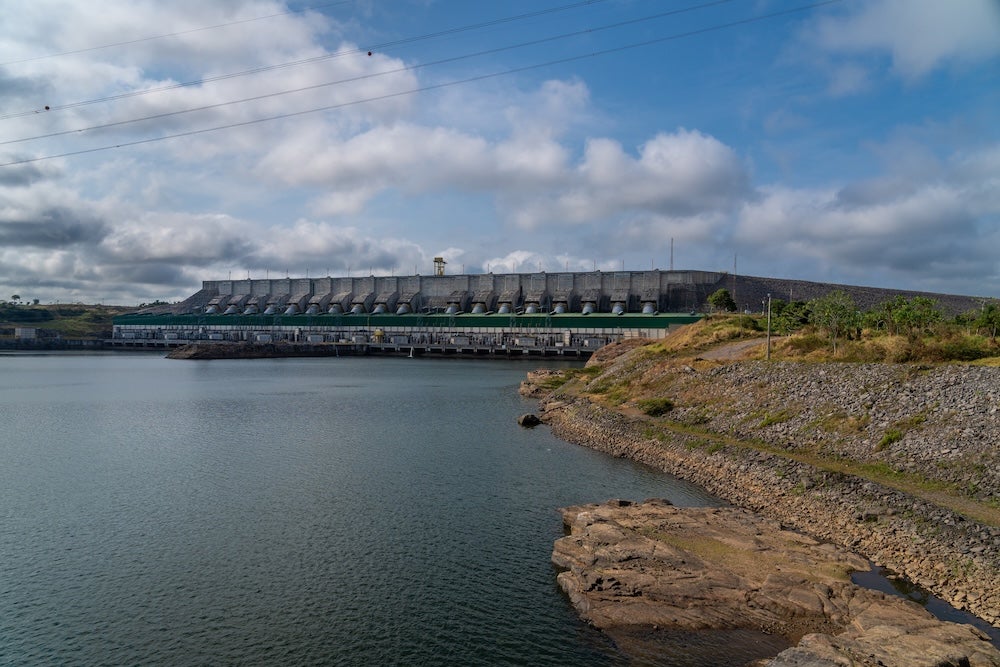
Brazil stands out globally as one of the most hydro-dependent power systems. Hydropower accounts for the majority of annual generation and forms the backbone of electricity supply. In 2024, large conventional hydro represented 41.7% of total installed capacity, with small hydro adding 2.8%, giving the technology a dominant position in the generation mix. This extensive base supports system stability and limits reliance on costly thermal generation.
Hydropower’s dominance, however, is double-edged. Policymakers are increasingly concerned about overdependence, particularly during droughts that threaten reservoir levels and reliability. The severe 2014–2015 drought exposed this vulnerability, forcing greater use of expensive thermal power. As a result, Brazil is diversifying through rapid wind and solar expansion supported by competitive energy auctions.
Hydropower is therefore shifting from primary supply source to complementary balancing resource, maintaining stability while integrating variable renewables. Electricity consumption is projected to continue rising with urbanisation, electrification, and data-centre growth, reinforcing the need for system resilience. In this context, hydro’s flexibility and storage capacity remain indispensable.
For the global hydro sector, Brazil represents a mature yet evolving market, with investment opportunities centred on refurbishment, reservoir optimisation, digital asset management, and hybrid integration rather than large-scale expansion alone.
Russia
Russia’s hydropower sector holds a structurally important but stable position within a generation mix dominated by natural gas. Large conventional hydro accounted for about 18.3% of installed capacity in 2025, with small hydro and pumped storage contributing smaller shares. Capacity is projected to remain broadly constant at roughly 50.6GW through 2035, reflecting a policy focus on modernisation rather than new megaprojects. Refurbishment of legacy assets and efficiency upgrades therefore form the core of investment.
Hydropower performs several systemic functions within Russia’s centralised energy model, supporting baseload generation, seasonal balancing, and supply security alongside gas and nuclear. The state planning framework prioritises reliability, with capacity payments and long-term agreements underpinning revenue stability.
Between 2026 and 2030, hydropower is expected to receive around $2bn in investment, aimed at sustaining reliability and adapting infrastructure to shifting energy export dynamics. Geopolitical pressures and sanctions, including restricted access to foreign technology and financing, further reinforce the emphasis on domestic modernisation over expansion.
Russia presents targeted opportunities in efficiency upgrades, grid integration improvements, and pumped storage enhancements within a tightly controlled, state-driven environment.
India
India’s electricity sector combines rapid demand growth with ambitious decarbonisation targets, positioning hydropower as both a stability mechanism and investment opportunity. Large hydro represented 7.9% of installed capacity in 2024, with small hydro and pumped storage each contributing around 0.9%. While modest compared with coal or solar, hydro’s strategic value lies in balancing India’s expanding renewable fleet. Accelerating wind and solar deployment has increased demand for dispatchable resources and storage, boosting interest in pumped hydro.
Hydropower is expected to receive 7.5% of sector investment between 2025 and 2030, part of a projected $267.7bn total power-sector spend. Funding will support both new capacity and modernisation of existing assets.
Hydro also plays a regional role, underpinning cross-border electricity trade with Bhutan and Nepal and strengthening supply stability. Electricity consumption is projected to rise from about 1,418 TWh in 2024 to over 2,100TWh by 2030, driven by urbanisation, industrial growth, and electrification. Meeting this demand sustainably requires flexible renewable support assets, reinforcing hydro’s role as a system enabler.
Challenges persist, including land acquisition hurdles, permitting delays, and grid bottlenecks. Nonetheless, hydro’s capacity to stabilise a rapidly evolving renewable system ensures its continued strategic importance.
China
China’s power system – the largest globally – presents a hydropower narrative defined by scale and integration. Large hydro accounted for 8.7% of installed capacity in 2024, alongside 2.6% small hydro and 1.8% pumped storage. Hydropower sits within a vast renewable portfolio, with total renewables representing 46.1% of capacity under China’s decarbonisation strategy.
Its role is multifaceted. Renewable expansion has created excess coal capacity in some regions, prompting restrictions on new coal construction. Hydropower thus functions as both generation supply and a transition catalyst supporting reduced coal reliance. Market mechanisms such as green power trading allow users to procure hydroelectricity directly or via certificates, while cross-provincial trading helps balance resource-rich and demand-intensive areas.
Electricity demand continues to outpace GDP growth, driven by manufacturing, electrification, and digital infrastructure. Hydropower’s flexibility and storage capacity are critical for integrating expanding solar and wind capacity.
Grid constraints remain a challenge, with transmission limitations delaying some projects. However, continued smart-grid investment and infrastructure upgrades signal deeper hydro integration. For the global hydropower industry, China offers opportunities in advanced turbines, pumped storage expansion, and digital control systems for ultra-large grid operations.
South Africa
South Africa presents a distinct hydropower narrative: rather than serving as a central generation pillar, hydro plays a small but strategically important role focused on storage, system balancing, and regional cooperation. In 2024, coal accounted for roughly 66.7% of installed capacity, while large hydropower represented about 0.9% and pumped storage 4%.
This limited domestic share reflects structural constraints. Low rainfall and recurring droughts restrict large-scale hydro expansion, and capacity has remained around 0.6 GW since 2020, with no major additions planned through 2035. Generation from large hydro and pumped storage is projected to remain broadly stable over the next decade.
Hydropower’s importance, however, lies in system functionality rather than output. Pumped storage is a critical component of national energy strategy, helping manage supply–demand fluctuations and stabilise a grid facing reliability challenges, aging infrastructure, and increasing renewable penetration. As solar and wind deployment accelerates under the Renewable Energy Independent Power Producer Programme, the need for flexibility resources continues to grow.
Regional interconnection further enhances hydro’s strategic relevance. South Africa has long relied on imports from Mozambique’s Cahora Bassa scheme and participates actively in the Southern African Power Pool, exporting 13.5TWh and importing 9.8TWh in 2024. Policy frameworks reinforce hydro’s supplementary role: the Integrated Resource Plan targets 2,500 MW of additional hydro capacity by 2030, largely through imports and regional collaboration rather than domestic dam construction.
For hydropower stakeholders, South Africa represents a market defined less by new large-scale generation and more by pumped-storage optimisation, asset modernisation, and cross-border integration –positioning hydro as essential enabling infrastructure in a system gradually transitioning away from coal.
References
GlobalData (2025). Brazil Power Outlook, Update 2025: Market Trends, Regulations and Competitive Landscape. Power Industry Report, March 2025.
GlobalData (2025). China Power Outlook, Update 2025: Market Trends, Regulations and Competitive Landscape. Power Industry Report, July 2025.
GlobalData (2025). India Power Outlook, Update 2025: Market Trends, Regulations and Competitive Landscape. Power Industry Report, August 2025.
GlobalData (2026). Russia Power Outlook, Update 2026: Market Trends, Regulations and Competitive Landscape. Power Industry Report, January 2026.
GlobalData (2025). Mexico Power Market Outlook to 2035, Update 2025: Market Trends, Regulations and Competitive Landscape. Power Industry Report, 2025.
GlobalData (2025). Indonesia Power Market Outlook to 2035, Update 2025: Market Trends, Regulations and Competitive Landscape. Power Industry Report, 2025.
GlobalData (2025). Nigeria Power Market Outlook to 2035, Update 2025: Market Trends, Regulations and Competitive Landscape. Power Industry Report, 2025.
GlobalData (2025). Turkey Power Outlook, Update 2025: Market Trends, Regulations and Competitive Landscape. Power Industry Report, March 2025.
GlobalData (2025). South Africa Power Market Outlook to 2035, Update 2025: Market Trends, Regulations and Competitive Landscape. Power Industry Report, November 2025.


