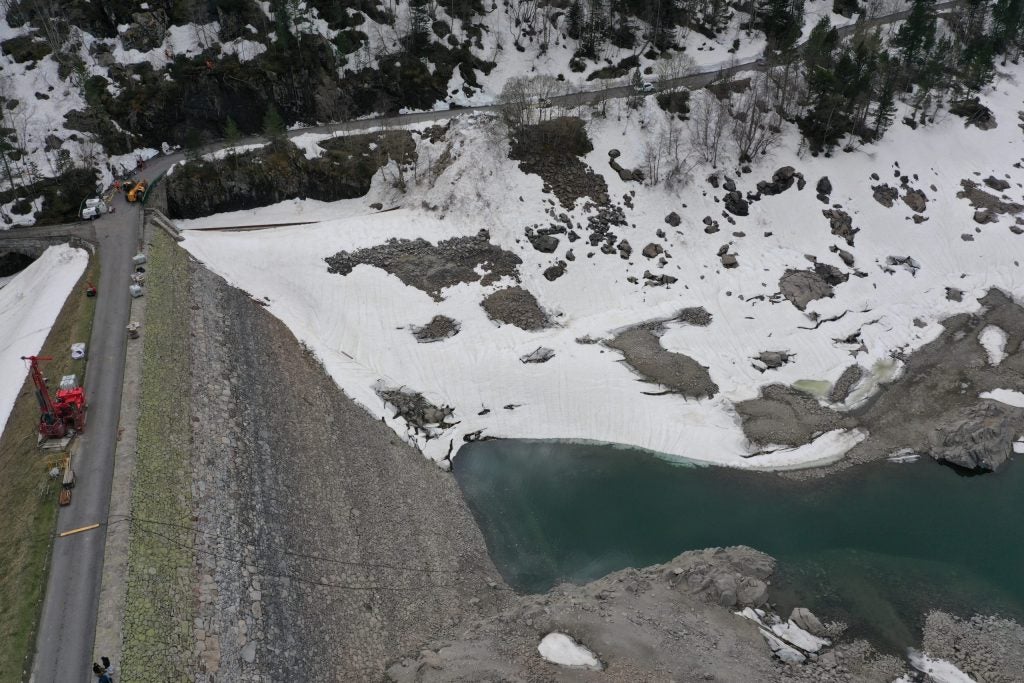

Société Hydro-Électrique du Midi (SHEM), a subsidiary of ENGIE, has begun work to strengthen the safety of the Orédon dam in the French Pyrenees through the construction of a new spillway designed to manage extreme flood events.
Located at an altitude of 1,850m in Aragnouet in the Hautes-Pyrénées region, the Orédon dam was built between 1869 and 1884. Like all classified dams in France, it is equipped with systems to release excess water during periods of heavy rainfall in order to maintain the stability of the structure.
The current spillway can discharge floods below the scale of a 100-year event, with a maximum capacity of around 50m³/sec. The new system will raise this capacity to 213m³/sec, enabling the dam to withstand so-called “decamillennial” floods – events with a statistical probability of occurring once every 10,000 years.
Water released during extreme events will be channelled through an underground tunnel measuring 128m in length and 4.6m in diameter.
Because the dam is located at the narrowest point of a gorge carrying the Neste de Couplan river, widening the structure was not considered feasible. SHEM has therefore opted for a labyrinth spillway design, using a zigzag configuration to increase discharge capacity without extending the footprint of the installation.
Alongside the spillway works, SHEM will also upgrade the dam’s monitoring systems as part of the safety reinforcement programme.