

Tajikistan has published a long-term power system plan for its Gorno-Badakhshan Autonomous Region (VMKB), formally integrating hydropower sustainability assessment tools into future project selection and establishing a development pathway centred on hydropower, storage and renewable energy development through to 2050.
The Power System Plan (PSP) 2025–2050, developed by the Ministry of Energy and Water Resources with technical support from the Hydropower Sustainability Alliance (HSA), sets out a framework for meeting growing electricity demand while strengthening energy security, climate resilience and regional development.
At the heart of the plan is a hydropower-led development strategy. The PSP assesses four future development scenarios, all based primarily on renewable energy resources and technologies, principally hydropower and solar energy. The preferred Diversified Renewables (DIV) scenario combines additional hydropower capacity with solar PV and new storage solutions while incorporating sustainability criteria into project selection and siting decisions.
The plan formally introduces HydroSelect and the Hydropower Sustainability Standard (HSS) into the region’s long-term planning framework. HydroSelect will be used to screen potential hydropower sites, while the HSS provides a structured framework for assessing environmental, social and governance performance throughout project development.
Daler Juma, Minister of Energy and Water Resources of Tajikistan, said: “The publication of the Power System Plan represents an important milestone for long-term energy planning in Tajikistan. It reflects our commitment to ensuring that future hydropower development is guided by strong sustainability principles and international good practice.”
The PSP builds on several years of collaboration between HSA, Pamir Energy and the Tajik government, including the Sebzor Hydropower Project in VMKB, which became the first project in the world to achieve certification under the Hydropower Sustainability Standard.
Sustainability tools move upstream in project planning
While hydropower remains the foundation of the region’s electricity system, the PSP identifies seasonal balancing as one of its principal long-term challenges. Electricity demand peaks during winter because of heating requirements, while renewable generation resources reach maximum output during summer months. According to the report, this creates significant seasonal and daily imbalances that must be addressed through system planning and storage solutions.
To tackle this challenge, the preferred scenario envisages the development of pumped storage or conventional storage hydropower facilities capable of helping balance seasonal and daily variations in demand and renewable generation. The report describes storage hydropower as the largest innovation within the preferred development pathway, although further studies will be required to determine capacity requirements, costs and suitable locations.
The PSP concludes that the preferred scenario would allow the region to expand renewable generation while avoiding development in some of the most environmentally sensitive river valleys in the western Pamirs. HydroSelect is specifically recommended as a tool for screening future hydropower options against environmental and social criteria.
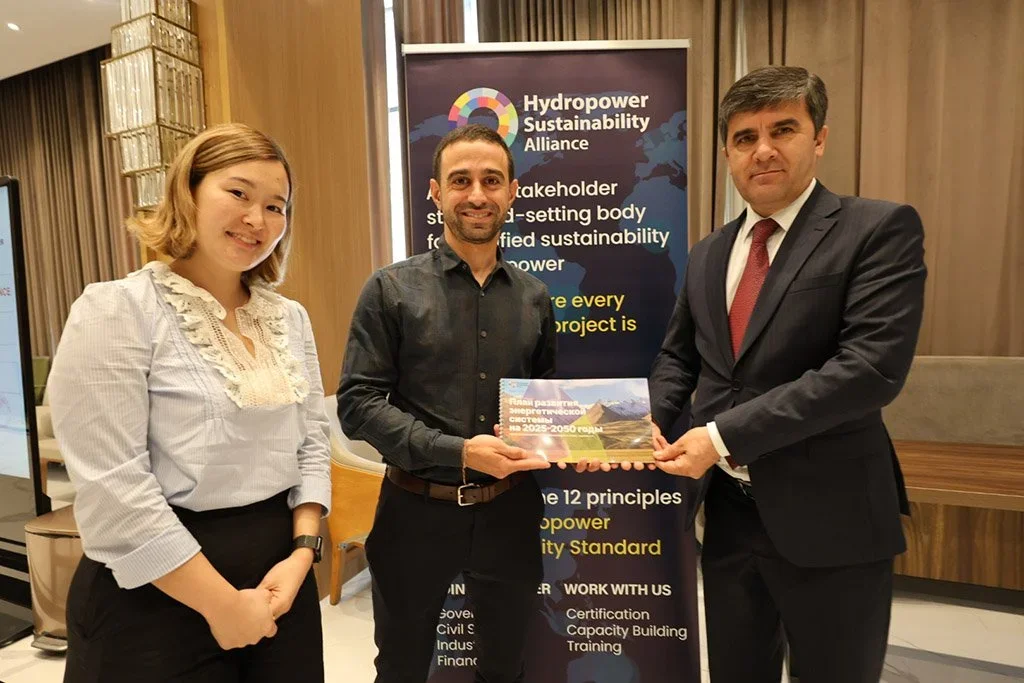
Speaking at the launch event in Dushanbe, Alain Kilajian, Deputy Executive Director of HSA, said: “This is an incredible achievement. There is only a handful of countries in the world today that implement long-term power system planning with clear sustainability metrics and tools at their core. By implementing this PSP for the Pamir Region, the Ministry of Energy and Water Resources of the Republic of Tajikistan will not only be able to develop its clean energy infrastructure but also avoid major impacts to biodiversity hotspots, protected areas and settlements, and build confidence among donors looking to invest into national energy projects. Long-term power system planning is a clear win-win for any government looking to expand its renewable energy capacity.
“We are proud to have supported the Ministry of Energy and Water Resources of the Republic of Tajikistan and Pamir Energy with this ambitious plan and look forward to supporting the next stages of its implementation.”
Prepared in partnership with Pamir Energy and supported by the Swiss State Secretariat for Economic Affairs (SECO), the PSP is intended to be updated every five years as technologies, demand forecasts and regional priorities evolve. The report notes that one additional run-of-river hydropower project, the 20 MW Charthem scheme, forms part of the common near-term priorities across all development scenarios.
Amrikhon Raimov, General Director of Pamir Energy, said: “Today marks an important moment not only for Pamir Energy but for the future of energy development for the VMKB province. For the first time, we have a comprehensive long-term view of how the energy sector in VMKB can evolve over the next quarter century. It provides a basis for prioritizing investments, coordinating partners and ensuring that every somoni invested delivers the greatest possible value for the people we serve. This is not simply a technical document. It is a development roadmap.”
You can download the full Power System Plan (PSP) 2025–2050 in English and Russian.


