
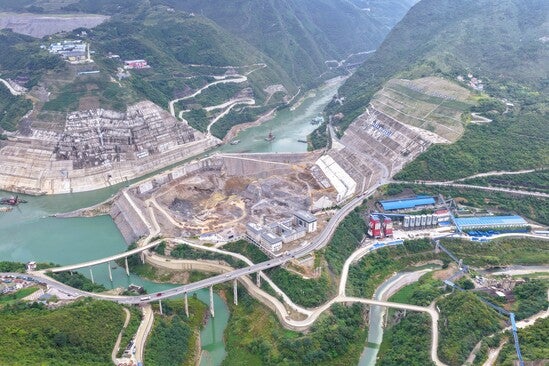
The first concrete pour for the main structure of the second phase of China’s Wujiang Baima Hydropower Project was completed on 22 September, according to contractor Eighth Hydropower Bureau. The milestone follows foundation excavation and cofferdam works and clears the way for construction of the dam and powerhouse.
The second phase began in March 2022. The contractor said it closed the cofferdam in November 2025 and completed its seepage prevention system in April 2026. It has since excavated 12 million m³ of earth and rock from the foundation pit.
The works have included an anti-seepage wall reaching a maximum depth of 85.8m. The contractor used a combination of drilling, hydraulic grabs and trench milling to build the wall in difficult ground conditions, including karst breccia. It said seepage during subsequent foundation pit dewatering remained within design limits.
Excavation close to the anti-seepage wall also required tight control of blasting vibrations. The project team used pre-splitting and micro-delay blasting, followed by shallow-hole and smooth blasting near the foundation surface. According to the contractor, changes to the excavation method shortened that stage of work by 20 days.
The Wujiang Baima project combines hydropower generation with improvements to navigation on the Wujiang River. Once complete, it is expected to generate 1.762 billion kWh annually, improve 45.3km of waterway and provide lock capacity of 10.6 million tonnes a year.
Concrete pour for the main structure follows the pour in late August for the fishway which forms part of the project.


