

Brazil’s dam history dates back to the 16th century, with Apipucos — documented in 1577 — recognised as the earliest known dam structure in the country. But only in 19th century was dam engineering effectively applied to support the industry, and as a response to society’s water and humanitarian needs.
The construction of the country’s first large public reservoir, the Cedro Dam, started in 1890 in Ceará and marked the beginning of structured hydraulic infrastructure in response to severe drought cycles in the Northeast of Brazil. Hydropower generation also played an important pioneering role in the development of dams in the country, with the first facilities built in the 1890s, some of the first in the world. Most notably we have two in the Minas Gerais state: Ribeirão do Inferno, built in Diamantina in 1883 to provide energy for mining and the Marmelos Plant, constructed to supply electricity to the city of Juiz de Fora, in 1889. Marmelos was the first one intended to produce energy for a public utility in South America. The old plant is now a museum, but the dam is still operating for a new powerplant built later.
In the 1950s, the Paulo Afonso Hydropower Complex, onward on the São Francisco River, in the northeast region, stands as one of the pioneering milestones of Brazilian engineering in large-scale underground works and challenging geotechnical environments. With successive expansions over the decades, the complex has become one of the pillars of the region’s economic development, providing continuous energy and driving industrial growth. Its construction symbolises a critical moment in Brazil’s transition toward a robust, interconnected, and increasingly sophisticated electric power sector.
Significant advances followed with the construction of the Três Marias Hydropower plant, inaugurated in 1962. Besides being one of the largest geotechnical projects in the world at the time, one of its highlights was the technical advisory provided by the renowned Arthur Casagrande.
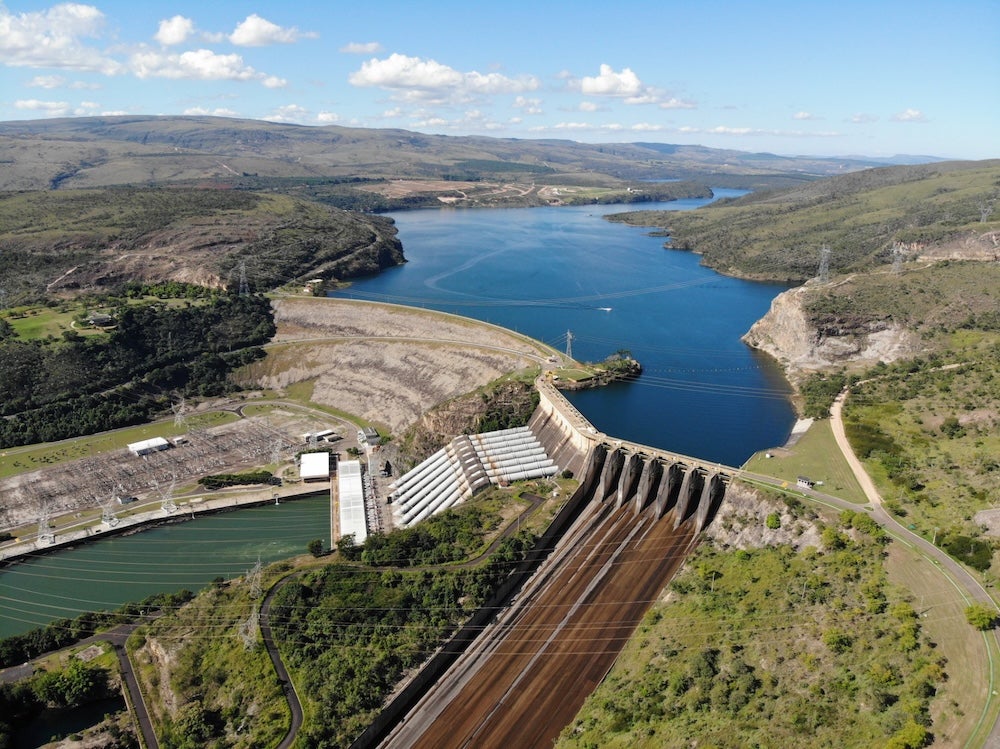
The Furnas Hydropower Plant, inaugurated in 1963 on the Rio Grande, marked a turning point in Brazil’s energy development and the consolidation of national dam engineering. Its large reservoir – one of the largest in the country – became essential for meeting the growing energy demand of Brazil’s Southeast region, particularly São Paulo. In addition to boosting energy supply, Furnas played a decisive role in technological advancement, the training of specialised professionals, and the expansion of the country’s hydroelectric infrastructure.
By the 1970s and 1990s, Brazil gained international prominence with the construction of major hydropower projects, such as Itaipu and Tucuruí—developments that the CBDB points to as symbols of the maturity and excellence of Brazilian dam engineering, which “evolved and reached international prominence” during this era.
Between 2000 and 2020, other major projects were built in Brazil, drawing on this extensive accumulated experience. Among the most prominent are the: Irapé Hydropower Plant Dam, the highest in the country at 210m and featuring a rockfill structure with a clay core; Santo Antônio and Jirau dams on the Madeira River, whose spillways allow the passage of floods in excess of 80,000m3/sec; and Belo Monte complex on the Xingu River, with an installed capacity of 11,233MW, comprising two main dams and 28 dikes.
More recently, engineering expertise has expanded into advanced tailings dam systems, reflecting the country’s strong mining sector and growing demand for safety, innovation, and environmental responsibility.
Brazil has one of the world’s largest and most diverse dam inventories. National regulatory consolidations report over 30,000 dams, spanning multiple functions such as hydropower, water supply, irrigation, and mining waste storage. It is estimated that there are tens of thousands of other small structures not registered in the national database, especially those dedicated to water supply and irrigation in small communities.
Benefiting from diverse geology and large river basins, Brazil employs all major dam types, including:
- Embankment dams (earthfill and rockfill) — the most common, widely used for multipurpose reservoirs and for tailings containment. Their prevalence aligns with global patterns and their adaptability to Brazilian terrain.
- Concrete dams (gravity, arch, RCC) — fundamental in major hydropower complexes such as Itaipu and Belo Monte.
- Tailings dams — a significant Brazilian category, especially in Minas Gerais and Pará, addressed by CBDB’s CT‑7 and increasingly integrated with the hydraulic dam community due to shared challenges in safety and environmental stewardship.
- Multipurpose reservoirs — for water supply, irrigation, flood mitigation, and recreation.
This technical diversity is supported by more than 20 CBDB Technical Committees, responsible for maintaining updated guidelines, disseminating best practices, and promoting continuous innovation.
Dam safety
Dam safety remains a national priority. In recent years, Brazil’s dam industry has faced significant challenges driven primarily by climate change and increasing hydrological variability. . Brazil’s most recent national dam safety report (2024–25) registered 24 accidents and 45 incidents, many of which were linked to flooding or extreme rainfall events – highlighting a growing vulnerability of ageing and insufficiently monitored structures in the face of climate extremes.
Another major concern is conflicts with other sources of generation. The rapid expansion of intermittent renewable sources such as solar and wind has generated adverse effects on the Brazilian power sector by increasing supply volatility and reducing overall system stability. This variability places growing pressure on hydropower plants – traditionally responsible for providing operational flexibility. As a result, the system’s dependence on dispatchable sources to compensate for renewable fluctuations intensifies, heightening vulnerability and increasing operational costs across Brazil’s electrical grid.
Together, these issues illustrate a dam sector undergoing transformation, challenged by climate change, ageing infrastructure, environmental considerations, and the need for more integrated and robust regulatory frameworks. The Brazilian dam industry is being compelled to adapt quickly, by updating design criteria, reinforcing safety protocols, and rethinking long‑term hydropower planning in a world where hydrological extremes have become the new normal.
Construction
Dam construction is still taking place in Brazil, with multiple new hydropower and reservoir projects advancing through planning, auction, and construction stages.
In 2025, Brazil’s Ministry of Mines and Energy signaled a renewed expansion of the hydropower sector by auctioning 65 new hydro projects, totaling 815MW of new capacity to be delivered by 2030. Although many of these plants are relatively small (under 50MW), this marks a return to dam-building after a period of limited development.
Complementing these initiatives, Brazil is implementing the LRCAP 2026 (Reserve Capacity Auction), a major ongoing federal program intended to strengthen system reliability by contracting firm, dispatchable capacity to balance the growing share of intermittent renewable sources such as solar and wind. The LRCAP includes the expansion of existing hydropower plants through the installation of new generating units, with auctions scheduled for March 2026.
Through these parallel fronts—new builds, ongoing construction, hydropower modernisation, and LRCAP-driven expansion—Brazil maintains an active and strategically diversified dam construction landscape.
Undergoing transformation
As a Director of the Brazilian Committee on Dams, I have observed a profound transformation in Brazil’s dam sector. The country is entering a new era defined not only by engineering excellence, but also by a strengthened commitment to safety, sustainability, and innovation. In this context, the CBDB’s mission—promoting best practices in the study, design, construction, operation, and maintenance of dams—has become increasingly vital as the sector responds to climate change, evolving environmental standards, and rising societal expectations. From my own experience in recent years, the severe floods and prolonged droughts Brazil has faced underscore the essential role of reservoirs in protecting people and assets—both by mitigating flood peaks and by securing reliable water supplies for human consumption and irrigation. After all, this is the great role that dams and reservoirs have been contributing to society for millennia.
One of the most significant advancements has been the growing integration between the hydraulic and mining dam communities, a convergence that enhances knowledge sharing, aligns safety cultures, and strengthens national resilience. Through our technical committees, events, publications, and international partnerships, the CBDB cultivates a dynamic ecosystem of continuous improvement—one that mirrors the scale and strategic importance of Brazil’s water and energy infrastructure.
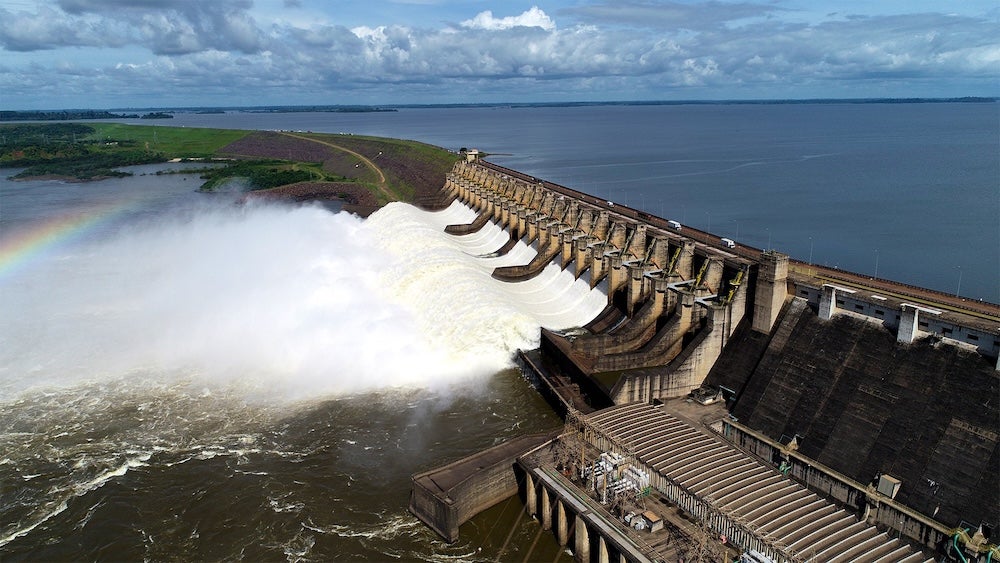
DAMS WEEK 2026 – Belém, Pará (20–26 September 2026)
The flagship event of CBDB, DAMSWEEK, is held annually and, in 2026, will take place in the Amazon. The event will bring together Brazilian and international experts to discuss sustainability, innovation, and dam safety. Technical visits will be conducted at two major dams in the region – Belo Monte and Tucuruí – both mentioned in this article. The programme will also include the INCA Meeting (ICOLD National Committees of the Americas), strengthening regional cooperation and knowledge exchange. https://cbdb.org.br/evento/dams-week-2026?lang=en
Technical Publications
Through editorials, bulletins, technical reports, and the Revista Brasileira de Engenharia de Barragens, CBDB provides authoritative technical guidance and disseminates state‑of‑the‑art knowledge across all dam-related disciplines. https://cbdb.org.br/revistas


